 Bellingham
 Why Birch Bay Roofs Wear Differently Than Roofs Inland
Birch Bay sits right on the water, and that changes what a roof deals with over its lifespan. Homes here take on salt-laden air off the bay, wind-driven rain that gets pushed sideways under normal flashing details, and a long, damp moss season that runs from fall through spring. None of these things ruin a roof overnight. What they do is quietly shorten the life of materials and fasteners that were installed without that exposure in mind, and speed up the growth of moss and algae on north-facing slopes that stay shaded and wet for months at a time.
A new roof installation in Birch Bay isn't just "put shingles on a house." It's choosing materials and details that are built for salt exposure and sustained moisture, then installing them correctly so the roof actually performs the way it's rated to. That's the standard we hold every Birch Bay job to.
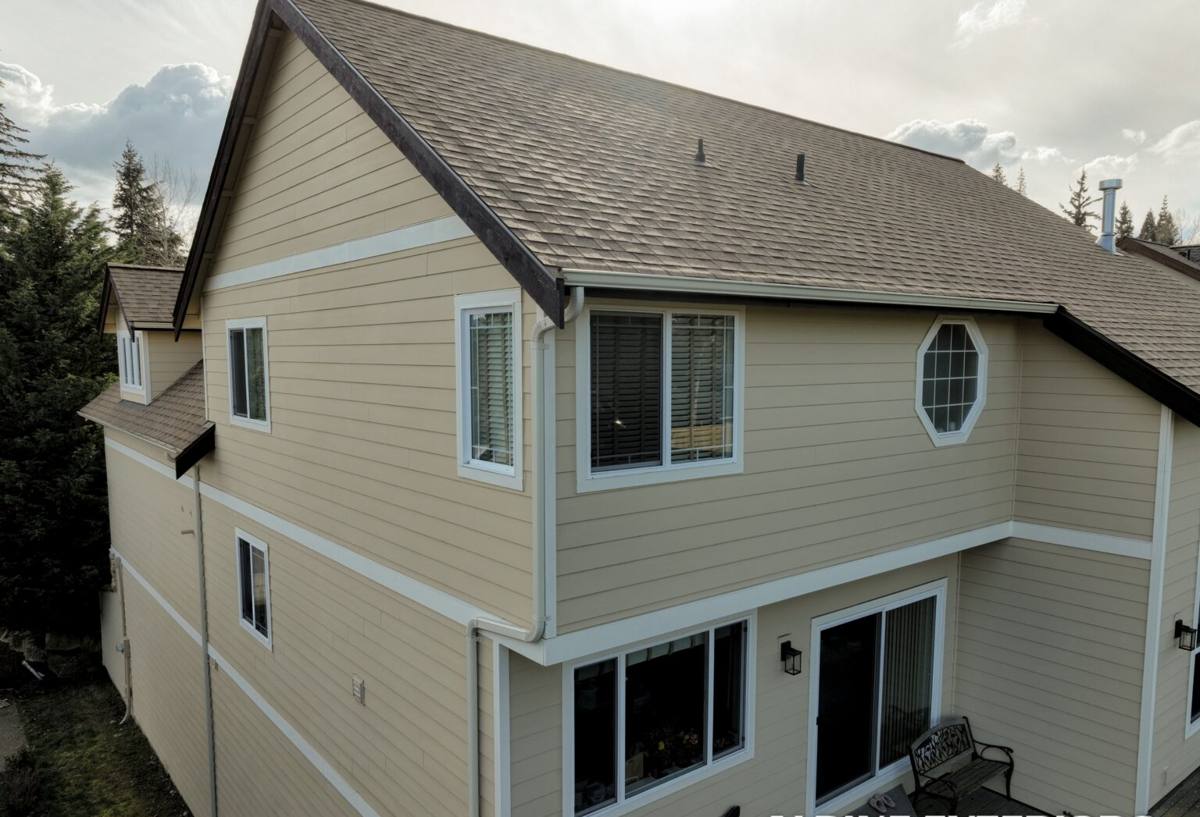
What Salt Air, Rain, and Moss Actually Do to a Roof
Salt Air
Airborne salt accelerates corrosion on exposed metal — nail heads, flashing edges, valley metal, and vent stacks. On a roof installed without corrosion-resistant fasteners and flashing, this shows up as rust streaking and early metal failure years before the shingles themselves are due.
Driving Rain
Wind off the water doesn't just fall on a roof, it pushes into laps, valleys, and any gap in the flashing. Roofs here need underlayment and flashing details sized for wind-driven rain, not just standard-exposure installation. This matters most at valleys, roof-to-wall transitions, chimneys, and any low-slope section.
Moss and Sustained Moisture
Whatcom County's damp, mild climate is close to ideal for moss growth on shaded or north-facing roof planes. Moss holds moisture against the roof surface, works its way under shingle tabs, and lifts edges over time — which is how a moss problem becomes a leak problem.
What a Correct New Roof Installation Involves
A new roof is only as good as what's underneath the shingles. For Birch Bay homes, we treat the following as non-negotiable, not upgrades:
Full Tear-Off and Deck Inspection
We remove the old roofing down to the deck rather than layering over it, because that's the only way to actually see the condition of the sheathing. Any soft, delaminated, or water-damaged decking gets identified and replaced before anything new goes down — a new roof over a bad deck just hides the problem.
Ice, Water, and Underlayment Protection
Self-adhering ice-and-water barrier at eaves, valleys, and roof penetrations, backed by a quality synthetic underlayment across the full deck, is what actually stops wind-driven rain from getting underneath the roof covering. This is one of the areas we don't cut corners on for coastal homes.
Flashing Done Right
Valleys, chimneys, skylights, and wall transitions are where roofs actually leak — it's rarely the open field of shingles. Correctly formed and sequenced flashing, in a corrosion-resistant metal, is what keeps water managed at every one of these transition points.
Ventilation That Matches the Home
Proper intake and exhaust ventilation keeps the attic dry and temperature-balanced, which reduces condensation buildup and helps prevent moss and mildew from getting a foothold from the underside as well as the top.
Choosing a Roofing Material for a Birch Bay Home
There's no single "best" roofing material for every house — it depends on your roof's exposure, slope, budget, and how much long-term maintenance you want to take on. Here's how the common options stack up for a bay-front or near-water property:
| Material | Salt Air / Coastal Exposure | Moss Resistance | Maintenance |
|---|---|---|---|
| Architectural Asphalt Shingles | Good, with corrosion-resistant fasteners and flashing | Moderate — benefits from periodic cleaning on shaded slopes | Low to moderate |
| Standing Seam Metal | Very good, when finished and fastened for coastal use | Very good — sheds moss more readily due to smooth, sloped surface | Low |
| Synthetic / Composite Shingle | Good, doesn't corrode, but check manufacturer coastal warranty terms | Moderate to good depending on product | Low to moderate |
| Wood Shake | Poor without diligent upkeep — moisture and salt shorten lifespan | Poor — retains moisture, feeds moss and rot | High |
For most Birch Bay homes, architectural asphalt shingles remain the practical choice when the fasteners, flashing, and underlayment are upgraded for coastal exposure. Metal roofing is a strong option for homeowners planning to stay long-term and wanting the lowest ongoing maintenance, particularly on steeper or heavily shaded roof planes where moss is a recurring fight. We'll walk through the honest trade-offs of each for your specific roof rather than pushing one product across every job.
Our Installation Process
- On-site inspection and roof assessment — we look at slope, exposure, ventilation, decking condition, and any existing problem areas before quoting anything.
- Written estimate with material options — a clear scope of work, not a vague "reroof" line item, so you know exactly what's being installed.
- Tear-off and deck repair — full removal of old roofing and replacement of any compromised sheathing.
- Underlayment and flashing installation — ice-and-water membrane, synthetic underlayment, and new flashing at every valley, wall, and penetration.
- Roofing material installation — installed to manufacturer specification, including nailing pattern and exposure, which is what keeps a wind and warranty rating valid.
- Ventilation check and final walkthrough — confirming intake/exhaust balance and reviewing the finished job with you before we consider it done.
Signs a Birch Bay Roof Needs Replacement, Not Another Repair
- Granule loss heavy enough to see bare asphalt on multiple shingles, not just around one repair
- Curling, cupping, or cracked shingles across a significant portion of the roof, especially on the water-facing slope
- Rust staining or visible corrosion at flashing, valleys, or exposed fasteners
- Persistent moss coverage on shaded slopes that keeps returning after cleaning
- Soft spots, sagging, or staining on the interior ceiling or attic decking
- A roof approaching or past the manufacturer's expected lifespan for its material and this climate
- Multiple past repairs in different spots rather than one contained issue
If you're only seeing one or two of these, a repair may still make sense. When several show up together, or the roof is old enough that another repair is just delaying the same conversation, replacement is usually the more honest recommendation — and we'll tell you that directly rather than stringing along repairs.
Why a Local Crew Matters for This Job
A roofing crew that regularly works Birch Bay and the surrounding Bellingham area already knows what this specific exposure does to a roof — which fastener and flashing upgrades are worth it here, which slopes tend to hold moss, and how wind off the bay behaves differently than it does a few miles inland. That's not something a crew unfamiliar with Whatcom County picks up on a single job.
Being local also matters after the installation is finished. If a question comes up during the first heavy fall storm, or you want a slope checked before moss season sets in, you're calling a crew that's a short drive away and already has your roof's history on file — not chasing down a company that worked its way through the area once and moved on.
Protecting the Investment: Long-Term Roof Care in Birch Bay
- Have moss growth cleaned off before it works under shingle edges — don't wait for visible damage
- Keep gutters and downspouts clear so wind-driven rain has somewhere to go besides under the roofline
- Trim back overhanging branches on shaded slopes to cut down on moss and debris buildup
- Have flashing and fasteners checked periodically for early corrosion, especially closer to the water
- Confirm attic ventilation is balanced if you notice condensation or unusual heat buildup
- Address small leaks or lifted shingles promptly — small issues here compound faster in a wet climate
What to Expect: Timeline, Permits, and Warranty
A straightforward residential roof replacement in this area typically takes a few days from tear-off to finished cleanup, weather permitting — coastal weather windows can shift a schedule, and we'll be upfront if that happens rather than rushing the job to hit a date. Roofing permits are handled through the applicable local jurisdiction and pulled before work begins; that's part of what we manage as part of the job, not something left for you to sort out.
Material warranties vary by manufacturer and product line, and workmanship coverage is separate from that — we'll go over exactly what's covered, by whom, and for how long before you sign anything. Total project cost depends heavily on roof size, pitch, current layer count, decking condition, and material choice, so honest pricing here runs anywhere from several thousand dollars for a smaller, straightforward reroof to well into five figures for a larger or more complex roof — we'll give you real numbers for your specific house rather than a generic range.
If your Birch Bay roof is showing its age or you're planning ahead for the next wet season, we're happy to take a look and give you a straight assessment. The form below gets you a free, no-pressure estimate — no obligation, just an honest read on where your roof stands.