 Bellingham
 Fairhaven's Roofs Work Harder Than Most
Homes in Fairhaven sit close enough to Bellingham Bay that the weather here isn't quite the same as weather ten miles inland. Salt-laden air off the water speeds up corrosion on fasteners, flashing, and exposed metal. Storms tend to arrive with driving, wind-pushed rain rather than straight-down rain, which finds every weak seam a roof has. And because the neighborhood has plenty of mature tree cover and a long, damp shoulder season, moss and moisture have months at a time to work into a roof before anyone notices a problem from the ground. None of that means a Fairhaven roof is doomed — it means storm damage repair here has to account for conditions a generic roofing crew from outside the area might not think about.
This page is specifically about storm damage repair for Fairhaven homes: what actually counts as storm damage, what a correct repair looks like given our climate, and how we handle the job from first call to final inspection.
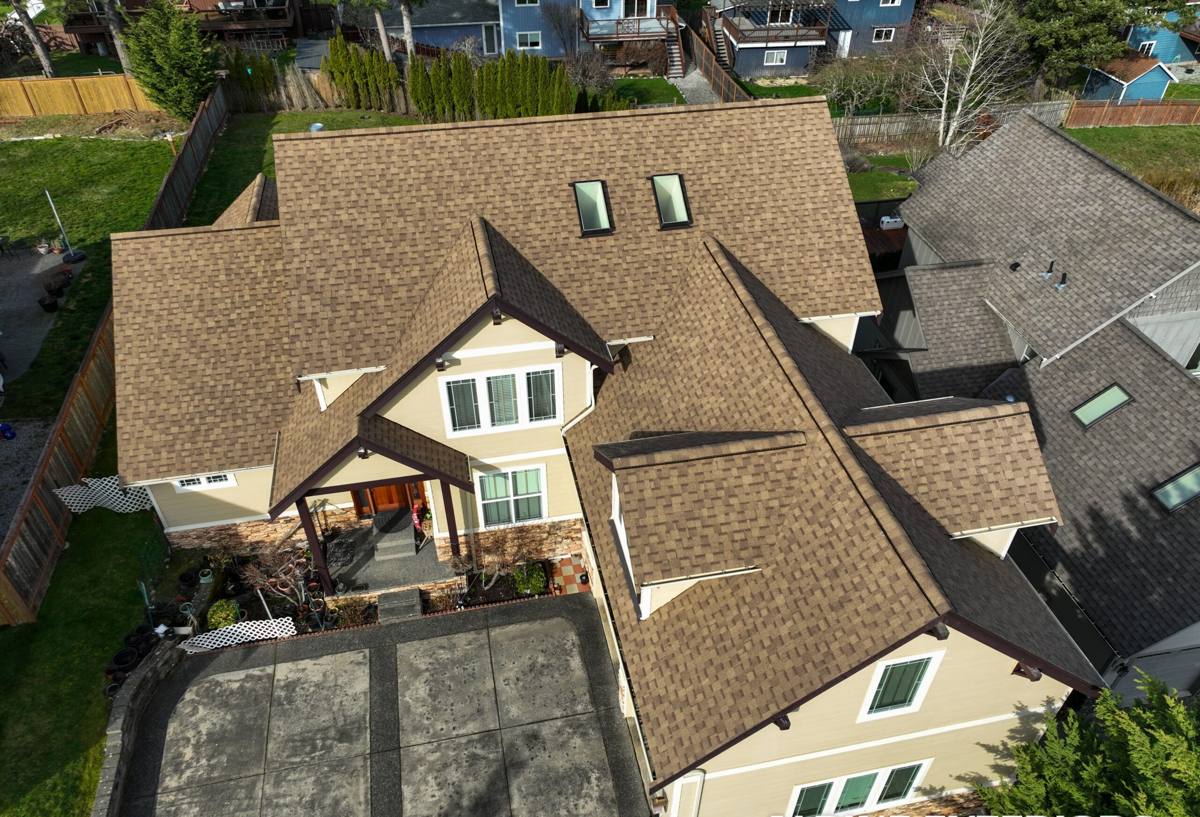
What Actually Counts as Storm Damage
Not every roof problem that shows up after a windstorm is technically "storm damage," and that distinction matters for both the repair approach and any insurance conversation. Here's how we sort it out.
Wind and Uplift Damage
Sustained wind and gusts pull upward on shingle or shake edges, especially at ridges, eaves, and rake edges where the wind gets underneath the roofing material. You'll often see lifted or missing shingles, broken shake tabs, or fasteners that have backed out just enough to break the seal. Once a shingle's seal is broken, it doesn't reseal itself — it stays vulnerable until it's fixed or replaced.
Wind-Driven Rain and Flashing Failures
This is the one that catches Fairhaven homeowners off guard. Rain that's being pushed sideways by wind off the bay can work its way under flashing at chimneys, skylights, dormers, and valleys even when the roofing field itself looks fine. The leak shows up inside the house — a stain on a ceiling or wall — long before there's visible damage on the roof.
Falling Debris
Broken branches and debris from mature trees are one of the most common causes of point damage after a storm here. A limb doesn't have to be huge to crack a shingle, dent a metal panel, or punch a small hole that lets water in over the following weeks.
Why Salt Air and Moss Season Change the Repair
A storm repair done without accounting for local conditions tends to fail again within a season or two. Two things we watch for specifically in Fairhaven:
Corrosion at the coast. Bare or poorly coated fasteners and flashing corrode noticeably faster in salt-influenced air than they do further inland. A repair that reuses corroded fasteners or matches new flashing to already-degraded metal is a repair that's set up to leak again. We use fasteners and flashing rated for coastal exposure whenever we're working this close to the water.
Moss holding moisture against damaged areas. Whatcom County's long wet season means moss and organic debris can build up around a storm-damaged spot faster than in drier climates, trapping moisture against the roof deck and slowing everything down — including how quickly hidden rot spreads. Part of any honest storm repair here includes clearing growth and debris from the repair area, not just patching around it.
What a Correct Storm Repair Actually Involves
A quick patch can stop a leak for a while, but "stopped for a while" and "repaired correctly" aren't the same thing. Here's what we consider non-negotiable.
A Real Inspection, Not Just the Obvious Spot
Storm damage rarely announces itself in just one place. We check the full roof plane, not only the area where a leak showed up inside, because wind and debris damage often has a secondary spot nearby that hasn't started leaking yet.
Checking the Deck, Not Just the Surface
If water has been getting in for more than a short time, the roof deck underneath can be soft, delaminating, or rotted. Replacing shingles or panels over a compromised deck just resets the clock on the same failure.
Matching Materials Properly
Patched-in shingles or panels that don't match the existing roof in type, weight, or age create both a cosmetic mismatch and, more importantly, a seam where water can find its way in. When an exact match isn't available, we talk through the honest trade-offs with the homeowner rather than forcing a mismatch and hoping it holds.
Flashing and Sealant Done Right
Most repeat leaks trace back to flashing that was reused when it should have been replaced, or sealant used as a substitute for proper flashing work instead of a supplement to it. We replace flashing where it's compromised and use sealant the way it's meant to be used — to finish a mechanically sound repair, not to cover for a shortcut.
Our Storm Repair Process
- Call or estimate request: Tell us what you're seeing — a leak, missing shingles, visible debris damage — and roughly when the storm happened.
- On-site inspection: We walk the roof (or use a lift/drone if pitch or access requires it) and check the full roof plane, not just the reported problem area.
- Written findings and options: You get a clear explanation of what's damaged, what's causing it, and what repair options make sense — including when a small area doesn't need a full section replaced.
- The repair: Deck check and repair if needed, matched materials, proper flashing, and fasteners suited to a coastal-influenced climate.
- Final check: We confirm the repair area sheds water correctly and walk you through what was done.
Repair or Replace? What Actually Drives That Decision
Storm damage doesn't always mean a full roof replacement, and it doesn't always mean a simple patch either. These are the factors that usually decide it.
| Factor | Points Toward Repair | Points Toward Replacement |
|---|---|---|
| Extent of damage | Isolated to one section or a few spots | Spread across multiple roof planes |
| Roof age | Roofing material still has years of life left | Roof was already nearing the end of its service life |
| Deck condition | Deck is solid under the damaged area | Deck shows rot or soft spots in multiple places |
| Material availability | Matching material is available | Material is discontinued or won't reasonably match |
| History of repeat leaks | First occurrence, clear single cause | Recurring leaks or storm damage over several seasons |
We'll walk you through where your roof falls on these factors rather than defaulting to the most expensive option — a well-executed repair is often the right call, and we'll say so when it is.
Signs Your Fairhaven Roof May Have Storm Damage
Some storm damage is obvious. A lot of it isn't, especially with wind-driven rain and flashing issues that only show up as a slow drip weeks later. Worth checking after any significant windstorm:
- Shingles or shake tabs that look lifted, curled, or are missing entirely
- Granules collecting in gutters or at downspout outlets
- Dents, dings, or scuffed spots on metal roofing or flashing
- New or worsening moss growth around valleys, chimneys, or roof-to-wall joints
- Water stains on ceilings or upper walls that appeared after a storm
- Daylight visible through the attic roof deck
- Debris — branches, needles, leaves — piled against a roof-to-wall transition instead of shedding off
A Note on Storm Claims
If your damage may be covered by homeowners insurance, document what you can see from the ground with photos before anything is repaired, and get an inspection soon after the storm — insurers generally want damage tied to a specific, dateable event rather than gradual wear. We provide the inspection findings and repair documentation homeowners typically need for a claim, but the claim itself is between you and your insurer; we don't inflate scope or findings to fit a claim, because that kind of overreach is what gets legitimate claims denied.
Why Local Experience in Fairhaven Matters
A crew that already works this neighborhood knows what Fairhaven roofs are up against — the corrosion risk from being close to the bay, the tree cover that drops debris and feeds moss, and the wind-driven rain patterns that make flashing the first thing to check, not the last. That local familiarity means fewer surprises during the inspection and repair recommendations that match the reality of your specific roof rather than a one-size-fits-all approach. It also means faster response after a storm, when a lot of homeowners in the area are trying to get someone out to look at their roof at the same time.
If you're dealing with storm damage on a Fairhaven roof, or you just want a professional set of eyes on it after a rough windstorm, we're glad to come take a look. Request a free, no-pressure estimate using the form below and we'll get you scheduled.