 Bellingham
 Roofing a Home on Birch Bay's Shoreline
Birch Bay sits right up against open water, and that changes what a roof has to deal with compared to a house a few miles inland in Bellingham. Homes here take on salt-laden air, wind that comes straight off the Strait of Georgia with nothing to slow it down, and long stretches of wet weather that keep roof surfaces damp for months at a time. An asphalt shingle roof can handle all of that and last its full service life, but only if it's specified and installed with this specific exposure in mind. A roof built for a sheltered inland lot and a roof built for a Birch Bay waterfront lot should not look the same on paper, even if the shingle brand is identical.
This page covers what we actually pay attention to when we're putting asphalt shingles on a Birch Bay home: the climate stresses, the materials and details that hold up to them, how our process works from tear-off to cleanup, and what ongoing care looks like once the roof is on.
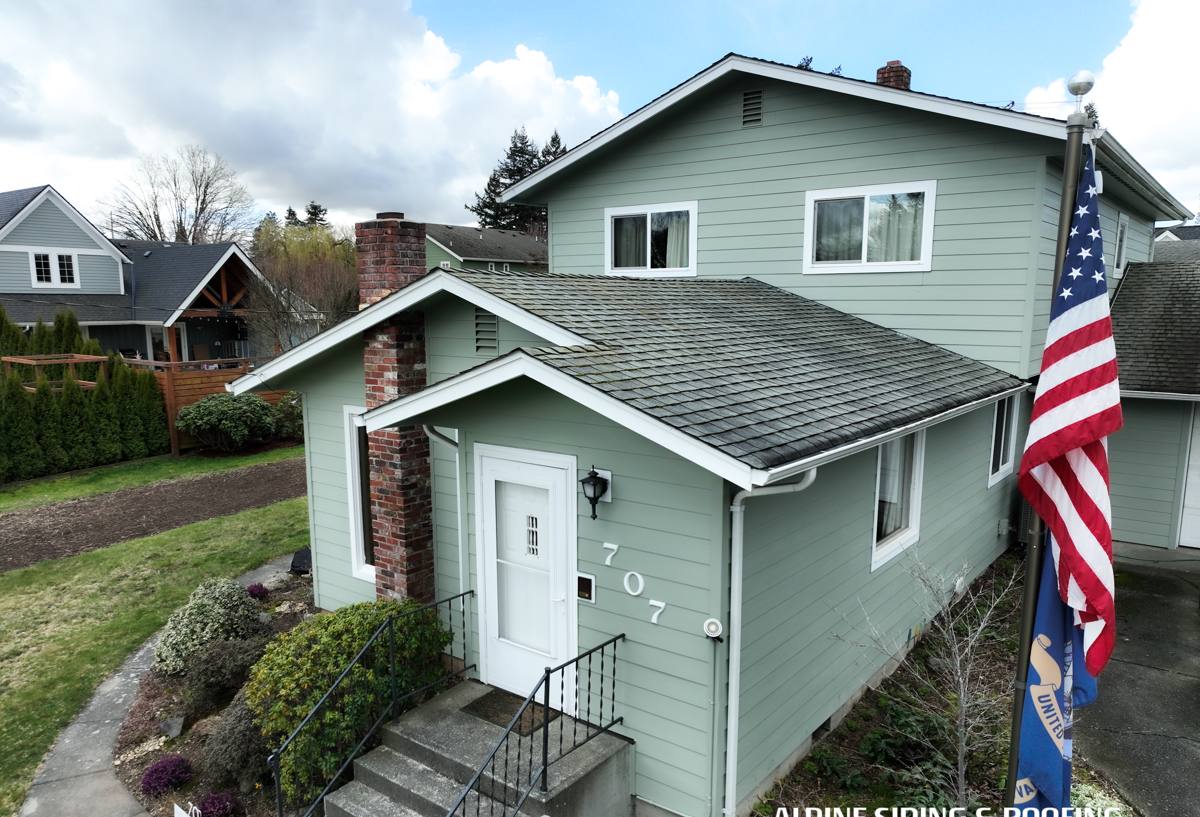
What Birch Bay's Climate Actually Does to a Roof
Salt Air
Airborne salt from the water doesn't damage the asphalt shingles themselves much, but it's hard on metal. Nails, flashing, drip edge, vent stacks, and any exposed fasteners are all candidates for accelerated corrosion when they're sitting a few hundred feet from saltwater year-round. Cheaper or mismatched metal components can start showing rust streaks and pitting well before the shingles above them are due for replacement. This is a detail that gets overlooked constantly, because it doesn't show up as a problem until years later.
Wind Off the Water
Birch Bay properties, especially those with a clear line to the water, see stronger and more consistent wind than similar homes tucked into Bellingham's neighborhoods or wooded lots further inland. Wind is the number one cause of premature shingle failure we see on waterfront and near-waterfront roofs — not because the shingles are bad, but because sealant strips didn't bond properly, nailing patterns were off, or the wrong wind-rated product was used for the exposure.
Driving Rain
Whatcom County gets a lot of rain, and on an exposed lot that rain doesn't fall straight down — it comes in sideways under wind pressure. That means water gets pushed up under shingle edges, into valleys, and around any roof penetration far more aggressively than on a calm, still day. Flashing details and underlayment quality matter more here than they would on a sheltered inland roof, because the margin for error is smaller.
A Long Moss Season
Mild temperatures and near-constant moisture from fall through spring give moss and algae a long window to establish themselves, particularly on north-facing slopes, shaded sections under trees, and anywhere debris collects. Once moss gets a foothold, it holds moisture against the shingle surface, which shortens the life of the roofing underneath it and can lift shingle edges over time.
Getting the Materials Right
Not every asphalt shingle product is a good fit for a Birch Bay lot. We generally steer homeowners toward laminate (architectural) shingles with algae-resistant granules and a wind rating that matches the actual exposure of the site, rather than the cheapest option on the rack. Here's how the common choices stack up for this specific climate:
| Shingle Type | Wind Performance | Algae / Moss Resistance | Best Fit |
|---|---|---|---|
| Standard 3-tab | Lower wind rating, flatter profile | Standard granules only unless upgraded | Sheltered, low-exposure sections; budget-driven projects |
| Architectural / laminate | Higher wind rating, thicker construction | Often available with algae-resistant granule upgrade | Most Birch Bay homes, especially open or waterfront-facing roofs |
| Algae-resistant premium laminate | High wind rating | Copper- or zinc-infused granules built in | North-facing slopes, tree-shaded roofs, homes with a history of moss |
We also pay close attention to the metal components that pair with the shingles — drip edge, step flashing, valley metal, and vent boots. On a Birch Bay roof, we favor corrosion-resistant metals and coated fasteners over standard galvanized options, because the salt exposure here will find the weak point in cheaper hardware faster than it would a few miles inland.
What a Correctly Installed Roof Involves
An asphalt shingle roof is a system, not a single product laid on top of plywood. Every layer has a job, and skipping or shortcutting one of them is where premature failures come from — especially in a climate like this one.
Deck Inspection and Repair
Before anything new goes down, the roof deck gets inspected for soft spots, rot, or delamination, particularly around valleys, chimneys, and eaves where water has had the most opportunity to work its way in over the years. Any damaged sheathing gets replaced — shingles installed over a compromised deck will never perform correctly, no matter how good the shingle itself is.
Underlayment
Given how much driving rain this area sees, we use synthetic underlayment across the field of the roof and self-adhering ice-and-water shield at the eaves, valleys, and around penetrations — the areas most likely to see wind-driven water pushed up under the shingle line. This layer is the backup plan if wind ever does get under a shingle edge, and on an exposed Birch Bay roof, it earns its keep.
Flashing
Flashing at chimneys, sidewalls, valleys, and any roof-to-wall transition is formed and installed to shed water outward, not just tucked in and caulked over. Caulk is a maintenance item, not a waterproofing strategy — a properly stepped and counter-flashed detail doesn't rely on sealant staying intact for the life of the roof.
Nailing Pattern and Fastening
Wind-related shingle failures are, more often than not, a nailing problem — too few nails, nails placed too high or too low in the shingle, or the wrong fastener for the wind exposure. We follow the manufacturer's high-wind nailing specification on every Birch Bay roof, not just the standard pattern, and that's often the single biggest factor in whether a roof holds together in a real windstorm.
Ventilation
Balanced intake and exhaust ventilation keeps the underside of the roof deck dry and at a stable temperature, which matters for shingle lifespan and for preventing condensation issues in a consistently damp climate. We check existing ventilation on every reroof and correct it where it's inadequate, rather than just replacing shingles over a ventilation problem that will keep causing damage underneath.
Cleanup and Final Check
The job finishes with a full site cleanup, including a magnetic sweep for stray nails, and a final walk-through of flashing details, vent boots, and shingle lines before we consider the roof complete.
Moss and Algae: What Actually Works
Moss removal and prevention on a Birch Bay roof isn't a one-time fix — it's an ongoing part of owning a roof in this climate, similar to gutter cleaning. A few things make a real, lasting difference:
- Algae-resistant shingles with metal-infused granules on shaded or north-facing slopes, especially where trees overhang the roof
- Zinc or copper strips installed at the ridge, which release trace metal with every rain and slow regrowth over time
- Keeping gutters and valleys clear of needles and leaf debris, since trapped organic matter is what gives moss a place to start
- Gentle, low-pressure moss removal rather than pressure washing, which can strip granules and shorten shingle life
- Trimming back overhanging branches where practical, to cut down on shade and debris load on the roof
Pressure washing a shingle roof is one of the most common ways we see homeowners accidentally shorten its lifespan — it looks clean afterward, but it can strip the granules that protect the asphalt from UV and weather, which is the opposite of what you want on a roof already dealing with heavy sun and salt exposure part of the year.
What Drives Cost on a Birch Bay Reroof
Every roof is priced based on its own specifics, but these are the factors that most often move the number up or down on a Birch Bay project:
| Factor | Why It Matters Here |
|---|---|
| Roof pitch and access | Steeper roofs and limited equipment access near the water take longer and need more safety setup |
| Number of existing layers | Tear-off of multiple old layers takes more labor and disposal than a single-layer roof |
| Deck condition | Rot or soft sheathing found during tear-off means repair before shingles can go down |
| Shingle grade chosen | Algae-resistant and higher wind-rated laminate shingles cost more than standard 3-tab up front |
| Flashing and penetration count | Chimneys, skylights, and multiple roof planes each add flashing labor |
| Ventilation upgrades | Adding or correcting intake/exhaust venting is worth the added cost for long-term performance |
We'd rather walk a homeowner through these trade-offs honestly during an estimate than quote a number without explaining what's driving it. On a shoreline lot, the underlayment and flashing upgrades usually pay for themselves in fewer callbacks and a longer-lasting roof, so we'll always flag where we think it's worth spending versus where it isn't.
Signs It's Time to Call Someone
A few warning signs tend to show up earlier on Birch Bay roofs than on more sheltered homes, simply because of the wind and salt exposure:
- Shingle edges that look lifted, curled, or cupped, especially on the side of the roof facing the water
- Granules collecting in gutters or at downspout outlets, which signals accelerated shingle wear
- Rust staining running down from flashing, vent boots, or exposed fasteners
- Moss buildup that's thick enough to hold visible moisture against the roof surface
- Daylight or water staining visible in the attic near valleys, chimneys, or roof-to-wall transitions
Catching these early usually means a repair. Waiting on them usually means a full replacement once water finds its way into the deck.
Why Local Experience in Birch Bay Matters
A roofing crew that's worked shoreline properties in Birch Bay knows which slopes on a given lot orientation take the worst of the wind, which shaded sections are going to fight moss no matter what, and which fastener and flashing choices actually hold up to salt air over years, not just on paper. That's different knowledge than what a crew builds doing mostly inland Bellingham or Whatcom County work, where the exposure is milder across the board. Neither is better in general — but for a Birch Bay roof specifically, that shoreline-specific experience is what keeps a homeowner from finding out the hard way that a detail was underspecified for the site.
We treat every Birch Bay roof as a shoreline roof from the first walkthrough — underlayment, flashing, fastening, and shingle selection all get evaluated against this exposure, not a generic inland spec sheet.
Get a Free, No-Pressure Estimate
If you're dealing with an aging roof, visible moss, storm damage, or you're just planning ahead for a Birch Bay home, we're happy to take a look and walk you through what we see — no pressure, no obligation. Use the form below to request a free estimate.