 Bellingham
 Fiber Cement Siding Built for a Waterfront Exposure
Birch Bay homes sit closer to the water than almost anywhere else in Whatcom County, and that changes what a siding job actually needs to hold up. Salt-laden air comes off the bay steadily, wind pushes rain sideways into wall assemblies instead of letting it fall straight down, and a moss and mildew season that runs most of the year settles into anything shaded or slow to dry. A siding material and installation that would be perfectly fine a few miles inland can start showing problems here in a fraction of the time.
We install James Hardie fiber cement siding exclusively, and Birch Bay is one of the clearer examples of why. This page covers what fiber cement siding service in Birch Bay specifically involves — what the material needs to do, what a correct installation looks like on this coastline, and how our process handles the details that matter most out here.
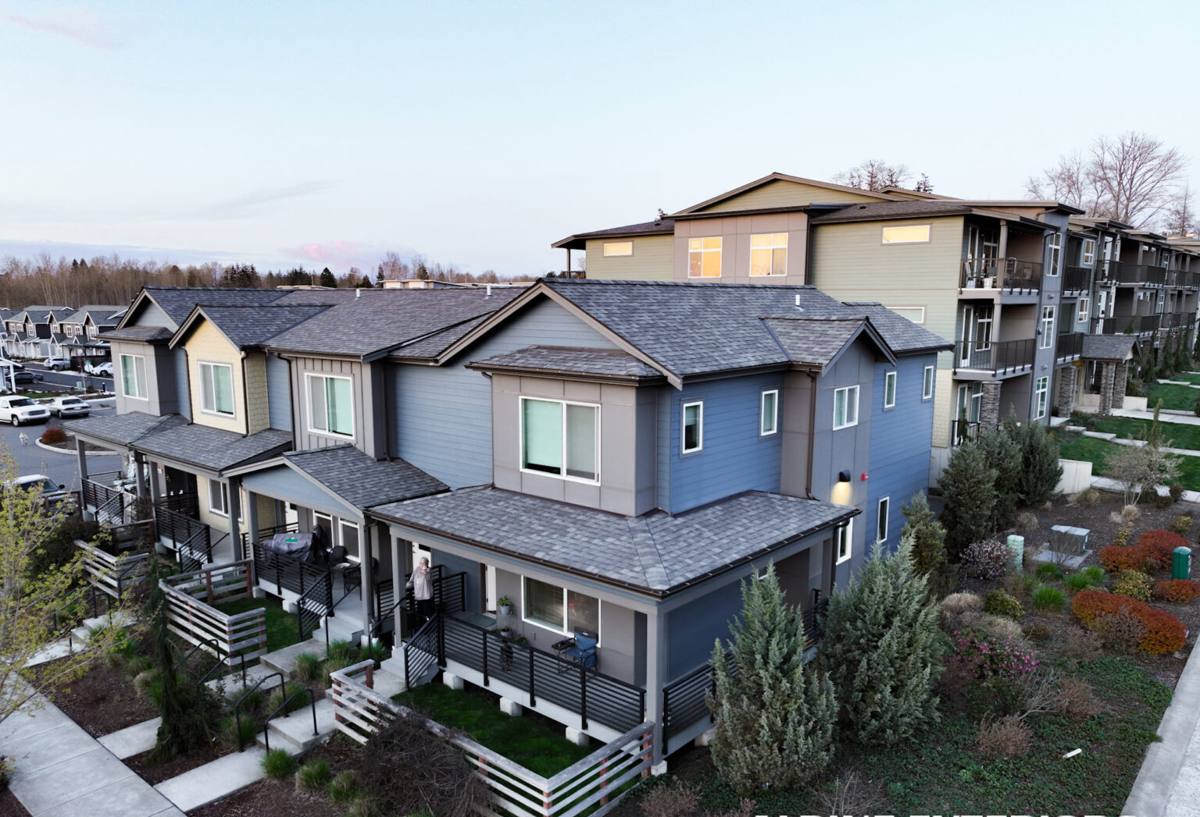
What This Stretch of Coastline Does to Siding
Salt Air and Fastener Corrosion
Direct waterfront exposure means Birch Bay homes take on more airborne salt than inland Whatcom County properties. Salt accelerates corrosion in fasteners, flashing, and trim hardware, and it breaks down lower-grade finishes faster than a drier environment would. On a fiber cement job, that means the fastener grade and flashing details matter as much as the siding panel itself — a great board with the wrong nail behind it still ends up with rust streaks and loosening panels within a handful of years.
Wind-Driven Rain
Open water means more wind, and wind-driven rain doesn't behave like a normal rain shower. It gets forced sideways into lap joints, corner trim, and anywhere a seam isn't detailed correctly. A siding system's real test in Birch Bay isn't how it looks in dry weather — it's how well water gets shed and drained during a sideways winter storm, storm after storm, for decades.
A Long Moss and Mildew Season
Mild temperatures, shade, and near-constant moisture add up to a moss and mildew season that can run most of the year on north-facing and tree-shaded walls. Anything porous or slow to dry becomes a growth surface over time. That's less about how the siding looks and more about what stays trapped against the wall behind it if moisture isn't managed correctly.
The James Hardie System We Install
Plank, Panel, and Shingle Profiles
James Hardie's fiber cement lineup covers most of what a Birch Bay home needs from a single manufacturer: lap siding in several widths and textures, vertical panel systems, shingle-style siding for accent areas, and matching trim boards. That matters for consistency — trim, fascia, and field siding that come from the same engineered system age and weather together instead of one component failing years before the others.
HZ5 Engineering for This Coastline
Hardie manufactures different formulations for different climate zones, and the HZ5 line is engineered specifically for regions with heavy moisture exposure and freeze-thaw cycling — a fit for waterfront Whatcom County. Using the correct HZ formulation isn't a marketing detail; it's a real part of why the product performs the way it's rated to in a climate this wet.
ColorPlus Factory Finish
Most of what we install carries Hardie's ColorPlus finish, a coating baked on under controlled factory conditions rather than brushed on after the siding is up. In a salt-air environment, that matters more than it would somewhere drier — a factory-cured finish resists fading, chalking, and moisture intrusion at the coating level far longer than field-applied paint, particularly at cut edges and seams where a site-applied coat tends to be thinnest.
What a Correct Installation Actually Involves
Fiber cement only performs the way it's engineered to when it goes on correctly. On a job with this much wind and moisture exposure, a handful of details separate siding that lasts thirty years from siding that starts failing in five.
Fastening and Clearances
Hardie specifies exact fastener types, spacing, and penetration depth, along with minimum clearances from grade, roof lines, and decks. Skipping those specs — using the wrong nail gauge, fastening too close to a panel edge, or leaving too little clearance at grade — is one of the most common reasons a fiber cement job underperforms, and it's rarely visible until years later.
Joint Detailing and Caulking
Every seam, corner, and penetration is a place water can get in if it's not detailed correctly. That means properly lapped joints, factory-mitered corners where possible, and the right caulk in the right places — not caulk used as a substitute for correct flashing. In a climate pushing rain sideways into every seam, joint work is where a lot of the real performance difference between a careful crew and a rushed one shows up.
Drainage Behind the Cladding
Fiber cement is dimensionally stable, but the wall assembly behind it still needs a way to manage the moisture that inevitably gets past the outer surface over time. Proper house wrap, flashing integration at every window and door, and drainage detailing behind the panels give that moisture a path out instead of a place to sit against the sheathing. This is invisible once the job is finished, which is exactly why it's worth asking a contractor about before they start.
Re-Siding a Birch Bay Home: Tear-Off vs. Overlay
Older Birch Bay homes are candidates for a full tear-off far more often than homes further inland, simply because of how much moisture the existing siding has been exposed to over the years. An overlay — installing new siding directly over the old — can be appropriate in some situations, but it also seals in whatever condition the wall is already in, good or bad. On a waterfront property, that's a real risk: trapped moisture behind failing older siding can quietly damage sheathing and framing long before it's visible from outside.
A full tear-off costs more upfront, but it's the only way to actually see what's behind the existing siding and address any rot, mold, or compromised sheathing before new fiber cement goes up. We evaluate that on a house-by-house basis rather than defaulting to whichever option is faster, because installing a good product over a bad substrate just delays the same problem.
Choosing Colors and Profiles for a Waterfront Home
Color selection in Birch Bay has a practical side beyond curb appeal. Darker colors absorb more heat and can show fading and chalking sooner under sustained UV and salt exposure, while ColorPlus finishes in general hold their pigment longer than a site-applied paint regardless of shade. Board width and profile choices also interact with wind exposure — wider reveals and certain trim details can be more forgiving to install correctly on a home with a lot of wall articulation, which is common on the coastline's mix of older cottages and newer builds. We walk through these choices with homeowners as part of the estimate rather than defaulting to whatever's fastest to quote.
Comparing Siding Materials in This Exposure
| Material | Behavior in Salt Air & Wind-Driven Rain | Maintenance Burden | Typical Longevity in Birch Bay |
|---|---|---|---|
| James Hardie fiber cement | Dimensionally stable; inorganic core resists swelling | Low; factory finish resists fading and moisture | 30+ years with correct installation |
| Vinyl siding | Can distort under heat and stress at fastener points in high wind | Low upfront, but seams are exposure points | Variable; shorter on direct waterfront lots |
| Engineered wood (e.g. LP SmartSide) | Wood-based core is moisture-sensitive at cut edges and joints | Moderate; edge sealing and paint upkeep matter more here | Depends heavily on installation and upkeep |
| Cedar or primed wood | Absorbs and releases moisture readily | High; regular refinishing in wet, salty air | Shorter without consistent maintenance |
Our Process for a Birch Bay Fiber Cement Project
- On-site assessment: We walk the exterior, check the condition of the existing siding and substrate, and look specifically at how moisture and salt exposure have affected the wall over time.
- Written scope and product selection: We put together a clear scope covering tear-off or overlay, Hardie product lines, profiles, and colors, with pricing before anything starts.
- Substrate repair: Any rot, mold, or compromised sheathing found during tear-off gets addressed before new siding goes up — not covered over.
- Weather barrier and flashing: House wrap, window and door flashing, and drainage detailing go in as standard practice, matched to this climate's wind-driven rain.
- Installation to spec: Correct fastening, clearances, and joint detailing, following Hardie's published installation requirements for this HZ zone.
- Final walkthrough: We review the finished job with the homeowner and confirm everything matches the agreed scope.
Why a Local Crew Matters for This Job
A crew that regularly works Birch Bay and the surrounding waterfront already knows how differently salt air, wind, and prolonged dampness behave here compared to even a few miles inland. That shows up in small decisions — which fastener grade gets used, how much clearance is left at grade, where extra drainage detailing gets added — and those small decisions are what determine whether a fiber cement job lasts one wet season or several decades.
Before You Hire for Fiber Cement Siding in Birch Bay
- Ask specifically which Hardie product line and HZ formulation they're proposing, and why it fits this location
- Confirm whether the job is scoped as a tear-off or overlay, and how that decision was reached
- Ask how they detail flashing at windows, doors, and roof-to-wall transitions for wind-driven rain
- Ask about fastener type and corrosion resistance given the salt air exposure
- Get a written scope of work, including product lines and colors, before signing anything
- Confirm current Washington contractor licensing and insurance
If you're considering fiber cement siding for a home in Birch Bay, we're glad to walk the property, look at what the current siding and substrate are actually dealing with, and give you a straight answer on what it needs. Reach out below for a free, no-pressure estimate.