 Bellingham
 Why Birch Bay Is a Different Kind of Siding Job
Birch Bay sits right where Puget Sound weather meets open water exposure, and that combination is tougher on a home's exterior than most inland Whatcom County neighborhoods ever see. Salt-laden air off the water accelerates corrosion on fasteners and hardware. Driving rain, pushed sideways by wind off the bay, finds every gap in a poorly flashed wall system. And the long, damp moss season that defines a Pacific Northwest winter means anything that traps moisture against a wall — instead of shedding it — starts breaking down years before it should.
None of this is exotic. It's just consistent, and consistency is what wears siding out. A product or installation detail that would hold up fine in a drier part of the state can fail in Birch Bay simply because it never gets a break between rain events. When we talk about siding installation for this area, we're talking about a system that has to perform against salt, wind-driven water, and moss pressure every single season, not just survive an occasional storm.
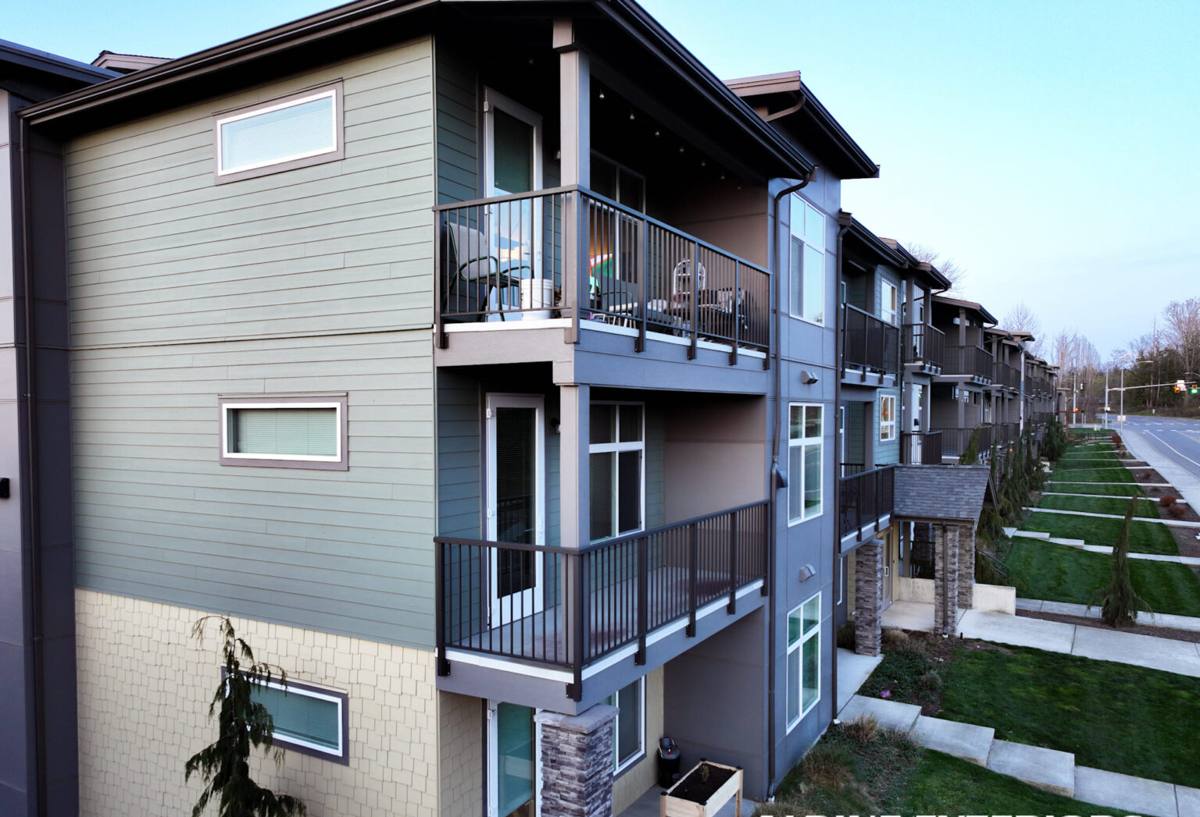
What Birch Bay Homes Actually Need From Their Siding
Homeowners near the water usually come to us after noticing one of a few things: paint that's failing faster than it should, soft spots low on the wall, black or green streaking that keeps coming back after a wash, or trim that's visibly swelling. These are symptoms of a wall system that isn't managing moisture correctly, and siding installation is where that gets fixed or made permanently worse.
A correct installation in this environment has to account for:
- A continuous weather-resistant barrier behind the siding, with every penetration properly sealed
- Flashing details at windows, doors, and roof-to-wall intersections that direct water out, not into the wall cavity
- Correct fastener type and spacing — stainless or coated fasteners matter more here than in drier inland areas
- Proper clearance between the bottom of the siding and grade, decks, roofs, and hardscaping so water and moisture-holding debris can't sit against the material
- Ventilation behind the cladding so any moisture that does get in can dry out instead of being trapped
- A cladding material that doesn't feed moss and mildew growth the way porous or organic materials do
Skip any one of these and the siding may still look fine on installation day. The problems show up two, five, or ten years later — which is exactly why so many "just replaced" siding jobs in coastal Whatcom County end up needing repair well before they should.
Why We Install Only James Hardie Fiber Cement
We install James Hardie fiber cement siding exclusively. We don't install vinyl, LP SmartSide, Cemplank, Allura, primed spruce, or cedar, and in a climate like Birch Bay's, that's not a brand preference — it's a decision built around how each of those materials actually behaves against salt air, sustained moisture, and moss pressure over decades, not just years.
Fiber cement is non-combustible, dimensionally stable, and doesn't feed organic growth the way wood-based products can. It doesn't warp, buckle, or become brittle in cold snaps the way vinyl can. And because it holds paint and factory finish far better than wood-based alternatives, it doesn't demand the repainting cycle that keeps homeowners chasing maintenance every few years.
The HZ5 Climate-Engineered Line
James Hardie engineers its products by climate zone, and homes in our region qualify for the HZ5 product line, which is built specifically for the wetter, more humid conditions found in the Pacific Northwest. That engineering shows up in the moisture and fungus resistance of the substrate itself, not just the surface finish — which matters a great deal in a place with a moss season as long as ours.
ColorPlus Factory Finish
Most of what we install uses Hardie's ColorPlus finish, a factory-applied, baked-on coating that's more consistent and more durable than a field-applied paint job. In a salt-air environment, where paint failure is one of the first signs of trouble, starting with a finish engineered to resist fading and moisture intrusion is a meaningful head start.
| Factor | Vinyl / Wood-Based Siding | James Hardie Fiber Cement |
|---|---|---|
| Moisture behavior near salt air | Vinyl can warp; wood-based products absorb moisture and swell | Dimensionally stable, engineered for humid Pacific Northwest conditions |
| Moss and mildew resistance | Organic-based products are more susceptible to growth | Non-organic substrate resists moss and fungal growth |
| Fire rating | Combustible | Non-combustible |
| Finish longevity | Field-applied paint fades and needs recoating on a shorter cycle | Factory ColorPlus finish holds color and resists moisture intrusion longer |
| Fastener sensitivity | Improper fastening leads to warping or splitting over time | Correctly fastened per spec, holds shape through wind and temperature swings |
How Our Installation Process Works
Every Birch Bay job starts the same way, regardless of how big or small the project is. Getting the sequence right matters more than the individual materials, because siding failures are almost always installation failures, not product failures.
- On-site assessment. We look at wall condition, existing moisture damage, trim and window details, and how the home is exposed to prevailing wind and rain direction — a detail that matters more in Birch Bay than almost anywhere else in the county.
- Tear-off and substrate inspection. Old siding comes off and we check the sheathing underneath for rot, soft spots, or prior water intrusion before anything new goes on. This step is non-negotiable — covering a compromised wall with new siding just hides the problem.
- Weather barrier installation. A continuous, correctly lapped weather-resistant barrier goes on before any cladding, with careful attention to seams and penetrations.
- Flashing at every transition. Windows, doors, roof lines, and any wall penetrations get flashed to direct water away from the structure, not just sealed with caulk as an afterthought.
- Hardie panel or lap siding installation. Installed to James Hardie's published fastening and clearance specifications — this is what actually protects the warranty and the performance of the product.
- Trim, caulking, and finish work. Final detailing at corners, transitions, and penetrations, using products compatible with the ColorPlus finish.
- Final walkthrough. We go over the completed work with the homeowner and flag anything that needs attention before we consider the job finished.
Common Problems We See on Existing Birch Bay Siding
When we're called out to look at siding that's failing early, the causes are fairly consistent across the neighborhood:
- Caulk used as a substitute for proper flashing at windows and trim, which fails within a few seasons under constant wind-driven rain
- Siding installed with no clearance above grade, decks, or roof lines, allowing standing moisture and moss to sit directly against the material
- Fasteners that have corroded from salt air exposure, loosening panels over time
- Wood-based products that absorbed moisture at butt joints and began to swell or delaminate
- No functioning drainage plane behind the cladding, trapping moisture that should have been able to dry out
Almost none of these are "the siding's fault" in the sense of a defective product. They're what happens when correct installation detail gets skipped in a climate that doesn't forgive shortcuts.
Maintaining Hardie Siding in a Salt-Air, High-Moss Environment
James Hardie siding is low-maintenance compared to wood or vinyl, but "low-maintenance" doesn't mean "no maintenance," especially this close to the water. A simple annual routine keeps it performing the way it's designed to:
- Rinse the exterior annually to remove salt residue and organic buildup before moss gets a foothold
- Keep gutters clear so water is directed away from the wall system, not sheeting down the siding face
- Trim back vegetation and landscaping that holds moisture against exterior walls
- Inspect caulking at trim and penetrations yearly and re-caulk any cracked or separated joints
- Watch for moss or algae at the base of walls and shaded north-facing sections, and address it early
Why Local Experience in Birch Bay Matters
A crew that already works Birch Bay knows which walls take the brunt of the wind off the water, which lots hold moisture longer into the season, and how the permitting process works with Whatcom County for exterior work in this area. That local knowledge changes real installation decisions — where extra flashing attention goes, which elevations need the most careful detailing, and how a home's specific site conditions should shape the job.
It also means fewer surprises. A contractor unfamiliar with this stretch of coastline might treat it like any other Bellingham-area job. We treat Birch Bay's wind and salt exposure as the baseline condition to design around, not an exception.
What Affects the Cost of Siding Installation Here
Every home is different, but the same handful of factors drive most of the cost variation we see on Birch Bay projects:
| Cost Factor | Why It Matters |
|---|---|
| Existing wall condition | Rot or water damage found during tear-off requires repair before new siding goes on |
| Home size and wall complexity | More corners, dormers, and transitions mean more flashing and trim detail work |
| Siding profile chosen | Lap siding, panel systems, and trim styles vary in material and labor cost |
| Site access and wind exposure | Waterfront and elevated lots can require additional protective and staging measures |
| Trim and finish detail level | More elaborate trim packages and color choices add time and material |
We don't quote a job until we've actually looked at the walls, because guessing at substrate condition sight unseen leads to bad estimates on both ends.
Ready to Talk About Your Home
If your Birch Bay home is showing early paint failure, soft trim, recurring moss staining, or you're simply planning ahead for a siding replacement, we're glad to take a look and walk you through what correct installation would involve for your specific walls. Reach out for a free, no-pressure estimate using the form below.