 Bellingham
 Why Birchwood Roofs Wear Differently Than You'd Expect
Birchwood sits inside the same weather pattern that shapes every neighborhood in Bellingham: cool, wet winters, a short dry season, and a near-constant flow of moist air off Bellingham Bay and the Salish Sea. That combination is hard on a roof in ways that don't show up right away. A shingle roof in a drier inland climate can go a decade with almost no maintenance. A shingle roof here can't be treated the same way, because the failure points are different — moss instead of UV cracking, corroded fasteners instead of brittle sealant, and slow water intrusion instead of sudden storm damage.
If you own a home in Birchwood, or you're planning a re-roof, understanding what this specific climate does to asphalt shingles will save you money over the life of the roof. This page covers what local conditions demand, what a correctly built shingle roof looks like here, and what our process involves when we work on homes in this part of Bellingham.
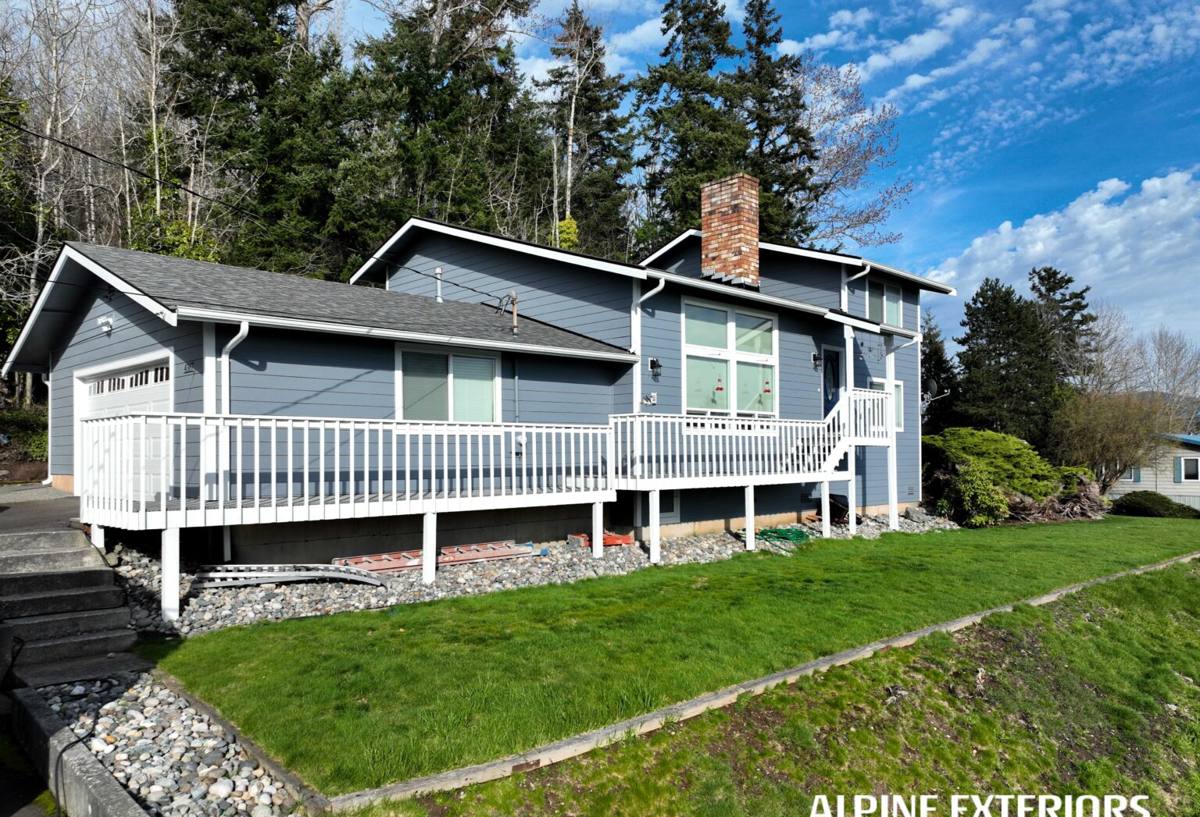
What Bellingham's Weather Does to an Asphalt Shingle Roof
Moss and Algae Growth
Whatcom County's long wet season and the tree cover common throughout Bellingham's older residential neighborhoods create ideal conditions for moss and algae to take hold on a roof. Moss doesn't just sit on top of shingles — it roots into the granule surface, holds moisture against the shingle mat, and lifts shingle edges as it grows. Over a few seasons that constant moisture retention shortens the life of even a good-quality shingle. Black algae streaking is a related but separate issue: it's cosmetic at first, but on an aging roof it's often a sign the granule surface is wearing thin.
Salt Air and Metal Components
Bellingham's proximity to the bay means homes throughout the city, including Birchwood, get some exposure to salt-laden air, especially on west and northwest-facing roof slopes. Salt air accelerates corrosion on exposed metal — flashing, roofing nails, vent caps, and gutter hardware. A roof can have shingles that still look fine while the flashing and fasteners underneath are quietly failing. This is one of the most common reasons we find leaks that don't correspond to any visible shingle damage.
Wind-Driven Rain and Flashing
Rain here rarely falls straight down. Storms moving through Whatcom County typically bring sustained wind alongside the rain, which pushes water sideways and upward under shingle edges, around chimneys, and into valleys. A roof that would perform fine in a calmer climate with the same shingle can still leak in Bellingham if the flashing detail at penetrations and valleys wasn't built for wind-driven moisture.
Signs Your Birchwood Roof Needs Attention
Most roof problems in this climate develop slowly. Catching them early is almost always cheaper than waiting for an interior leak. Look for these signs, especially after the wetter months:
- Green or dark moss patches, particularly on north-facing slopes or under tree cover
- Granules collecting in gutters or at downspout outlets
- Shingle edges that look lifted, curled, or cupped
- Dark streaking that doesn't wash off with rain
- Rusty streaks below metal flashing, vent boots, or nail heads
- Soft or spongy spots when walked on (a sign of deck moisture underneath)
- Daylight visible through the roof deck from inside the attic
- A roof age of 18-20+ years without a full inspection
None of these guarantee a full replacement is needed. Some are simple repairs. But they're all reasons to get an honest inspection before a small problem becomes a ceiling stain.
What a Correctly Installed Asphalt Shingle Roof Includes
Underlayment and Ice/Water Barrier
The underlayment is doing more work than most homeowners realize — it's the backup layer that protects the deck if wind-driven rain gets under a shingle. In this climate we treat synthetic underlayment as the baseline, not an upgrade, and we install a self-adhered ice-and-water membrane at eaves, valleys, and around penetrations, where the majority of leaks originate.
Ventilation
A roof that can't breathe traps moisture in the attic, which shows up as premature deck rot, mildew, and shortened shingle life from the underside up. Balanced intake and exhaust ventilation matters more here than in drier climates, because there's more moisture in the air to manage in the first place.
Flashing and Valleys
Step flashing at walls and chimneys, properly lapped valley metal or woven valleys, and correctly sealed vent boots are where most leaks actually start — not in the open field of shingles. Given the salt air exposure in Bellingham, we favor corrosion-resistant flashing materials over standard galvanized where budget allows.
Shingle Selection for This Climate
Not every asphalt shingle product is a good fit here. We look for algae-resistant granules (rated to resist the streaking common in the Pacific Northwest), a wind rating suited to exposed or elevated lots, and a shingle profile that sheds moss buildup rather than trapping it. We'll walk through options with you rather than defaulting to whatever is cheapest, because the wrong shingle in this climate costs more in the long run through early moss buildup and warranty gaps.
Choosing the Right Shingle for Birchwood Homes
There's no single "best" shingle for every home, but in a moss-and-moisture climate like this, some categories perform noticeably better than others. Here's how the common options compare:
| Shingle Type | Moss/Algae Resistance | Wind Rating | Typical Lifespan Here |
|---|---|---|---|
| Standard 3-tab | Low unless treated | Lower | Shorter — moss and wind exposure both cut into service life |
| Architectural (laminate) | Moderate to good | Higher | Longer, more forgiving of wind-driven rain |
| Algae-resistant architectural | Best available | Higher | Best long-term value in this climate |
| Premium/designer shingle | Best available | Highest | Longest, at a higher upfront cost |
For most Birchwood homes, an algae-resistant architectural shingle is the practical middle ground — meaningfully better performance against moss and streaking than a basic 3-tab, without paying for a premium designer line most homes don't need.
Our Process, Start to Finish
- Inspection and honest assessment. We check the shingles, flashing, decking, ventilation, and attic before recommending repair or replacement — not before we've actually looked.
- Written scope and shingle selection. You'll know what's being installed, what underlayment and flashing details are included, and why, before any work starts.
- Tear-off and deck inspection. Old material comes off and the deck gets checked for soft spots or rot, which only becomes visible once the old roofing is removed.
- Underlayment, ice-and-water membrane, and flashing installation. This is where most future leaks are prevented or created — it's not a step we rush.
- Shingle installation. Installed to manufacturer nailing and exposure specs, which matters for both wind performance and warranty validity.
- Cleanup and magnetic sweep. Job site and yard cleared of debris and stray nails.
- Final walkthrough. We go over the finished roof with you before calling the job done.
What It Costs and What Drives the Price
Every roof is different, so we don't quote a number until we've actually inspected yours — but these are the main factors that move the price up or down:
| Factor | Effect on Cost |
|---|---|
| Roof size and number of stories | More material and more labor/access complexity |
| Roof pitch and layout complexity | Steeper or multi-valley roofs take longer and require more safety setup |
| Number of layers being removed | Tear-off of multiple old layers adds labor and disposal cost |
| Deck condition | Rotted or soft decking found during tear-off requires repair before shingles go on |
| Shingle tier chosen | 3-tab vs. architectural vs. premium changes material cost directly |
| Ventilation and flashing upgrades | Adding proper intake/exhaust venting or upgraded flashing adds modest cost but reduces future risk |
As a general rule, spending a bit more upfront on algae-resistant shingles, full ice-and-water coverage, and corrosion-resistant flashing costs less over the life of the roof than saving money on those items and dealing with moss removal or early leaks later.
Keeping a Birchwood Roof Healthy Through Moss Season
A well-built roof still needs occasional attention in this climate. A short annual routine goes a long way:
- Keep gutters and downspouts clear so water doesn't back up under shingle edges
- Trim overhanging branches to reduce shade and debris buildup on the roof surface
- Have moss physically removed rather than power-washed, which can strip granules
- Watch for granule buildup in gutters as an early warning sign
- Get a professional inspection every couple of years, or after any major windstorm
Why Hire a Crew That Already Works Birchwood
A roofing crew that works throughout Bellingham and Whatcom County day in and day out knows how the local climate actually treats a roof over time — not from a manual, but from opening up dozens of attics and tear-offs across neighborhoods like Birchwood. That experience shapes real decisions: which flashing details hold up against wind-driven rain here, which shingle lines resist moss best in practice, and where leaks in this specific climate actually tend to start. It also means we're familiar with the permitting and inspection expectations that apply to roofing work in the city, so the project moves without avoidable delays.
If your Birchwood home needs a roof inspection, a repair, or a full asphalt shingle replacement, we're happy to take a look and give you a straightforward, no-pressure assessment. Use the form below to request a free estimate, and we'll walk you through exactly what your roof needs and why.