 Bellingham
 Windows Built for Birchwood's Weather, Not a National Average
Birchwood sits close enough to the water and the wind patterns that move through Whatcom County that its homes take a different kind of beating than houses further inland. Salt-laden air corrodes hardware and finishes faster than dry-climate products expect. Driving rain, pushed sideways by wind off Bellingham Bay and the Sound, tests flashing and seals in ways a catalog spec sheet never accounts for. And the long stretch of grey, wet months every year gives moss, algae, and general dampness months to work into any gap a window wasn't sealed to handle. When we replace windows in this neighborhood, we're not installing a generic "energy-efficient window" — we're installing one that has to survive Birchwood's specific mix of moisture, salt exposure, and temperature swings between damp winters and warm, dry summers.
Energy efficiency and weather resistance aren't separate goals here — they're the same job. A window that leaks air is very often a window that will eventually leak water too, and in this climate that combination shows up as fogged glass, soft trim, and higher heating bills within a few seasons, not decades.
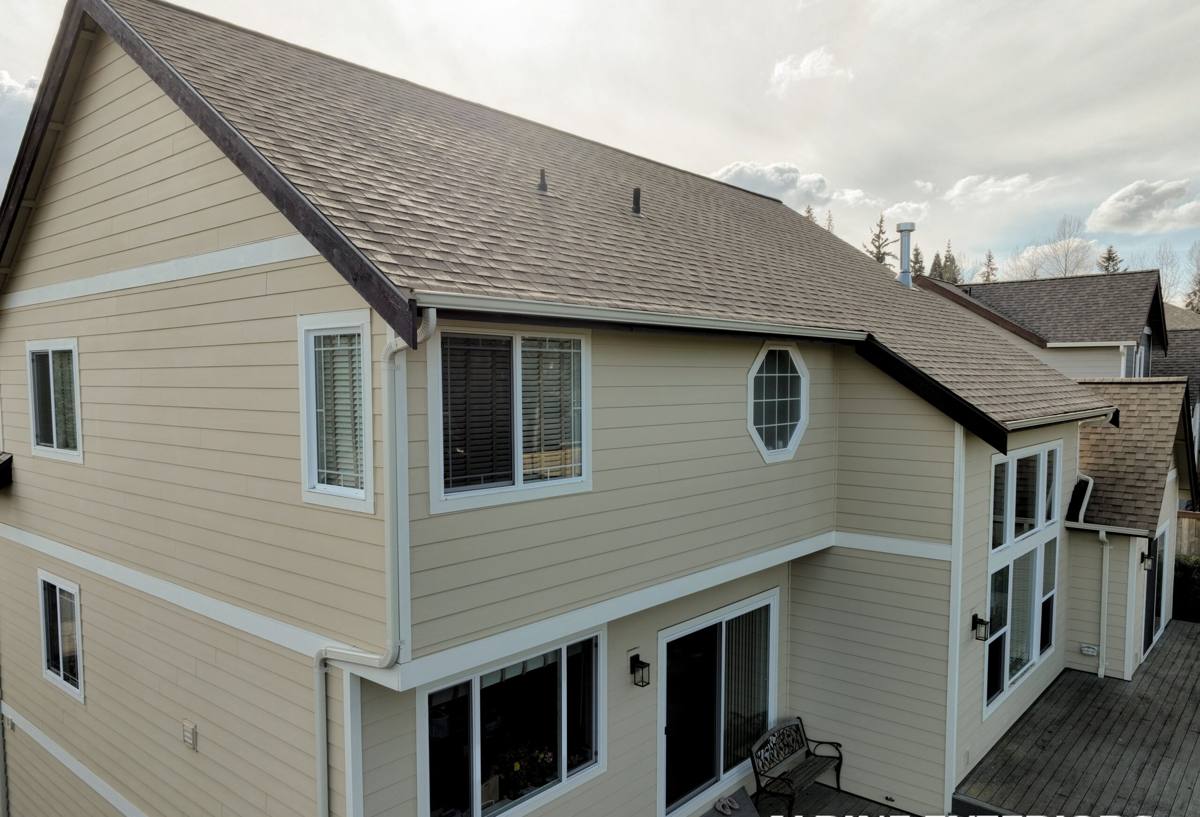
What "Energy-Efficient" Actually Means for a Birchwood Home
The term gets used loosely in this industry, so it's worth being specific about what actually matters for a house in this part of Whatcom County.
Glass Package
Double-pane, low-E coated glass with an argon gas fill is the practical baseline for our climate — it cuts heat loss in winter and reduces solar gain in summer without the added cost of triple-pane, which rarely pays for itself in this milder coastal climate zone compared to colder inland regions.
Frame Material and Corrosion Resistance
Salt air accelerates corrosion on hardware, hinges, and fasteners. Vinyl and fiberglass frames handle that exposure far better than uncoated aluminum, and any exposed hardware should be a corrosion-resistant grade — not a builder-standard finish meant for inland use.
Air and Water Sealing
A window's efficiency rating on paper means little if the installation lets wind-driven rain behind the trim. Proper flashing, sealant, and weatherstripping do as much for comfort and utility bills as the glass itself.
Condensation Control
In a damp climate, interior condensation on old single-pane or failed double-pane windows is common. A properly sealed, insulated unit largely eliminates it, which also reduces the moisture that feeds mold and mildew around the frame.
Signs a Birchwood Home Needs New Windows
- Visible fog or moisture trapped between panes — the seal has failed and the insulating gas is gone
- Drafts you can feel near the frame on a windy day, especially during winter storms off the water
- Soft, discolored, or swelling wood trim around the window, often a sign moisture has been getting behind it
- Moss or algae staining building up on the sill or lower frame faster than on the rest of the siding
- Windows that are difficult to open, close, or lock — frames can warp slightly as wood or lower-grade vinyl absorbs moisture over time
- Noticeably higher heating costs compared to similar-sized homes nearby
- Corroded or stiff hardware, hinges, or locks that show pitting or discoloration
What a Correct Installation Involves
Replacing a window is straightforward in theory and easy to get wrong in practice, particularly in a wet climate where a poor seal doesn't show its damage until months later.
1. Removal Without Damage
Old windows and trim come out carefully so we can inspect the surrounding sheathing and framing for hidden rot or moisture damage before anything new goes in. This step gets skipped by crews in a hurry, and it's usually where problems start.
2. Address What's Underneath
If we find soft wood, compromised flashing, or signs of past water intrusion, that gets repaired first. Installing a new window over a damaged opening just hides the problem behind a nicer frame.
3. Flashing and Water Management
Proper flashing tape and drainage planes direct any water that does get past the exterior cladding back out, rather than letting it pool at the sill. This matters more in Bellingham than in drier parts of the state, given how much wind-driven rain the area sees over a typical winter.
4. Air Sealing and Insulation
Gaps around the new frame are sealed and insulated properly — not just caulked on the surface — so the window performs at its rated efficiency instead of a rating that only applies in a lab.
5. Final Weatherproofing
Exterior trim, caulking, and finish work are completed to shed water and resist the salt air and moss growth common in this neighborhood.
Comparing Window Options for This Climate
| Frame Type | Salt Air / Corrosion Resistance | Maintenance | Typical Fit for Birchwood |
|---|---|---|---|
| Vinyl | Strong — won't corrode or rust | Low; occasional cleaning | Good value, solid efficiency, widely used locally |
| Fiberglass | Excellent — very stable in coastal conditions | Low | Higher upfront cost, excellent long-term durability |
| Wood (clad exterior) | Moderate — depends heavily on cladding and upkeep | Higher; needs regular inspection and finish maintenance | Best for homeowners who want a wood interior look and are committed to upkeep |
| Uncoated Aluminum | Poor near salt air — prone to pitting and corrosion | Moderate to high | Generally not what we recommend this close to the water |
We don't push any single brand or material as "the only right answer" — we walk each homeowner through the trade-offs above based on their budget, the exposure of their specific elevation, and how much upkeep they want to take on.
Why a Crew That Already Works Birchwood Matters
A window installer who mostly works inland or in drier regions can do competent work and still miss details that matter here — under-flashing a sill because "it's never leaked before," or spec'ing hardware that looks fine on delivery and starts corroding within a year or two of salt exposure. Crews who work Birchwood and the surrounding Bellingham neighborhoods regularly see how this specific microclimate — the wind direction off the water, the moss buildup pattern, how long surfaces stay damp after a storm — actually plays out on real houses, not just on a spec sheet. That local pattern recognition is what prevents a callback two winters later.
Our Process, Start to Finish
- Free on-site assessment — we look at your current windows, note problem areas, and check for hidden moisture or framing issues where visible
- Honest recommendation — we explain which frame and glass options fit your home, your budget, and this climate, without upselling features you don't need
- Clear, written estimate — no vague allowances or surprise change orders
- Scheduled installation — timed around weather where possible to protect your home's interior during the swap
- Careful removal and inspection — checking the opening before the new unit goes in
- Proper flashing, sealing, and insulation — done to the standard this climate actually requires, not the minimum
- Final walkthrough — we confirm operation, sealing, and finish work with you before we consider the job done
Cost Factors Worth Understanding
Every home is different, so we won't quote a number without seeing the job, but a few factors consistently drive cost up or down:
- Number of windows and their sizes — larger or custom-sized openings cost more than standard sizes
- Frame material chosen — vinyl, fiberglass, and clad-wood carry different price points
- Condition of the existing opening — hidden rot or flashing repairs add labor beyond a straightforward swap
- Access and elevation — second-story or hard-to-reach windows take more time and equipment
- Glass upgrades — specialty coatings or tempered glass where code requires it near doors or low sills
We'd rather walk you through these factors honestly during the estimate than quote a number that doesn't hold up once the work starts.
Maintaining Your Investment
Even a well-installed, well-built window benefits from basic upkeep in this climate. Rinsing salt residue off exterior frames a few times a year, keeping gutters clear so overflow doesn't run down onto window heads, and checking caulking lines annually for cracking all go a long way toward getting the full lifespan out of a new window system. Moss and algae on nearby siding or trim should be addressed promptly, since sustained dampness against a frame — even a resistant one — is never good for it long term.
If you're weighing whether it's time to replace your windows, or just want a straight answer about what your home actually needs, we're happy to take a look. Reach out for a free, no-pressure estimate using the form below.