 Bellingham
 Blaine's Siding Problem Isn't Like Bellingham's
Blaine sits on Semiahmoo Bay, right up against the Strait of Georgia and a few miles from the Peace Arch border crossing. That waterfront position gives it a different exposure profile than homes further inland around Bellingham proper. Salt-laden air rolls off the water and settles on siding, trim, and fasteners year-round. Combine that with Whatcom County's long wet season — low sun angles, shaded north walls, and months where siding barely gets a chance to dry out between rain events — and you get a climate that's genuinely harder on exterior materials than most manufacturers' marketing accounts for.
We're a Bellingham-based crew, and Blaine is part of our regular service area, not a once-in-a-while drive-out job. That matters more than it sounds like it should, because siding failure in a coastal, moss-prone town tends to show up in specific, predictable places — and knowing where to look before we ever start tearing off old siding saves homeowners money and rework.
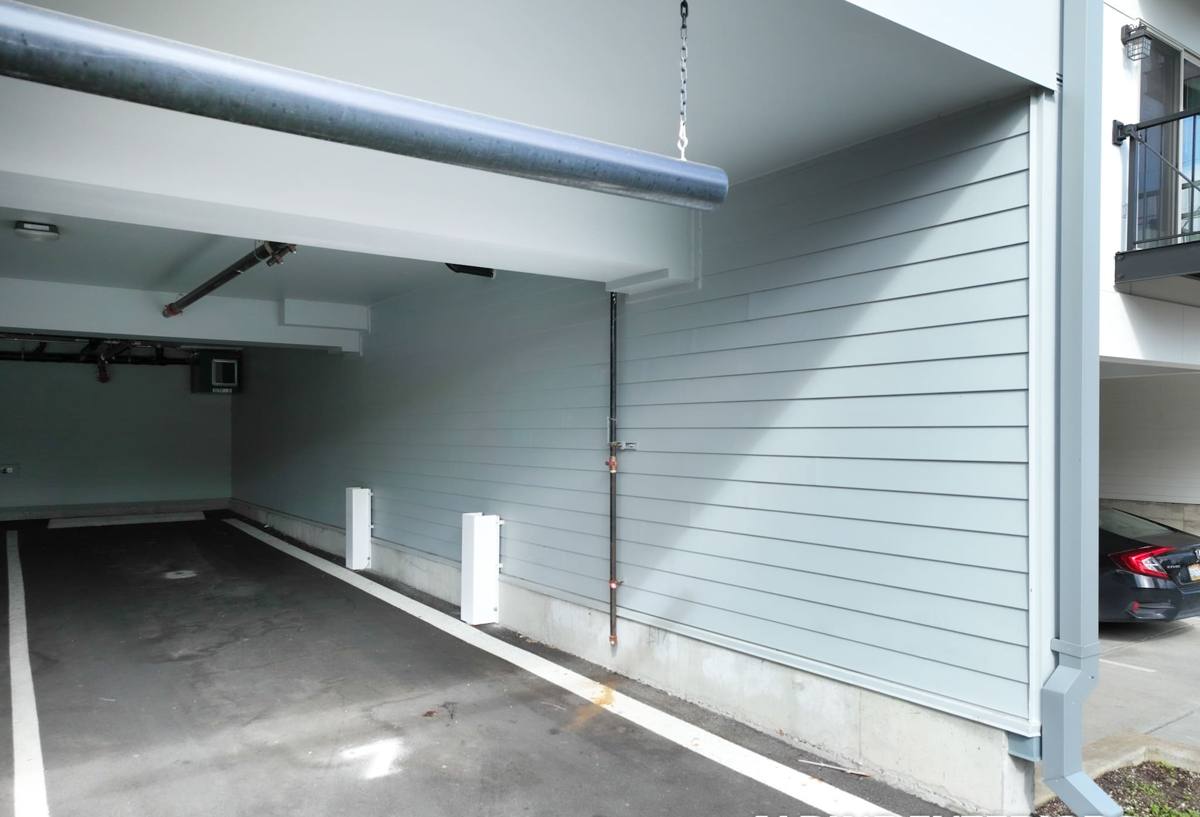
What Salt Air and Moss Actually Do to Siding
Two separate mechanisms are working against your siding in Blaine, and they attack different materials differently.
Salt Air
Airborne salt is corrosive to exposed metal — nail heads, flashing edges, hose bibs, light fixture backing — and it's abrasive to painted and coated surfaces over time. On wood-based products, salt-laden moisture accelerates the wet/dry cycling that causes cupping, checking, and paint failure. On vinyl, it doesn't cause structural damage but it does dull and chalk factory color faster near the water.
Moss and Algae
Shaded walls, gutters that run slow, and siding that stays damp for days at a time all invite moss and green algae growth. This isn't just cosmetic. Moss holds moisture directly against the siding surface, which is exactly the condition that causes rot in wood-based products and accelerates paint and caulk failure on almost anything. A wall that's constantly damp behind a moss mat ages faster than a wall that dries out between storms, regardless of what material is on it.
| Material | Salt Air Response | Moss/Damp Response |
|---|---|---|
| Vinyl siding | Chalks and fades faster near water; doesn't rot but can warp under heat cycling | Moss grows on the surface; panels can trap moisture behind them at poor seams |
| Primed wood / cedar | Salt accelerates paint breakdown at exposed edges and fastener heads | Highest rot risk of common materials when moss holds moisture against the surface |
| LP SmartSide (engineered wood) | Edge sealing becomes critical near salt spray; factory finish helps but field cuts are vulnerable | Engineered wood core is still moisture-sensitive at unsealed cuts and joints |
| James Hardie fiber cement | Non-combustible cement composition doesn't corrode; ColorPlus finish resists salt-driven fading | Won't rot from sustained dampness; moss can still grow on the surface and should be cleaned |
Why We Standardized on James Hardie for Homes Like These
We install James Hardie fiber cement exclusively — not LP SmartSide, not vinyl, not cedar, not other fiber cement brands like Allura or Cemplank. That's a deliberate standard, not a sales pitch, and in a town like Blaine it's especially easy to defend.
Fiber cement is cement, sand, and cellulose fiber — there's no wood core to rot, and no petroleum-based panel to warp or chalk under UV and salt exposure. James Hardie also builds region-specific product lines through its HardieZone system, and homes in this part of Washington fall into the HZ5 engineering zone — meaning the boards are formulated for the wet, moderate-temperature Pacific Northwest climate rather than a generic national spec. That's a meaningful difference from siding lines that don't vary by region at all.
The factory-applied ColorPlus finish is the other piece that matters here. It's baked on in a controlled environment with a stronger warranty against fading and cracking than field-applied paint can offer, which counts for more in a spot getting steady salt exposure than it does on a sheltered inland lot. We still tell homeowners plainly: Hardie siding is not maintenance-free. It needs periodic washing, especially in a moss-prone environment, and caulking has a service life. But it doesn't rot, it doesn't feed pests, and it's non-combustible — trade-offs we're comfortable standing behind on a house that's going to spend the next 30 years a short walk from saltwater.
What a Correct Fiber Cement Install Looks Like Here
Fiber cement performs the way it's rated to perform only when it's installed to spec. In a marine, high-moisture area, a few details matter more than they would on a dry inland site:
- Proper clearance at grade and hardscape — Hardie's own instructions call for a minimum gap above concrete, decks, and soil. In Blaine, where ground moisture and splashback are more constant, we don't shortcut this.
- Correct flashing at every horizontal transition — window heads, roof-to-wall intersections, and butt joints all need proper flashing, not just caulk. Caulk is a seal; flashing is the actual water management.
- Fastener choice — corrosion-resistant fasteners driven correctly (not overdriven, not underdriven) matter more in salt air, where a compromised fastener head is a starting point for streaking and, eventually, a loose board.
- Rainscreen or drainage plane where called for — giving the wall assembly a way to dry is one of the biggest factors in long-term performance in a climate that doesn't offer much drying time between storms.
- Sealed and primed field cuts — any cut edge that isn't factory-finished needs to be sealed before it goes on the wall. This is a step that's easy to skip and hard to catch later.
Our Process on a Blaine Job
1. Inspection and Scope
We start by walking the exterior and identifying moisture-prone zones specific to the lot — shaded north and west walls, areas near mature trees or fences that block airflow, and any spots where the existing siding shows staining, moss buildup, or soft spots that point to trapped moisture underneath.
2. Tear-Off and Sheathing Check
Once old siding is off, we inspect the sheathing and house wrap underneath. This is often where the real story is — siding can look fine on the surface while the wall behind it has been taking on moisture for years. We flag and address any water damage before anything new goes up; new siding over a compromised wall just hides the same problem.
3. Weather-Resistive Barrier and Flashing
We install or repair the drainage plane and flash every penetration and transition before the first board goes up. In a coastal, high-rain area, this layer is doing as much work as the siding itself.
4. Installation to Manufacturer Spec
Boards, panels, or trim go up following James Hardie's fastening schedule, clearance requirements, and joint treatment — not a generalized "close enough" approach. This is also where HZ5-rated product matters, since it's formulated for exactly this moisture load.
5. Finish and Walkthrough
We check caulk lines, touch up any field-cut edges, and walk the finished job with the homeowner, including what to expect from the ColorPlus finish and warranty coverage going forward.
Living With Fiber Cement Siding in a Salt-Air, Moss-Prone Town
Correct installation is most of the battle, but ongoing care still affects how the siding looks and performs over its lifespan. None of this is difficult, but it's worth doing on a schedule rather than only when something looks wrong.
- Rinse siding periodically with a garden hose and soft brush, focusing on shaded walls where moss and algae take hold first — avoid high-pressure washing, which can drive water behind joints and damage the finish.
- Keep gutters clear so runoff doesn't sheet down the siding face; overflowing gutters are one of the most common causes of localized moss and staining.
- Trim back vegetation and tree limbs that shade walls and block airflow, since those are the sections that stay damp longest.
- Inspect caulk joints around windows, doors, and trim yearly — caulk has a service life shorter than the siding itself, and salt air can accelerate its breakdown.
- Watch fastener heads and cut trim edges for early streaking or discoloration, which usually means a sealing step needs attention before it becomes a bigger repair.
Cost Factors for a Blaine Fiber Cement Project
Every house is different, but the same handful of factors drive most of the cost variation we see on jobs in this area:
| Factor | Why It Matters in Blaine |
|---|---|
| Existing wall condition | Rot or moisture damage found at tear-off adds repair scope before new siding can go on |
| Wall exposure and complexity | Shaded, moisture-prone walls often need drainage plane upgrades; cut-up elevations take more trim work |
| Product line and profile | HZ5-rated boards, panel vs. lap siding, and trim choices all affect material cost |
| Access and site conditions | Waterfront lots, tight setbacks, or difficult staging can affect labor time |
| Color and finish | Standard ColorPlus colors vs. custom finish options carry different material costs |
Why a Local Crew Matters Here
A crew that only occasionally works this far north treats Blaine like any other stop. A crew that works it regularly already knows which walls tend to hold moss, which lots catch the worst of the wind off the water, and where sheathing damage tends to show up first when old siding comes off. That familiarity doesn't replace following the manufacturer's install spec — it just means fewer surprises during the job and a better read on what a given house actually needs before the first board is ever cut.
If you're weighing a siding project on a home in Blaine, we're happy to take a look and talk through what your walls are actually dealing with — no pressure, no obligation. Fill out the form below to schedule a free estimate.