 Bellingham
 Why Deck Replacement in Columbia Is a Different Job Than It Looks
Columbia is one of Bellingham's older, well-established residential pockets, which means a lot of the decks here are original to homes built decades ago, or were added on top of framing that was never designed for today's building loads. When we get a call about a "wobbly deck" or "one bad board," it's rarely just cosmetic. In this part of Whatcom County, decks take a beating from three directions at once: near-constant winter rain, salt-tinged air moving in off the water, and long stretches of shade and moisture that let moss and algae get a foothold and never really let go. A deck that would last 25 years in a dry inland climate can be structurally compromised here in half that time if it wasn't built — or isn't being maintained — with that reality in mind.
Replacing a deck correctly in Columbia isn't about picking prettier boards. It's about rebuilding the parts nobody sees — the ledger connection, the framing, the fasteners — so the finished surface actually has something sound to sit on for the next couple of decades.
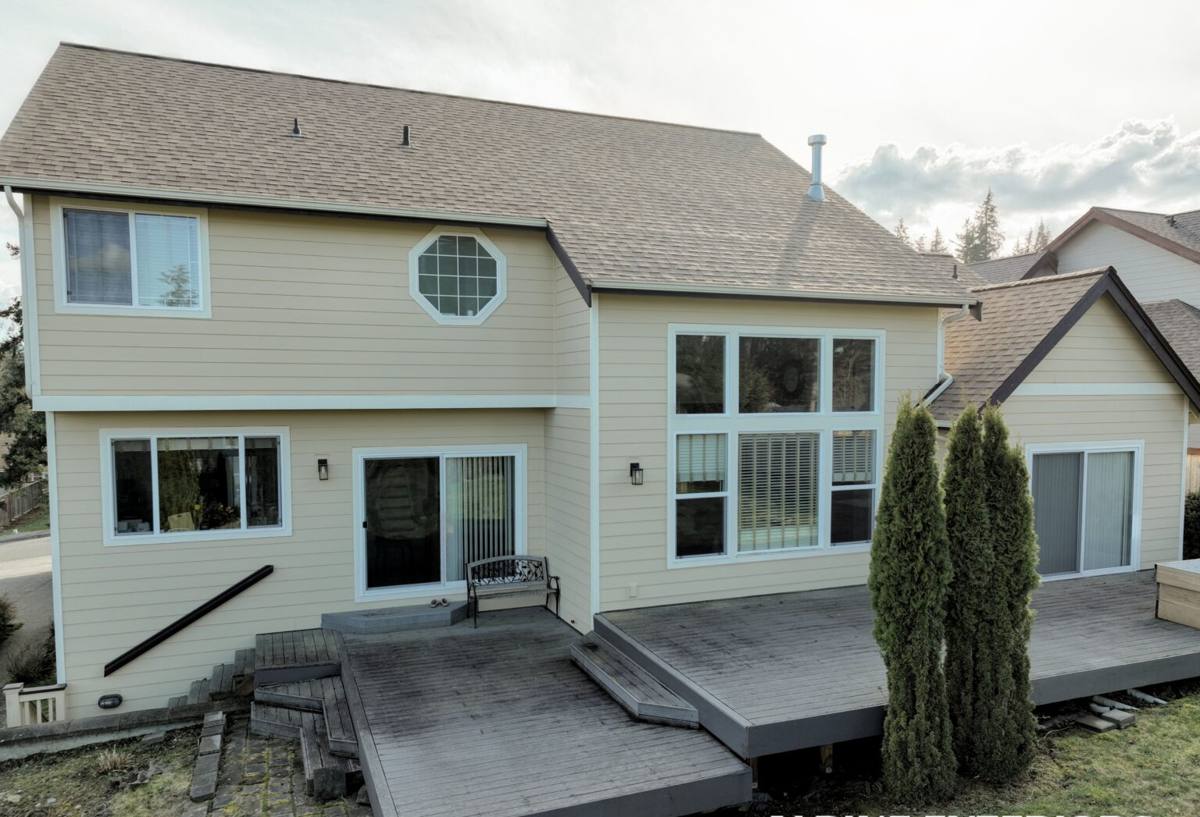
Signs Your Columbia Deck Is Due for Replacement, Not Another Repair
Homeowners often ask whether they really need a full replacement or if a few boards will hold them over another season. These are the signs that tell us the deck has moved past patch-and-wait territory:
- Boards that feel spongy, soft, or give slightly underfoot, especially near the house or in shaded corners
- Visible rot, splitting, or dark staining where the deck attaches to the house (the ledger board)
- Rusted, bleeding, or corroded fasteners and hardware — a common sign in areas with salt-influenced air
- Persistent moss or green-black algae film that returns within weeks of cleaning, no matter the season
- Railings or stair stringers that flex, wobble, or feel less solid than they used to
- Gaps that have widened significantly, or boards that have cupped and no longer sit flat
- A deck more than 20–25 years old that has never had the ledger flashing or structural connections inspected
Any one of these on its own might be repairable. Two or three together, especially structural ones near the ledger or footings, usually mean the deck's underlying frame has absorbed more moisture damage than the surface lets on.
What a Correct Deck Replacement Actually Involves
A deck replacement done right isn't just new boards on old bones. In a climate like ours, the structural details are what determine whether the new deck outlasts the old one or fails the same way in another 15 years.
Ledger Board and Flashing
The ledger board — where the deck bolts into the house — is the single most common failure point we see on older Bellingham-area decks. Without proper metal flashing directing water away from the house sheathing, rain works its way behind the ledger year after year and rots both the ledger and the wall framing behind it. Any deck replacement we do rebuilds this connection with correct flashing and structural fasteners, not just lag screws driven into whatever was there before.
Footings and Framing
We check footing depth and condition, joist spacing, and whether the original frame was sized for the loads current code requires. A lot of older decks in this neighborhood were framed for lighter use than they see today — bigger furniture, hot tubs, larger gatherings. Replacement is the point where undersized framing gets corrected instead of hidden under new decking.
Fasteners and Hardware
Standard fasteners corrode faster near the water, and once a fastener starts rusting it weakens the connection long before it's visually obvious. We use corrosion-resistant, code-rated hardware throughout — joist hangers, structural screws, and post bases rated for exterior and coastal-influenced conditions — rather than mixing in whatever was left over from a hardware store multi-pack.
Choosing Decking Material for Bellingham's Wet, Salt-Air Climate
There's no single "best" decking material — there's a best material for how you'll use the deck, how much upkeep you're willing to do, and your budget. Here's how the common options actually perform in Columbia's conditions:
| Material | Moisture & Moss Resistance | Maintenance | Typical Cost Tier |
|---|---|---|---|
| Pressure-treated lumber | Good if sealed regularly; end grain and fastener holes are the weak points | Annual cleaning and re-sealing recommended | $ |
| Cedar | Naturally rot-resistant, but surface graying and moss growth still occur in constant shade/moisture | Periodic cleaning and oiling to maintain appearance | $$ |
| Composite decking | Excellent — doesn't absorb moisture or rot, though algae can still grow on the surface film | Occasional washing; no sealing or staining | $$$ |
| PVC/capped polymer | Best overall in wet, shaded settings — fully moisture-sealed surface | Lowest — mostly rinsing | $$$ |
We don't push one product line over another as a matter of preference — the honest trade-off is upfront cost versus long-term maintenance. Wood costs less to install but asks more of you every year. Composite and PVC cost more upfront but hold up better in the shaded, moss-prone yards common in this neighborhood. We'll walk through what your specific site — sun exposure, tree cover, how the deck is used — actually calls for before you commit.
Railings, Stairs, and Code Requirements in Whatcom County
Deck replacement is also the right time to confirm the whole structure meets current code, not just the decking surface. Guardrail height, baluster spacing, stair rise and run, and handrail requirements have all been tightened over the years, and a lot of older Columbia decks predate the current standards. Depending on the scope of work, the City of Bellingham or Whatcom County may require a permit and inspection — we handle that process as part of the job rather than leaving it for the homeowner to sort out. Skipping permits on a deck rebuild can create real problems later, from insurance issues to complications at resale.
How We Handle a Deck Replacement in Columbia, Start to Finish
- On-site assessment — we inspect the ledger connection, framing, footings, and hardware to see how much of the failure is hidden below the surface, not just what's visible on top.
- Scope and material walkthrough — we go over decking material options, railing style, and any structural corrections needed, with honest pros and cons for your specific yard and budget.
- Permitting — where required, we handle the permit application and coordinate inspections so the finished deck is fully code-compliant.
- Demolition — the old deck comes out, including any compromised ledger, framing, or footings, not just the surface boards.
- Structural rebuild — new or repaired footings, properly flashed ledger, correctly sized framing, and corrosion-resistant hardware throughout.
- Decking, railing, and stairs installed — using the material you selected, with attention to drainage and airflow underneath to slow future moisture buildup.
- Final walkthrough and cleanup — we go over the finished deck with you, confirm everything is solid, and make sure the site is left clean.
Protecting a New Deck Through Bellingham's Long Moss Season
Even a well-built deck needs a little seasonal attention in this climate — the goal is to stay ahead of moisture rather than deal with it once it's already caused damage.
- Sweep leaves and debris off the deck regularly in fall, especially in shaded corners where moisture lingers
- Rinse or lightly scrub moss and algae film before it has a chance to establish, rather than after it's thick
- Keep gutters and downspouts near the deck clear so runoff isn't draining directly onto the structure
- Check that furniture, planters, and rugs aren't trapping moisture against the deck surface long-term
- If you have wood decking, plan on cleaning and re-sealing on a regular cycle rather than waiting until it looks worn
- Do a quick annual check of railings and stair connections for any looseness — catching it early is a five-minute fix, not a rebuild
Why Hire a Crew That Already Works in Columbia
A deck replacement in a dry, sunny climate and one in Bellingham are not the same project, even if they look identical on paper. Crews without regular experience in Whatcom County's wet, salt-influenced conditions can miss the details that actually matter here — proper ledger flashing, corrosion-resistant hardware, material choices suited to shaded, moss-prone yards. We work in this neighborhood and this climate regularly, which means we're not guessing at how a given material or connection will hold up here — we've seen what lasts and what fails, and we build accordingly. We're also familiar with local permitting expectations, so that part of the process doesn't become a bottleneck.
If your deck is showing its age, or you just want an honest opinion on whether repair or replacement makes more sense, we're happy to take a look. Reach out for a free, no-pressure estimate — someone will walk the deck with you, answer your questions directly, and give you a straight assessment with no obligation to move forward.