 Bellingham
 Why Roofs in Columbia Wear Differently Than Roofs Inland
Bellingham sits directly on Bellingham Bay, and neighborhoods close to the water — Columbia among them — deal with a mix of conditions that inland Whatcom County homes don't see nearly as much: salt-carrying air off the bay, rain that comes in sideways during a storm rather than straight down, and heavy shade from mature trees that keeps roof surfaces damp long after the weather clears. None of that is dramatic on its own, but stacked together over years it changes how a roof ages.
Salt air is mildly corrosive to exposed metal — flashing, fastener heads, gutter hardware — so those components on a roof near the water tend to show wear sooner than the same materials would forty miles inland. Add Whatcom County's long wet season, roughly October through April with plenty of gray days in between, and you get stretches where a roof rarely gets a full day to dry out completely. That combination is behind the two repair calls we get most often in this neighborhood: moss buildup and water finding its way in at flashing, valleys, and other transition points — not usually failure in the open field of the roof itself.
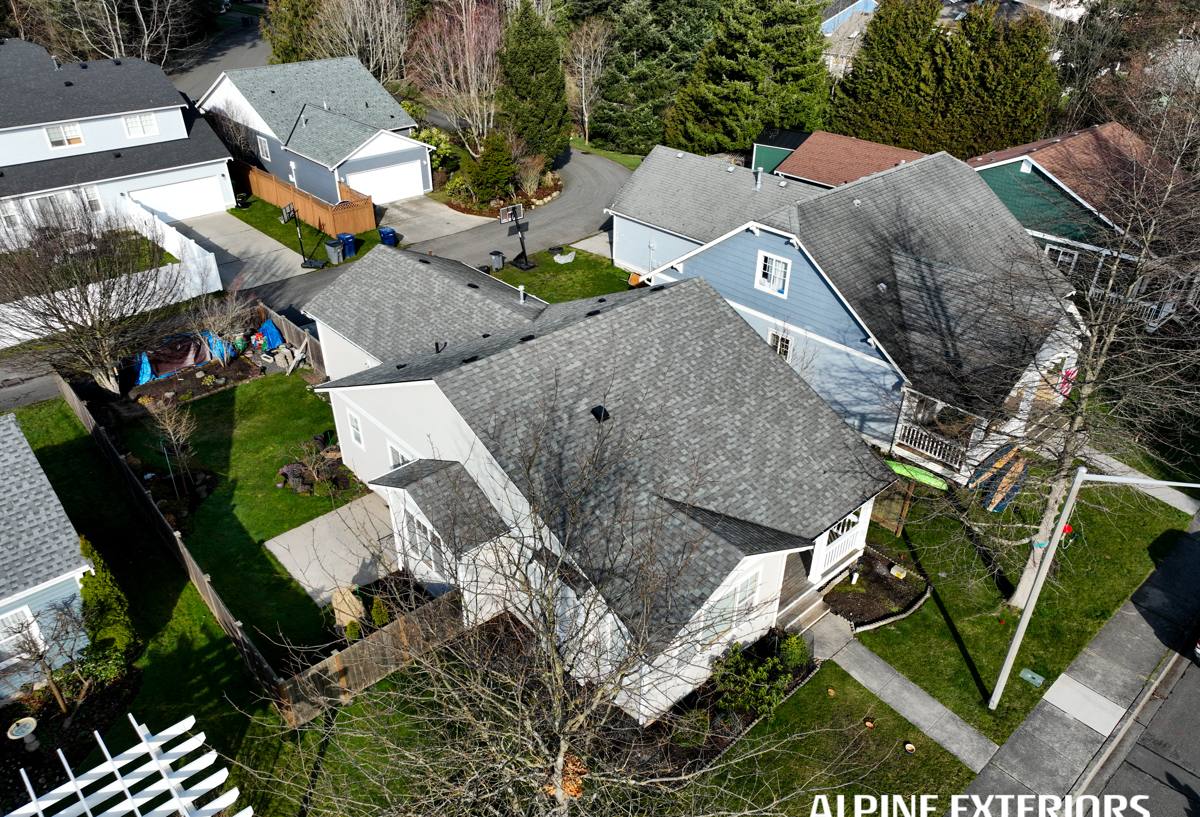
Signs a Columbia Roof Needs a Repair Call, Not Just a Look
Most roof problems give some warning before they turn into an interior leak. Worth checking for, especially heading into or coming out of the wet season:
- Dark streaking or green-black growth concentrated on shaded, north-facing, or tree-covered sections
- Granules collecting in gutters or piling up below downspout outlets
- Water stains on interior ceilings near chimneys, skylights, or anywhere two rooflines meet
- Daylight visible in the attic at flashing points, nail holes, or roof penetrations
- Shingles that are cupping, curling at the edges, or missing tabs after a windstorm
- Gutters overflowing or pulling away from the fascia during ordinary rain, not just downpours
- Moss thick enough that it's visibly lifting shingle edges rather than just sitting on the surface
- A musty smell in the attic that wasn't there before
Any one of these on its own might not mean much. A couple of them together, especially after a wet stretch, is worth a proper look before it turns into a ceiling repair on top of a roof repair.
What the Local Climate Does to a Roof, Piece by Piece
Moss and Sustained Moisture
Moss doesn't just sit on top of shingles — its roots and the moisture it holds against the roofing material work into the surface over time, lifting granules and shingle tabs and giving water a path underneath. In shaded parts of Columbia with mature tree cover, moss can re-establish within a season or two of being cleaned off if nothing else changes.
Flashing, Valleys, and Penetrations
When rain comes in at an angle off the bay instead of falling straight down, it gets pushed sideways under flashing and around penetrations — chimneys, vent pipes, skylights — in a way that a roof built for calmer weather doesn't have to withstand. This is why the large majority of leaks we find start at a transition point, not in the middle of an open shingle field.
Gutters and Roof Edges
Constant moisture at the roof edge keeps fascia boards and soffits wetter, for longer, than drier climates ever would. Left unaddressed, that leads to wood rot at the eaves — a slower-moving problem, but one that turns a straightforward repair into a bigger carpentry job if it's ignored too long.
Quick Patch vs. a Correct Repair
| Approach | What It Looks Like | What Usually Happens |
|---|---|---|
| Sealant-only patch | Caulk or roofing cement applied over a crack, gap, or nail head without checking what's underneath | Sealant shrinks or cracks within a season or two; water finds a new path since the actual cause was never addressed |
| Shingle swap without root-cause check | Damaged shingles replaced, but the flashing or underlayment beneath them isn't inspected | The new shingles look fine, but the leak returns because the original entry point is still there |
| Correct repair | Affected material removed, decking and underlayment checked, matching shingles and proper flashing installed, surrounding courses tied back in | Repair holds because the actual point of failure — not just the visible symptom — was fixed |
The first two approaches are faster and cheaper up front, which is exactly why they're common. They're also why we get called out to re-fix roofs that were "already repaired" within the last year or two.
How We Handle a Roof Repair Call in This Neighborhood
- Inspect from both the roof surface and the attic — staining inside doesn't always line up with the damage outside, so we check both
- Trace the actual source of the leak or damage, not just where the symptom shows up
- Walk you through what's failing and why, in plain terms, before any work starts
- Repair using materials matched to your roof's age, type, and existing color where possible
- Check nearby flashing, penetrations, and gutter sections while access is already open — no point leaving a second problem for next season
- Clean up and document the work so you have a record of what was done
Repair or Replace? Factors We Walk Through With You
| Factor | Leans Toward Repair | Leans Toward Replacement |
|---|---|---|
| Roof age | Well within expected material lifespan | Near or past the end of its expected service life |
| Extent of moss or wear | Localized to one section or slope | Widespread across most of the roof |
| Repair history | First or second repair call | Repeated repairs to different areas over recent years |
| Decking condition | Solid, no soft spots found during inspection | Soft, water-damaged, or rotted decking found underneath |
We'll always tell you honestly which side of that line your roof is on. A repair that will genuinely hold is the right call more often than not — we're not in the business of recommending a full roof when a targeted fix will do the job.
Materials We Use, and Why We're Selective About Shortcuts
For a repair to blend in and actually last, the materials matter as much as the labor. We match shingle type, profile, and color as closely as the market allows, since a mismatched patch stands out and can also perform differently than the surrounding roof in wind and rain. At flashing and valley repairs, we use proper metal flashing and appropriate underlayment rather than relying on sealant to do a flashing's job — sealant has its place as a finishing touch, but it isn't a substitute for correctly lapped materials underneath.
For roofs with a heavy moss history, we'll sometimes discuss zinc or copper control strips as part of a repair — they release trace amounts of metal ions that discourage regrowth along the ridge line. It's not a guarantee against moss returning, especially on heavily shaded slopes, but it's a reasonable tool for stretching the time between cleanings. We'll explain the trade-offs of any product option in plain terms rather than upselling it.
Why It Helps to Hire a Crew That Already Works in Columbia
A repair crew that's worked in this neighborhood before isn't guessing at conditions — they've seen how the roof pitches and construction common to Columbia's mix of older and newer homes actually hold up against bay-driven rain and shaded moss growth over time. That translates into fewer surprises once we're actually up on the roof.
There are practical local realities too: narrower lots, on-street parking, and mature trees close to the house can all affect how a crew stages equipment and materials for a repair. Familiarity with City of Bellingham permitting also matters if an inspection turns up damage extensive enough that a repair crosses into replacement-scope work — knowing that boundary ahead of time avoids delays partway through a project. And because Whatcom County's wet season creates a predictable rush of repair calls every year, an established local crew can usually get you scheduled faster than one coming from farther out.
Keeping a Repaired Roof Ahead of the Next Moss Season
A correct repair holds up a lot longer with a little upkeep behind it:
- Keep overhanging branches trimmed back so shaded sections of roof get more light and air movement
- Clean gutters at least twice a year — more often if you're under heavy tree cover — so water isn't backing up at the roof edge
- Schedule moss treatment before fall rains start rather than after moss has already taken hold
- Don't wait on small leaks; a stain the size of a dinner plate is a lot cheaper to fix than the water damage that follows six more months of rain behind it
- Have the roof looked at every year or two, even when nothing seems wrong — most leaks are easier to catch from the attic side before they show up on a ceiling
If you're seeing any of the warning signs above, or just want an honest read on where your roof stands, we're happy to take a look. Fill out the form below for a free, no-pressure estimate — we'll tell you straight whether you're looking at a repair, and what it actually involves.