 Bellingham
 Decking Built for South Hill's Particular Climate
South Hill sits close enough to Bellingham Bay to catch salt-laden air off the water, and its mature tree canopy means a lot of shade on any given deck for a good part of the day. That combination — moisture, salt, and shade — is exactly the mix that wears out a deck fastest. Composite decking has become the go-to material for homeowners in this part of Whatcom County precisely because it's built to shrug off what wood can't.
This page is about one thing: composite decking, done right, for South Hill homes specifically. Not a generic rundown of what composite decking is everywhere — what it needs to do here, in this neighborhood, given this weather.
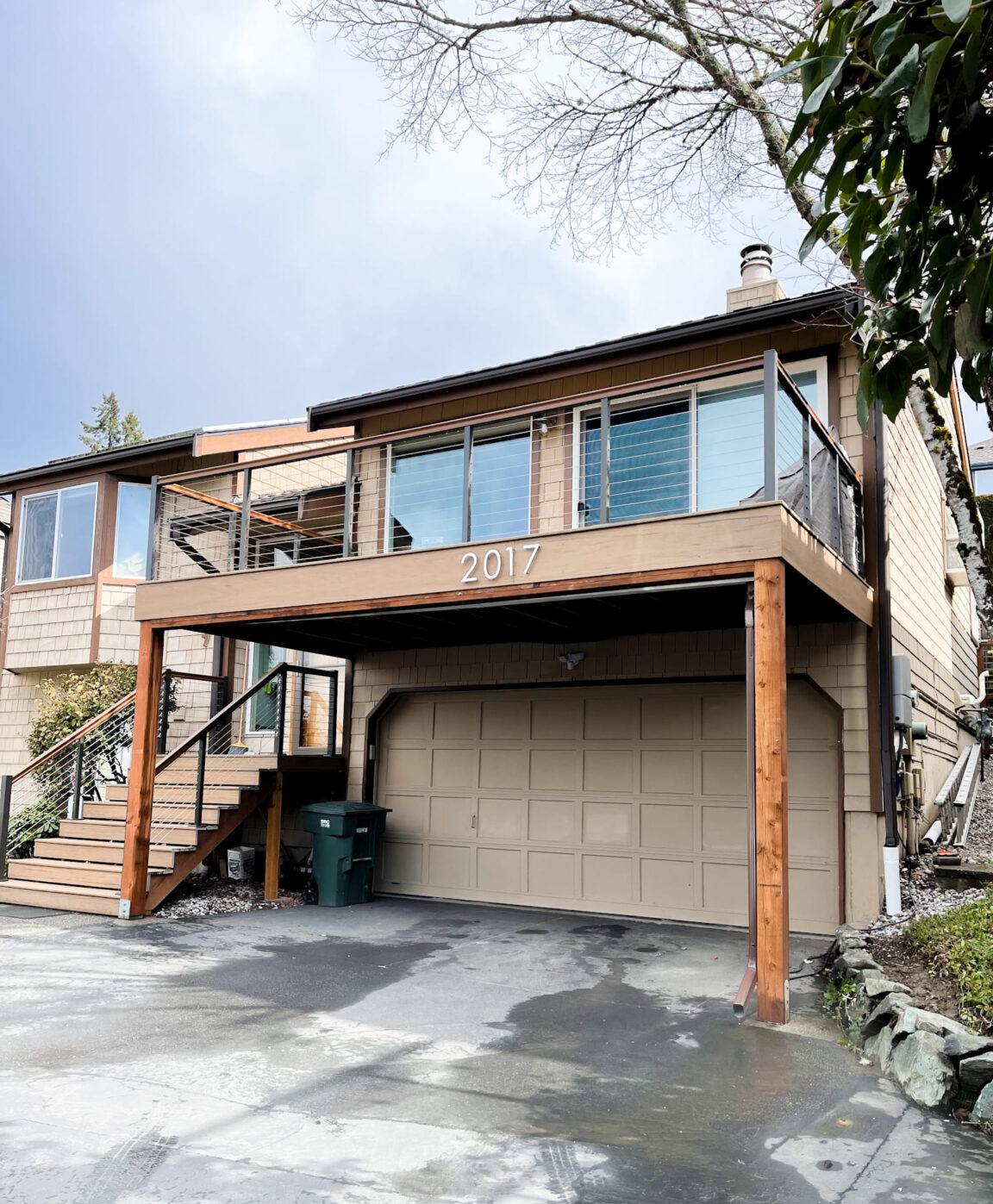
What Bellingham Weather Does to a Deck
Whatcom County doesn't get extreme heat or brutal cold. What it gets instead is relentless, low-grade moisture exposure for most of the year, and that's a harder problem for a deck than a single hard freeze or heat wave.
- Driving rain that hits decks at an angle, working its way into end grain, fastener holes, and any gap in a ledger board flashing detail.
- Salt air off the bay, which accelerates corrosion on fasteners, hardware, and any metal railing components that aren't rated for coastal exposure.
- A long moss and algae season — often eight or nine months of the year — especially on shaded, tree-covered lots like much of South Hill, where boards rarely get a full day of direct sun to dry out.
- Freeze-thaw cycling in winter, which is milder here than inland but still enough to stress trapped moisture in wood fibers and open up cracking that lets water in deeper next season.
None of this is unique to South Hill, but the tree cover and proximity to the water make it a sharper version of what the rest of Bellingham deals with. A deck built without that in mind will show it within a few seasons — soft spots, graying, board cupping, and a slick green film that makes the surface unsafe underfoot.
Why This Matters More on Shaded, Sloped Lots
A lot of South Hill properties sit on sloped ground with established trees close to the house. That's part of the neighborhood's character, but it also means airflow under and around a deck is often more restricted than on an open, flat lot. Less airflow means slower drying, which means more time for moss spores and mildew to take hold on a wood deck's surface and in its gaps.
Why Composite Decking Fits This Environment
Composite decking is made from a blend of wood fiber and recycled plastic, and most products sold today are "capped" — meaning the board has a hard polymer shell wrapped around a composite core. That cap is the part that matters most for South Hill homes, because it's what keeps moisture from soaking into the board the way it does with raw wood or uncapped composite.
Moisture Resistance Without the Upkeep Cycle
A capped composite board doesn't absorb water the way wood does, so it won't swell, cup, splinter, or rot from repeated wetting and drying. That's the single biggest advantage for a shaded, damp lot — the board isn't fighting the climate every week of the year.
Surface Texture and Moss Resistance
Moss and algae still need something to grip. Smooth, tightly capped composite boards give organic growth less to hold onto than the open grain of wood, and they're far easier to clean without damaging the surface. We still recommend periodic washing — composite resists staining and growth, it doesn't make a deck immune to it — but the maintenance burden drops substantially compared to wood.
Fastener and Hardware Considerations
Salt air is hard on metal. We spec stainless or coated fasteners and hidden fastener clip systems rated for coastal exposure rather than the cheapest hardware that happens to fit. A composite board is only as good as what's holding it down, and this is one of the most common corners cut on decks that fail early near the water.
What a Correct Composite Deck Installation Actually Involves
Composite decking is forgiving compared to wood, but it's not foolproof, and a bad installation will fail regardless of how good the boards are. A correct job on a South Hill property includes:
- Joist tape on every joist — a self-adhering membrane that protects the framing lumber underneath the composite from the moisture that inevitably finds its way to the substructure.
- Proper ledger board flashing where the deck attaches to the house, since this is the single most common point of hidden water intrusion and rot on any deck in this climate.
- Correct joist spacing for the specific composite product being used — many boards require tighter spacing than traditional lumber, especially on angled or diagonal patterns.
- Ventilation and clearance underneath the deck, particularly important on shaded, low-airflow lots where trapped moisture has nowhere to go.
- Proper end-gapping and expansion allowances, since composite boards expand and contract with temperature more than people expect, and tight-butted boards will buckle over time.
- Corrosion-resistant fasteners and hardware throughout, given the salt air exposure common in South Hill and the rest of coastal Whatcom County.
Composite vs. Wood vs. PVC: A Straight Comparison
Homeowners in South Hill usually narrow it down to three real options. Here's how they compare for this specific climate, not in the abstract.
| Material | Moisture & Moss Behavior Here | Maintenance | Typical Lifespan |
|---|---|---|---|
| Pressure-treated wood | Absorbs water, feeds moss/algae in shaded areas, prone to cupping and splintering under our rain patterns | Annual staining/sealing recommended | 10-15 years before major repair or replacement |
| Capped composite | Resists moisture absorption, moss has less to grip, holds up well under salt air and shade | Occasional washing, no sealing or staining | 25-30 year manufacturer warranties are common |
| PVC (cellular) | Fully moisture-proof, but can look and feel less like natural wood; some products are more prone to surface scratching | Low, similar to composite | Similar or longer warranty range, higher upfront cost |
We install composite most often on South Hill projects because it strikes the balance homeowners here actually want: a natural wood look, strong moisture and moss resistance, and a maintenance routine that doesn't compete with the rest of a Pacific Northwest homeowner's to-do list. PVC has its place for very high-moisture or ground-level applications, and we'll say so when it's the better fit rather than defaulting to one product regardless of the job.
Our Process for South Hill Deck Projects
- On-site evaluation — we look at sun exposure, tree cover, slope, and the condition of any existing structure before recommending a product or layout.
- Framing assessment — if the existing substructure has moisture damage or isn't rated for the new decking's span requirements, we address that before a single composite board goes down.
- Product selection — matched to the specific lot's shade level, drainage, and the homeowner's maintenance preferences and budget.
- Installation — joist tape, correct flashing, proper spacing, and coastal-rated hardware throughout, not just where it's visible.
- Final walkthrough — covering realistic care expectations for our specific rain and moss season, so there are no surprises six months in.
Living With a Composite Deck Through a Bellingham Winter
Composite decking cuts maintenance dramatically, but "low-maintenance" isn't "no-maintenance," especially under a South Hill tree canopy. A seasonal rinse with a garden hose and soft-bristle brush handles most surface buildup. For persistent moss or algae in the shadiest spots, a composite-safe cleaner applied once or twice a year usually keeps boards looking like new. We steer clients away from pressure washing on the highest settings, since it can wear at the cap layer over time and shorten the board's service life unnecessarily.
Gutters and downspouts near the deck matter too — a lot of moss problems on South Hill decks trace back to water sheeting off a roof edge onto one section of decking far more than the rest, which we'll flag during the on-site evaluation if it's a factor.
Checklist: What a South Hill Homeower Should Confirm Before Hiring
- Is joist tape included on every joist, not just mentioned as an option?
- What fastener and hardware grade is being used, given salt air exposure?
- Is the framing being inspected and repaired if needed before new decking goes down?
- Does the quote specify the exact composite product and its warranty terms in writing?
- Has the contractor accounted for shade and drainage specific to this lot, not a generic layout?
- Is ventilation and clearance underneath the deck addressed for a low-airflow, tree-covered site?
Why Local Experience in South Hill Matters
A deck built for a sunny, open lot in a drier part of the state doesn't need the same attention to moss resistance, drainage, and salt-rated hardware that a shaded South Hill property does. Crews that work Whatcom County regularly know which details are cosmetic and which ones are the difference between a deck that looks good for two seasons and one that holds up through fifteen Bellingham winters. That's the standard we hold every composite deck installation to, whether it's a small landing or a full wraparound deck.
If you're weighing composite decking for a South Hill property, we're happy to take a look at your specific lot — sun exposure, tree cover, existing structure — and give you a straight recommendation. Reach out for a free, no-pressure estimate using the form below.