 Bellingham
 Why Cordata Homes Need a Roof Built for This Climate
Cordata sits in north Bellingham, close enough to Bellingham Bay and the Salish Sea that salt-laden air is a real factor in how any roof ages, not just an abstract concern. Add in Whatcom County's long, wet winters, and a metal roof here is working against three things at once: driving rain that gets pushed sideways under wind gusts, near-constant moisture that feeds moss and algae for much of the year, and airborne salt that speeds up corrosion on the wrong fasteners, flashing, or panel coatings. A metal roof that's installed correctly can outlast that combination for decades. One that's installed with shortcuts — wrong fastener alloy, poor underlayment, sloppy flashing details — will show problems in the first five to ten years, usually right where two materials meet.
This page is specifically about metal roofing for Cordata homes. If you're weighing metal against other roofing materials in general, that's a broader conversation — here we're focused on what a correct metal roof job looks like on this side of Bellingham, and why the details matter more here than they would in a drier climate.
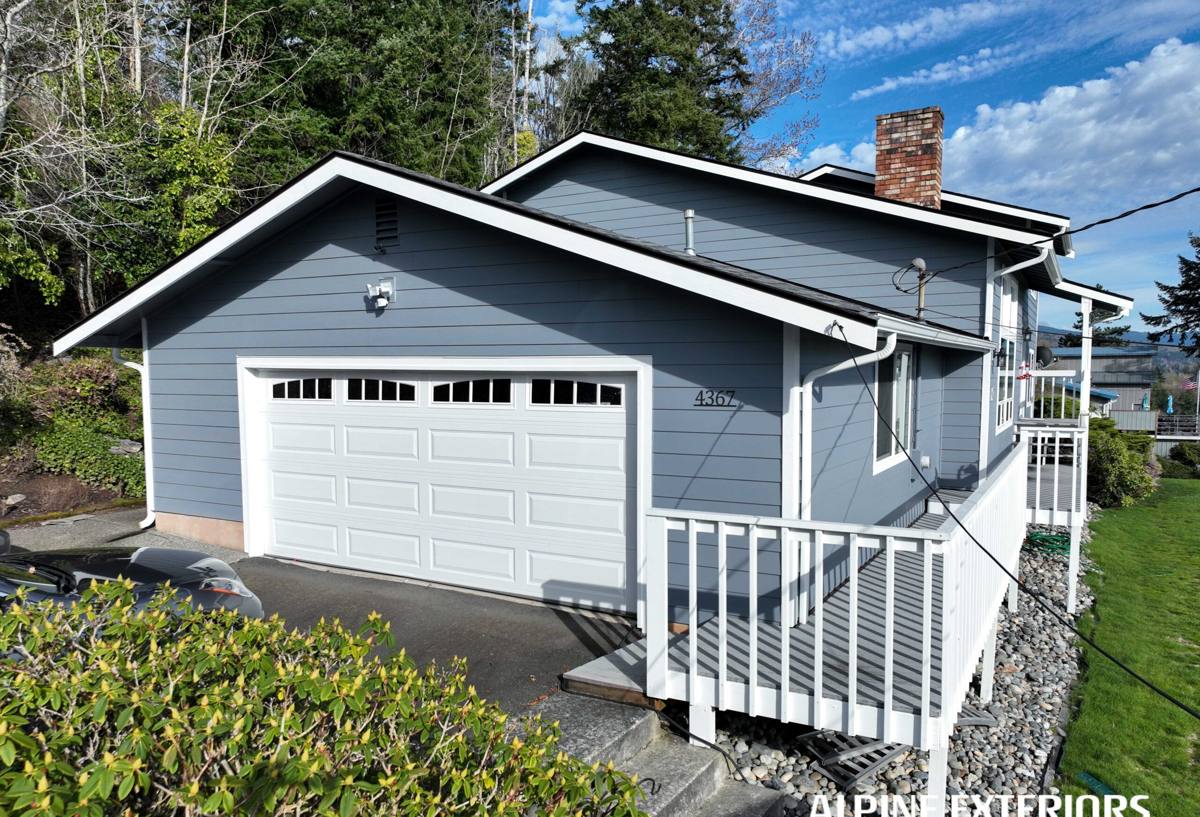
What "Driving Rain" Actually Does to a Roof
Whatcom County storms don't always drop rain straight down. Wind off the water pushes it sideways and upward under eaves, into ridge caps, and along exposed seams. On a standard sloped roof this usually isn't a problem if the underlayment and flashing were done right — the water sheds before it ever gets a chance to find a gap. The trouble shows up at the details: valleys, roof-to-wall transitions, chimney and vent penetrations, and low-slope sections where water sits longer before it drains.
On metal roofs specifically, this means:
- Underlayment needs to be a self-adhering, water-resistant type in valleys and eave edges, not just felt paper
- Panel seams need to be oriented and lapped correctly for the prevailing wind direction on your specific roof plane
- Flashing at penetrations needs proper counter-flashing, not just a bead of sealant over a gap
- Fastener spacing and type need to match the panel manufacturer's wind-load specs for this region, not a generic install pattern
Moss: The Slow Problem Metal Handles Differently Than Shingles
Whatcom County's moss season runs long — mild, wet stretches give moss and algae plenty of time to establish themselves on any north-facing or shaded roof plane. On asphalt shingles, moss roots into the granule surface and holds moisture against the mat, which is what eventually causes shingle failure. Metal roofing doesn't give moss the same foothold; there's no granule surface for it to grip, and a smooth, properly coated panel sheds spores far more easily than shingles do.
That doesn't mean metal is moss-proof. Moss and algae can still build up in areas where debris collects — behind chimneys, in valleys, along parapet walls, or anywhere leaves and needles pile up and stay damp. On a metal roof, moss growth is more of a cosmetic and drainage issue than a structural one, but left unchecked it can hold moisture against fasteners and trim, which is where corrosion actually starts. Zinc strips or occasional gentle cleaning handle this; pressure washing does not, and can damage panel coatings or force water under seams.
Salt Air and Fastener Corrosion
This is the detail that separates a metal roof that lasts thirty-plus years from one that starts rusting at the screw heads within a decade. Cordata isn't oceanfront, but it's close enough to Bellingham Bay that airborne salt is a factor, especially on homes with west or northwest exposure. The panel material itself — steel with a quality paint or coating system, or aluminum — is only half the equation. The fasteners, trim screws, and flashing pieces all need to be corrosion-rated to match, ideally the same metal family as the panels or a coating designed for coastal-adjacent exposure. Mixing incompatible metals (steel fasteners on aluminum panels, for example) sets up galvanic corrosion that shows up as rust streaking and pitting around every screw within a few years.
We spec fastener and flashing materials for the coastal-influenced side of Whatcom County, not generic inland hardware. It costs a little more up front and is one of the main reasons a metal roof installed by a crew unfamiliar with this area can fail early at exactly the points where it should be strongest.
Choosing a Metal Roofing System for a Cordata Home
There are two main categories of metal roofing used on homes here, and the right choice depends on your roof's slope, style, and budget.
| System | How it's fastened | Best for | Trade-offs |
|---|---|---|---|
| Standing seam | Concealed clips, no exposed fasteners on the field | Most residential roofs, especially anything visible from the street or with moderate to low slope | Higher material and labor cost; requires a crew experienced with seaming equipment |
| Exposed fastener (screw-down) | Screws through the panel face into the deck or purlins | Outbuildings, shops, garages, budget-driven projects | Every fastener is a potential leak point over time as gaskets age; more maintenance |
For primary residences in this climate, we lean toward standing seam wherever the budget allows, specifically because it has far fewer penetration points for wind-driven rain to exploit. Exposed-fastener panels have their place — they're a reasonable, honest option for detached shops or garages — but we're upfront with homeowners that the gasketed screws will eventually need attention, usually well before a standing seam roof needs anything at all.
What Our Installation Process Looks Like
A metal roof is only as good as what's underneath it and how the details are handled. Here's the process we follow on Cordata homes:
- Roof and deck inspection — we check the existing deck for soft spots, rot, or prior water damage before anything goes on top of it. Metal panels won't fix a compromised deck.
- Tear-off and prep — old roofing is removed, the deck is repaired where needed, and we confirm slope and drainage patterns.
- Underlayment — a synthetic, water-resistant underlayment goes down across the whole roof, with self-adhering membrane at eaves, valleys, and other vulnerable spots.
- Flashing and edge metal — drip edge, valley flashing, and penetration flashing are installed before panels go on, sized and lapped for this region's wind-driven rain.
- Panel installation — panels are laid with the correct overlap direction for your roof's exposure, fastened or seamed to manufacturer spec.
- Trim and detail work — ridge caps, rake edges, and penetration boots are finished and sealed with materials matched to the panel system.
- Final walk-through — we go over the completed roof with you, including what routine maintenance actually involves for your specific setup.
Mistakes We Commonly See on Existing Metal Roofs
When we're called out to look at an existing metal roof in the area — whether for a repair, a re-coat, or a second opinion — the same handful of issues come up again and again:
- Exposed fasteners installed with the wrong screw type, already showing rust streaks at the head
- Sealant used as a substitute for proper flashing at chimneys, skylights, and wall transitions
- Panels fastened too tight or too loose, restricting the natural expansion and contraction metal goes through with temperature swings
- Valleys and low-slope sections with debris buildup that's held moisture against the panel long-term
- Mismatched metals between panels, trim, and fasteners causing galvanic corrosion
Most of these trace back to the roof being installed by a crew more familiar with asphalt shingles than metal systems, or a crew from outside this climate who didn't account for the salt air and rain patterns specific to this part of Whatcom County.
Maintenance Checklist for Metal Roof Owners
Metal roofing is genuinely low-maintenance compared to shingles, but "low" isn't "none." A short annual routine catches problems while they're still cheap to fix:
- Clear leaves, needles, and debris from valleys and low-slope areas before the wet season sets in
- Check gutters and downspouts for clogs — overflowing gutters push water back up under eave flashing
- Look for rust streaking at fastener heads or flashing seams; catch it early and it's a spot repair, not a re-roof
- Watch for moss or algae buildup in shaded areas and address it gently, not with a pressure washer
- After major windstorms, do a visual check for lifted trim or displaced flashing
Cost Factors for a Cordata Metal Roof
Exact pricing depends on roof size, pitch, complexity, and the panel system chosen, but these are the main variables that move the number:
| Factor | Why it matters |
|---|---|
| Panel system (standing seam vs. exposed fastener) | Standing seam runs higher due to material and labor, but reduces long-term leak risk and maintenance |
| Roof complexity | Valleys, dormers, and multiple penetrations all add flashing work and labor time |
| Deck condition | Rot or soft decking found during tear-off adds repair cost before panels can go on |
| Fastener and flashing spec | Corrosion-rated hardware for coastal-influenced air costs more than generic inland hardware, but prevents early failure |
| Panel gauge and coating | Heavier gauge steel and better paint systems cost more upfront and hold up longer against this climate |
We'll walk through these factors specifically for your roof during an on-site look, rather than quoting a number sight-unseen.
Why Local Experience Matters for This Job
Metal roofing isn't a material you want a first-timer learning on. The systems that fail early in Cordata almost always trace back to details that only matter in this specific climate — fastener corrosion resistance, flashing sequencing for wind-driven rain, and moisture management in a place where the roof rarely gets a long dry stretch to fully shed. A crew that's already worked roofs in this part of Bellingham has seen where the previous mistakes were made and knows how to build so they don't repeat. That's the difference between a metal roof that needs attention in year eight and one that's still doing its job in year thirty.
If you're considering a metal roof for your Cordata home, we're happy to take a look and talk through what it would actually involve for your specific roof — no pressure, no hard sell. Fill out the form below and we'll set up a free estimate.