 Bellingham
 Building Decks for Happy Valley's Climate
Happy Valley sits close enough to Bellingham Bay that salt-laden air is a real factor in how a deck ages, and far enough into Whatcom County's wet season pattern that standing water, moss, and slow-drying wood are constant maintenance concerns. A deck built here has to handle driving rain that comes in sideways off the water, months of gray, damp weather where surfaces rarely fully dry out, and the kind of shaded, tree-covered lots common throughout the neighborhood that keep moisture sitting on decking boards long after a storm has passed. None of this is exotic — it's just what Pacific Northwest coastal weather does to exterior wood and metal, year after year. The difference between a deck that looks good for five years and one that holds up for twenty comes down to material choices and construction details that account for this specific climate, not a generic build.
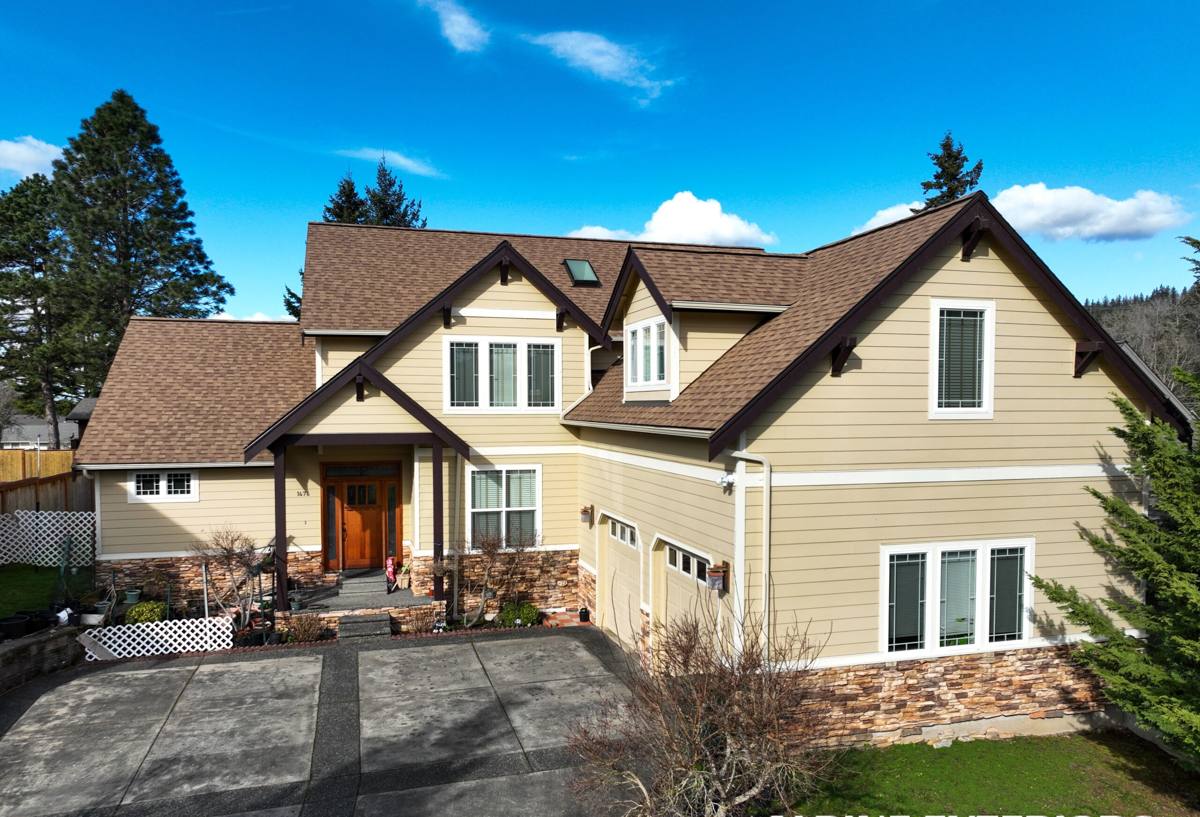
What Happy Valley Homes Need From a Deck
Lots in this part of Bellingham tend to have mature tree cover, sloped or uneven grade, and soil that stays saturated for long stretches of the fall and winter. That combination changes some of the basic decisions in a deck build:
- Footings need to be sized and set below frost depth and clear of shifting, saturated soil — not just poured wherever the ground is flattest.
- Shade from surrounding trees means a deck surface may never get a full afternoon of direct sun to dry out, so material and gap spacing matter more than they would on an open, sunny lot.
- Sloped yards common in the neighborhood often call for a taller substructure, which means more exposed framing and railing height to plan for under Bellingham's building code.
- Falling leaves, needles, and moss spores collect in board gaps and against the house, so drainage and airflow underneath the deck aren't optional extras.
We don't build the same deck for a shaded, sloped Happy Valley lot that we'd build for an open, flat one across town. The site dictates the structure before we ever get to color or railing style.
Choosing Decking Material for Whatcom County Weather
Every decking material handles wet, shaded, salt-air conditions differently. There's no single "best" choice — it's a trade-off between upfront cost, maintenance, and how the material behaves specifically in this climate.
| Material | How It Handles This Climate | Maintenance | Relative Cost |
|---|---|---|---|
| Pressure-treated wood | Affordable and strong, but absorbs moisture readily in shaded, damp spots and needs regular sealing to resist moss and rot | Annual cleaning, periodic sealing/staining | Lowest upfront |
| Cedar | Naturally rot- and insect-resistant with a warmer look, but still needs upkeep to fight graying and moss in low-sun areas | Sealing every 1-2 years | Mid-range |
| Composite decking | Resists moisture absorption and moss growth far better than wood; performs well in shaded, damp yards typical of the neighborhood | Occasional washing, no sealing or staining | Higher upfront |
| PVC/capped polymer | Fully sealed surface sheds water and resists staining and salt exposure best of any option, with no wood fibers to feed moss | Occasional washing | Highest upfront |
We're honest with homeowners about this trade-off: composite and PVC cost more to install, but on a shaded lot with heavy moss pressure, they cut the maintenance burden dramatically and hold their appearance longer. Wood costs less up front but only performs well if the maintenance schedule actually happens — and in a climate this wet, skipped maintenance shows up fast as graying, splintering, or slick moss growth.
Fasteners and Hardware Matter As Much As the Boards
Salt air accelerates corrosion on standard hardware faster than most homeowners expect. We use stainless steel or coated fasteners rated for coastal and marine-adjacent exposure, along with hidden fastener systems where the decking allows it — both to keep water from pooling around exposed screw heads and to reduce the rust streaking that shows up within a season or two when the wrong hardware is used near the water.
Ledger, Footings, and Framing — the Parts You Don't See
A deck's appearance is the easy part. What actually determines whether it lasts is underneath the boards.
Ledger Attachment and Flashing
Most deck failures we're called to inspect trace back to the ledger board — the piece that attaches the deck to the house. If it isn't flashed correctly to shed water away from the house's siding and framing, moisture works its way behind it over successive rainy seasons and rots both the ledger and the wall structure it's attached to. In a climate with as much driving rain as Bellingham gets, correct ledger flashing isn't optional detail work — it's the single most important connection on the whole structure.
Footings Sized for the Site
Footings need to reach below frost depth and bear on stable soil, which on a sloped or saturated Happy Valley lot may mean deeper or more numerous footings than a standard plan calls for. We evaluate this on-site rather than assuming a one-size formula works everywhere in the neighborhood.
Framing Spacing and Ventilation
Joist spacing, blocking, and clearance underneath the deck all affect how quickly the structure dries out between rain events. Tighter framing with poor airflow traps moisture against the wood — exactly the condition that lets rot and moss take hold in shaded yards.
Drainage and Moss Prevention
Whatcom County's moss season runs long, and a deck that doesn't shed and drain water properly will grow moss on the surface, in the gaps between boards, and on any framing members that stay damp. A few build details make a real difference here:
- Proper board spacing so water drains through rather than pooling on the surface.
- Grading and drainage underneath the deck so runoff doesn't collect against footings or framing.
- Keeping the deck surface clear of overhanging branches where possible, since falling debris feeds moss growth directly.
- Choosing a surface material and finish that doesn't hold moisture in its texture, especially on the shaded side of the house.
No deck is entirely moss-proof in this climate — but a well-drained, well-ventilated build needs a lot less scrubbing and pressure washing than one where water has nowhere to go.
Our Deck Building Process
We approach every Happy Valley deck build the same structured way, adjusted for the specifics of the site:
- Site walk and assessment. We look at grade, tree cover, sun exposure, drainage patterns, and the condition of the house wall where the deck will attach.
- Design and material selection. We talk through material trade-offs honestly based on how much shade and moisture the specific spot gets, not a generic recommendation.
- Permitting. We handle the permit process with the City of Bellingham or Whatcom County depending on the property, so the structure is inspected and code-compliant.
- Footings and framing. Footings are set to proper depth and bearing, framing is built with correct spacing and ventilation underneath.
- Ledger flashing and attachment. This connection gets the same care regardless of budget — it's not a place to cut corners.
- Decking, railing, and hardware installation. Corrosion-resistant fasteners and hardware appropriate for near-coastal exposure throughout.
- Final walkthrough and inspection sign-off. We review the finished structure and maintenance expectations with the homeowner before we call the job done.
Permits and Code Considerations Locally
Deck construction in Bellingham and the surrounding Whatcom County jurisdictions is subject to permitting and inspection, particularly for structures above a certain height or attached to the house. Requirements around railing height, guard spacing, footing depth, and ledger attachment exist because they address real failure points seen in this climate — they're not paperwork for its own sake. We pull the appropriate permits and build to inspection standards as a normal part of the job, not an upsell.
Maintaining a Deck in a Wet, Shaded Climate
Even the right material and a correctly built structure need some ongoing care in this climate. A realistic seasonal checklist:
- Clear leaves, needles, and debris from board gaps and against the house before fall rains set in.
- Rinse or lightly scrub surfaces showing early moss growth before it spreads, especially in shaded corners.
- Check and clear drainage paths underneath the deck once or twice a year.
- For wood decking, reseal or restain on the schedule the product calls for — skipping a cycle in this climate shows up fast.
- Inspect railings, fasteners, and the ledger connection annually for early signs of corrosion or movement.
Why Hire a Crew That Already Works Happy Valley
A deck built without accounting for local conditions can look identical to a well-built one on installation day — the difference only shows up two or three wet seasons later, when the poorly detailed one is growing moss, the hardware is streaking rust, or water has found its way behind the ledger. Working regularly in Happy Valley and the surrounding Bellingham neighborhoods means we've seen how the local combination of shade, slope, salt air, and rain actually plays out on real decks over time, and we build to account for it from the start rather than treating this as a generic exterior project. That local track record is worth more than a lower bid from a crew building to a one-size-fits-all spec.
If you're planning a new deck or replacing one that hasn't held up to Bellingham's weather, we're happy to take a look and give you a straightforward, no-pressure estimate — use the form below to get started.