 Bellingham
 Building a Deck That Holds Up in Lynden
Lynden sits inland from Bellingham Bay, but it doesn't escape the weather that defines this corner of Washington. Long wet winters, short bright summers, and a shoulder season that never seems to fully dry out all put real demands on outdoor structures. A deck built here has to handle standing moisture, seasonal freeze-thaw swings, and months of shade and dampness that push moss and algae growth on any surface that doesn't drain and dry properly.
A deck that looks fine going in but wasn't built with this climate in mind usually shows its problems within a few years — soft spots near the house, green film on the boards, rust streaks from the wrong fasteners, or a railing that's started to wobble. None of that is inevitable. It comes down to material choices, flashing details, and framing decisions made before the first board goes down.
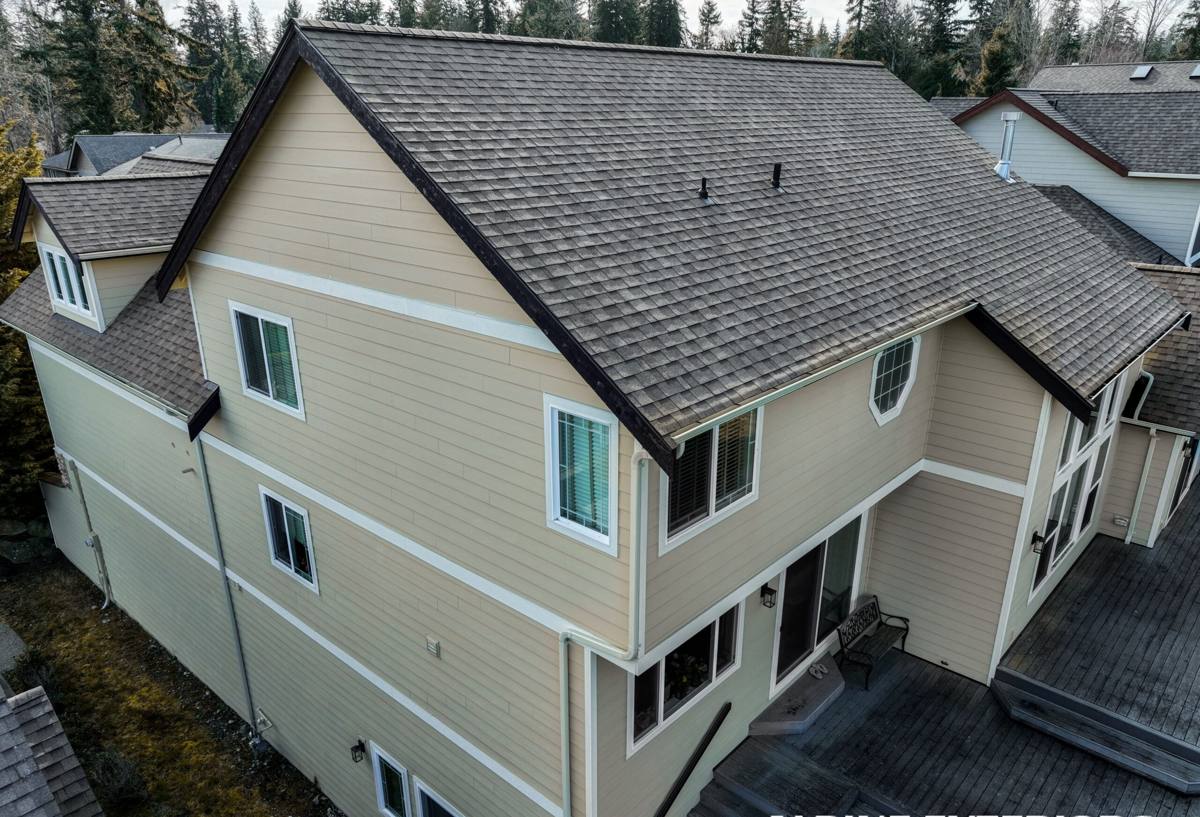
What Actually Goes Wrong on Decks Around Here
We see the same handful of failure points repeatedly on decks in and around Lynden, almost always tied to moisture management rather than the decking material itself.
Ledger Board Rot
The ledger board — where the deck attaches to the house — is the single most common failure point on any deck in a wet climate. Without proper flashing between the ledger and the siding or sheathing, water works its way behind the board and rots the framing from the inside, often long before it's visible from outside. This is also a structural safety issue, since the ledger carries a large share of the deck's load.
Moss and Algae on the Deck Surface
Whatcom County's long stretch of overcast, damp weather is exactly what moss and algae need to take hold. Decks that sit in shade, under trees, or on the north side of a house are especially prone to it. Once moss establishes itself in the grain of wood decking, it holds moisture against the board and accelerates rot — and it makes the surface slick and genuinely dangerous underfoot.
Corroded Fasteners and Hardware
Standard fasteners and connectors that aren't rated for exterior, high-moisture use will corrode over time in this climate, staining the decking and weakening the connections they're supposed to hold. This matters most on joist hangers, post bases, and structural screws — the parts you don't see once the deck is finished.
Frost Heave and Settling Footings
Footings that aren't poured below the local frost depth can shift slightly with winter freeze-thaw cycles. Over a few seasons that movement can throw a deck out of level or crack a footing, especially on the kind of open, exposed lots common on larger Lynden properties.
Choosing the Right Decking Material
There's no single "best" decking material — it's a real trade-off between upfront cost, appearance, and how much maintenance you're willing to keep up with in a climate that stays damp for months at a time.
| Material | Upfront Cost | Maintenance in This Climate | Typical Lifespan |
|---|---|---|---|
| Pressure-treated lumber | Lowest | Needs regular cleaning and re-sealing to resist moss and moisture | 15–20 years with upkeep |
| Cedar | Mid-range | Naturally moisture-resistant but still needs periodic sealing and cleaning | 15–25 years with upkeep |
| Composite decking | Highest | Occasional washing; no sealing or staining required | 25–30+ years |
Pressure-treated lumber is the budget-friendly, dependable option, but in a climate like this it only performs well if the homeowner keeps up with cleaning and sealing on a regular schedule. Cedar has natural oils that resist rot better than most softwoods and weathers to an attractive gray if left unfinished, but it's not maintenance-free here — it still needs attention to stay ahead of moss. Composite decking costs more up front but largely sidesteps the moss and rot issues that come with a long wet season, which is why we see more homeowners choosing it for decks that get heavy shade or sit low to the ground.
The Structural Work That Doesn't Show
The parts of a deck that actually determine how long it lasts are mostly the parts you never see again once it's finished.
Ledger Flashing
A correctly built ledger connection uses metal or high-quality flashing tape integrated with the house's existing weather barrier, not just caulk at the seam. Done right, water is directed out and away from the framing instead of trapped behind it.
Footings Below Frost Depth
Footings need to be dug to the depth required by local code, not just deep enough to look solid. This is what keeps the deck stable through winter freeze-thaw cycles instead of shifting a little more each year.
Corrosion-Resistant Hardware
Joist hangers, structural screws, and post connectors should be rated for exterior and treated-lumber use. It costs more than standard hardware, but it's a small fraction of the total project cost and it's the difference between hardware that lasts the life of the deck and hardware that's rusting and weakening within a few years.
Drainage and Airflow
Proper board spacing, joist layout, and grading underneath the deck all affect how quickly water drains and how well air moves under the structure. Good airflow is one of the most effective, and most overlooked, ways to keep moss from taking hold in the first place.
Permits and Local Considerations for Lynden Properties
Most new decks above a certain height or size require a permit, and inspections typically check footing depth, structural connections, and guardrail and stair details before the project is signed off. Guardrails and baluster spacing on any elevated deck follow specific code requirements, and stairs have their own rules for rise, run, and handrails.
Lynden's mix of in-town lots and larger rural, agricultural properties adds a few extra wrinkles compared to a straightforward city build. Setbacks can vary depending on the property, and rural lots often have well or septic system locations that affect where footings can go. A crew that regularly pulls permits and works properties in this area already knows what the local building department expects, which keeps the inspection process from turning into a source of delay.
Our Deck Building Process
- Site visit and assessment — we look at drainage, sun exposure, soil, and how the deck will attach to the house before anything is designed.
- Design and material selection — sizing, layout, and material choices based on your budget, how the deck will be used, and how much sun or shade it gets.
- Permitting — we handle the permit application and coordinate the required inspections.
- Footings and framing — footings poured to proper depth, framing built with corrosion-resistant hardware and correctly flashed at the ledger.
- Decking, railing, and stairs — installed to code with attention to spacing and drainage.
- Final walkthrough — we go over the finished deck with you, including what maintenance it will need going forward.
Keeping a New Deck Ahead of Moss Season
Even a well-built deck needs some seasonal attention in a climate that stays wet as long as this one does. A yearly cleaning before moss has a chance to establish itself, keeping gutters and downspouts clear so runoff doesn't drain onto the deck, and trimming back overhanging branches to let in more light and air all go a long way. Wood decking should be resealed on the schedule the product calls for — skipping a cycle is usually how moss and gray weathering get a foothold. Composite decking mostly just needs periodic washing to stay clean.
What a Properly Built Lynden Deck Should Have
- Ledger board flashed with metal or high-quality flashing tape, tied into the house's weather barrier
- Footings poured below the local frost depth
- Joist hangers and structural hardware rated for exterior, treated-lumber use
- Board spacing and framing that allow water to drain and air to circulate underneath
- Guardrails and stairs built to current code, with correct baluster spacing
- A decking material chosen with your property's sun, shade, and moisture conditions in mind
- Pulled permits and passed inspections, with documentation you keep for resale
Why Hire a Crew That Already Works in Lynden
A deck built by someone unfamiliar with this specific climate can look identical to a correctly built one on the day it's finished — the difference only shows up two or three winters later. Working with a crew that regularly builds decks in Whatcom County means the flashing details, hardware choices, and drainage planning are already dialed in for the conditions here, not adapted from a drier region's standard practices. It also means fewer surprises with the local permitting process and a better sense of how a specific lot's sun, shade, and soil will affect the deck over time.
If you're planning a new deck or replacing one that's showing its age, we're happy to take a look and talk through what makes sense for your property. Reach out for a free, no-pressure estimate using the form below.