 Bellingham
 Deck Repair for Puget Homes: Built for Bellingham's Weather, Not Just Patched Up
A deck in the Puget area of Bellingham works harder than a deck almost anywhere inland. It sits outside through nine months of Pacific Northwest rain, picks up salt-laden air off the water, and spends a good chunk of the year in the kind of damp shade that grows moss faster than a homeowner can scrub it off. None of that is unusual for Whatcom County. What it means, though, is that a deck repair here has to account for moisture cycling and organic growth, not just a squeaky board or a wobbly rail. Repairs that only address what's visible on the surface tend to come back within a season or two.
This page is about deck repair specifically — not new deck construction — for homes in and around Puget. If your deck is still structurally sound but showing wear, rot in isolated spots, failing fasteners, or a railing that's lost its stiffness, repair is usually the right call. If the frame itself is compromised, we'll tell you that plainly too.
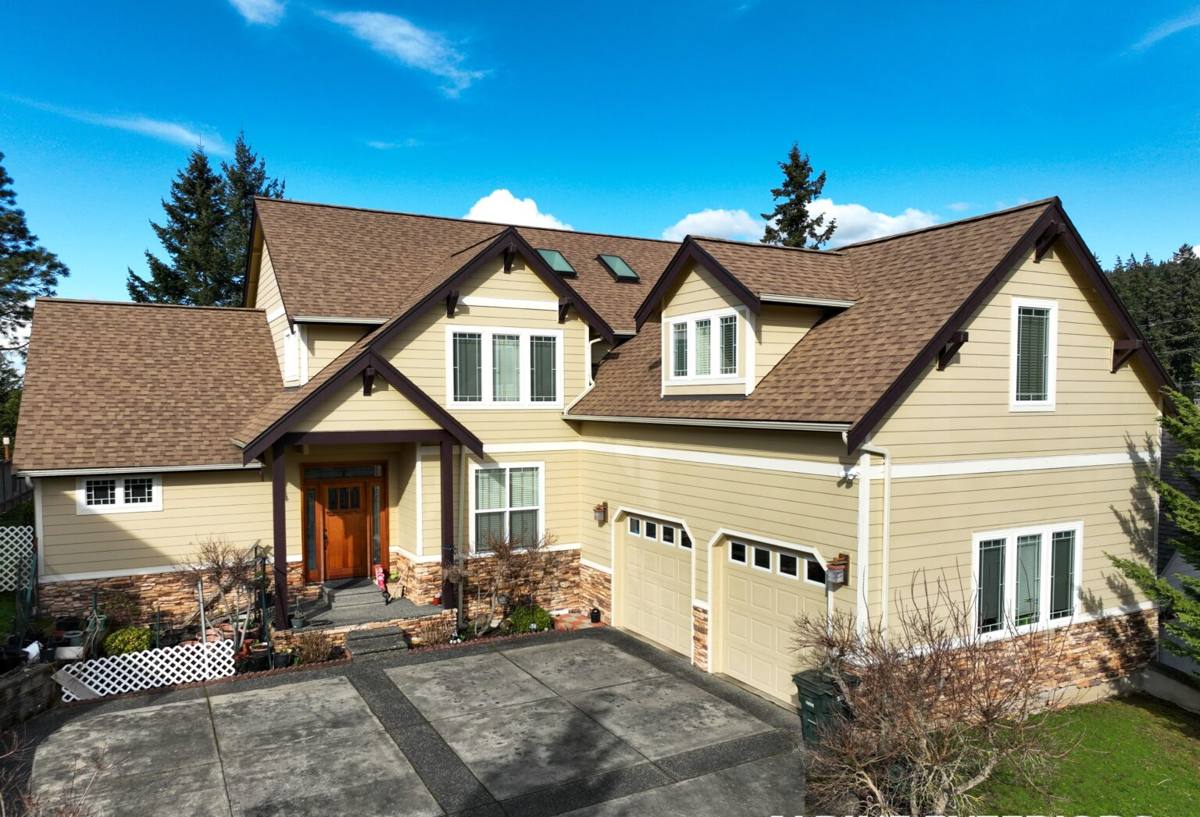
Why Puget Decks Take a Beating in Bellingham's Climate
Salt Air Near the Water
Bellingham sits on Bellingham Bay, part of the larger Puget Sound system, and homes closer to the water pick up a steady low level of salt in the air. Salt accelerates corrosion in exposed metal — nails, screws, joist hangers, railing brackets — long before the wood itself shows obvious damage. A fastener that's lost its zinc coating and started rusting is a weak point you usually can't see until a board comes loose or a hanger starts to separate from the ledger.
Driving Rain and Wind-Driven Moisture
It's not just total rainfall that matters, it's the direction it comes from. Wind-driven rain off the Sound pushes water sideways into places a flat roof over a deck or a simple drip edge doesn't account for — behind ledger boards, into post bases, and under railing posts where end grain is exposed. Wood absorbs moisture fastest through end grain, so the ends of boards, the tops of posts, and stair stringers are almost always the first places we find soft or discolored wood.
Moss, Algae, and Shade
Whatcom County's moss season runs long — realistically most of the year on shaded or north-facing decks. Moss and algae hold moisture against the wood surface, which keeps boards wet far longer than rain alone would. Left alone, that constant dampness breaks down wood fiber and makes the surface slick and dangerous underfoot, especially on stairs. A deck that looks "just dirty" is often already losing structural integrity underneath the green film.
Signs Your Deck Needs Repair, Not Just Cleaning
Some problems are cosmetic and some are structural. Knowing the difference before you call anyone saves time and helps you ask better questions. Walk your deck and check for these:
- Boards that flex, bounce, or feel spongy underfoot, especially near the house or stairs
- Visible gaps, splitting, or checking (long cracks) along the length of a board
- Rust streaks running down from screws, nails, or metal connectors
- A railing that moves side to side when pushed — it should not move at all
- Soft or discolored wood where the deck attaches to the house (the ledger board)
- Persistent moss or dark staining that comes back within weeks of cleaning
- Stair stringers that feel uneven, spongy, or show daylight where they meet the treads
- Gaps opening up between decking boards and the frame, or fasteners backing out
- A musty smell coming from underneath the deck, which usually means trapped moisture
Any one of these on its own might be a simple fix. Several together, especially near the ledger or stairs, usually mean the problem has moved past the surface.
What's Actually Failing: The Parts Homeowners Don't See
Most deck problems that matter aren't the decking boards — they're underneath. The ledger board (where the deck bolts to the house), the joists, the post bases, and the fasteners holding it all together take the real abuse, and they're exactly what's hardest to inspect from a casual walk-around.
The Ledger Board
This is the single most important structural connection on most decks — it's what keeps the deck attached to your house. Water that gets trapped between the ledger and the siding, often because flashing was missing or installed wrong originally, rots this board from the inside out. We check this closely on every repair because a failed ledger connection is a safety issue, not just a maintenance one.
Joists and Framing
Joists carry the actual weight of the deck. Rot typically starts at the ends, where they meet the ledger or the rim joist, or wherever a joist hanger has trapped moisture against the wood. A joist that's lost 20-30% of its cross-section to rot has also lost a meaningful chunk of its strength, even if it still looks solid from below.
Fasteners and Hardware
Given Puget's proximity to salt air, we pay particular attention to fastener condition. Older decks built with standard galvanized hardware are more prone to corrosion here than the same deck would be further inland. Replacing corroded fasteners with stainless steel or heavy hot-dip galvanized hardware during a repair is one of the most cost-effective things we do — it's a small material upgrade that meaningfully extends how long the repair lasts.
Post Bases and Footings
Where posts meet the ground or a concrete footing is another moisture trap, especially if the post base doesn't hold the post end grain up off standing water. We check for rot at the base of every post during a repair, since a compromised post base affects the whole railing system above it.
Decking Material and How It Holds Up Locally
What your deck surface is made of changes both how it fails and how it should be repaired. Here's how the common options behave under Bellingham's conditions:
| Material | How It Handles Salt Air & Rain | Moss/Algae Behavior | Typical Repair Approach |
|---|---|---|---|
| Pressure-treated lumber | Good, if fasteners are corrosion-resistant | Grows moss readily in shade; needs periodic cleaning | Sister or replace damaged boards/joists individually |
| Cedar | Naturally rot-resistant but weathers gray without upkeep | Resists moss slightly better than treated pine | Spot replacement; refinishing extends life |
| Composite decking | Very stable, doesn't absorb water like wood | Can still grow surface algae; doesn't rot structurally | Board or fastener replacement; framing beneath still needs wood inspection |
| Older/unknown lumber | Varies widely; often under-protected by today's standards | Depends on condition and shade exposure | Full assessment before deciding scope |
One point worth understanding: composite decking doesn't rot, but the framing underneath almost always is standard wood. A deck with a composite surface can still have a serious moisture problem in the joists and ledger below — the surface material doesn't tell you the whole story.
Repair or Replace? How We Help You Decide
Not every deck problem justifies a full rebuild, and we don't push for one. But there's a point where patching individual boards stops making financial sense. We walk through this honestly with every homeowner:
| Factor | Leans Toward Repair | Leans Toward Replacement |
|---|---|---|
| Ledger board condition | Solid, dry, properly flashed | Soft, rotted, or missing flashing |
| Extent of joist damage | Isolated to one or two joists | Widespread rot across the frame |
| Age of the structure | Under 15-20 years, built to a reasonable standard | Old enough that materials and code have both moved on |
| Railing and stair safety | Sound posts, just cosmetic wear on rails | Loose posts, undersized or non-code railing system |
| Homeowner goals | Want to preserve current layout and budget | Want a different footprint, material, or long-term low maintenance |
In practice, most of the deck repair calls we get in Puget end up being genuine repairs — replacing a section of decking, sistering a couple of joists, re-securing a ledger, or rebuilding a railing section. Full tear-offs are the exception, not the default recommendation.
How We Approach a Deck Repair in Puget
- On-site inspection. We get underneath the deck, not just walk the surface — checking joists, the ledger connection, post bases, and fastener condition, not just what's visible from the top.
- Honest scope. You get a clear explanation of what's failing, what's still sound, and what your real options are — including if repair isn't the right call.
- Moisture source check. If rot is present, we look for why — missing flashing, poor drainage, standing water at a post base — so the same spot doesn't fail again in two years.
- Repair work. Damaged boards, joists, or framing members are replaced or sistered with appropriately treated lumber; hardware is upgraded to corrosion-resistant fasteners where the original hardware is compromised.
- Railing and stair check. Any railing or stair component that's structurally loose gets addressed as part of the same visit rather than left for a separate call.
- Final walkthrough. We show you what was done and what to watch for going forward, including realistic maintenance timing for this climate.
Railings, Stairs, and Code Considerations
Railings and stairs are where deck failures turn into injuries, so we treat them differently than a cosmetic board swap. A railing that flexes under load has usually lost its connection at the post base, not just at the top rail, which means the fix often involves opening up the post-to-frame connection rather than just tightening a bracket. Stair stringers carry concentrated, repeated weight and take moisture from both rain and foot traffic tracking water onto the treads — we check stringer condition closely on any deck repair that includes stairs. Whatcom County follows the state building code for deck and railing construction, and any repair work we do respects those height, spacing, and load requirements rather than just matching what was there before, especially if what was there before was already undersized.
Maintenance That Actually Extends the Life of a Bellingham Deck
Repair work lasts longer when it's paired with realistic upkeep for this climate. A few things make a real difference here:
- Clean moss and algae off the surface at least once a year, more often on shaded, north-facing decks
- Keep gutters and downspouts clear so runoff isn't dumping extra water onto or under the deck
- Check and re-seal or stain exposed wood on a schedule suited to sun and rain exposure, not a fixed calendar
- Clear debris from between boards where it traps moisture against the wood
- Inspect fasteners and hardware yearly for rust streaks or backing-out screws
- Make sure post bases and stair bottoms aren't sitting in standing water after heavy rain
None of this prevents every problem, but it slows the moisture cycling that causes most of what we get called out to fix.
Why Hiring a Crew That Already Works Puget Matters
Deck repair done by someone unfamiliar with this specific stretch of Bellingham often misses the parts of the problem that aren't obvious from a quick look — the salt exposure that calls for better hardware, the shade patterns that keep certain sections wetter than others, or how wind-driven rain actually moves against a particular deck orientation. A crew that's worked other decks in the Puget area brings that context into the inspection from the start, instead of learning it the hard way after a repair fails early. We also know what "normal" looks like on a deck built to handle Whatcom County weather versus one that's been quietly failing for years — and we'll tell you which one you're dealing with.
If your deck in Puget has soft spots, a loose railing, persistent moss, or you just want an honest read on its condition, we're glad to take a look. Fill out the form below for a free, no-pressure estimate.