 Bellingham
 Replacing a Deck in Birchwood: What the Climate Has Already Done to It
A deck is one of the few parts of a house with no roof, no siding, and no wall cavity protecting it — it sits directly in whatever the weather brings, day after day, year after year. In Birchwood, that means salt-tinged marine air working on every exposed fastener and connector, driving rain that gets pushed sideways and up under railings and board edges instead of simply running off, and a moss season that settles into shaded and north-facing surfaces and doesn't fully let go until well into the warmer months. Whatcom County homes a few miles inland deal with a gentler version of all three. Birchwood, closer to the water and often more exposed, deals with the full version.
By the time a deck in this area is 15 to 20 years old, most of what's wrong with it isn't visible from the surface. This page covers how to tell whether a Birchwood deck actually needs full replacement rather than repair, what years of local weather typically do to an aging deck, what a correct replacement involves from tear-off to finished railing, and how our process works when you hire us to do it.
Is It Time to Replace, or Can It Still Be Repaired?
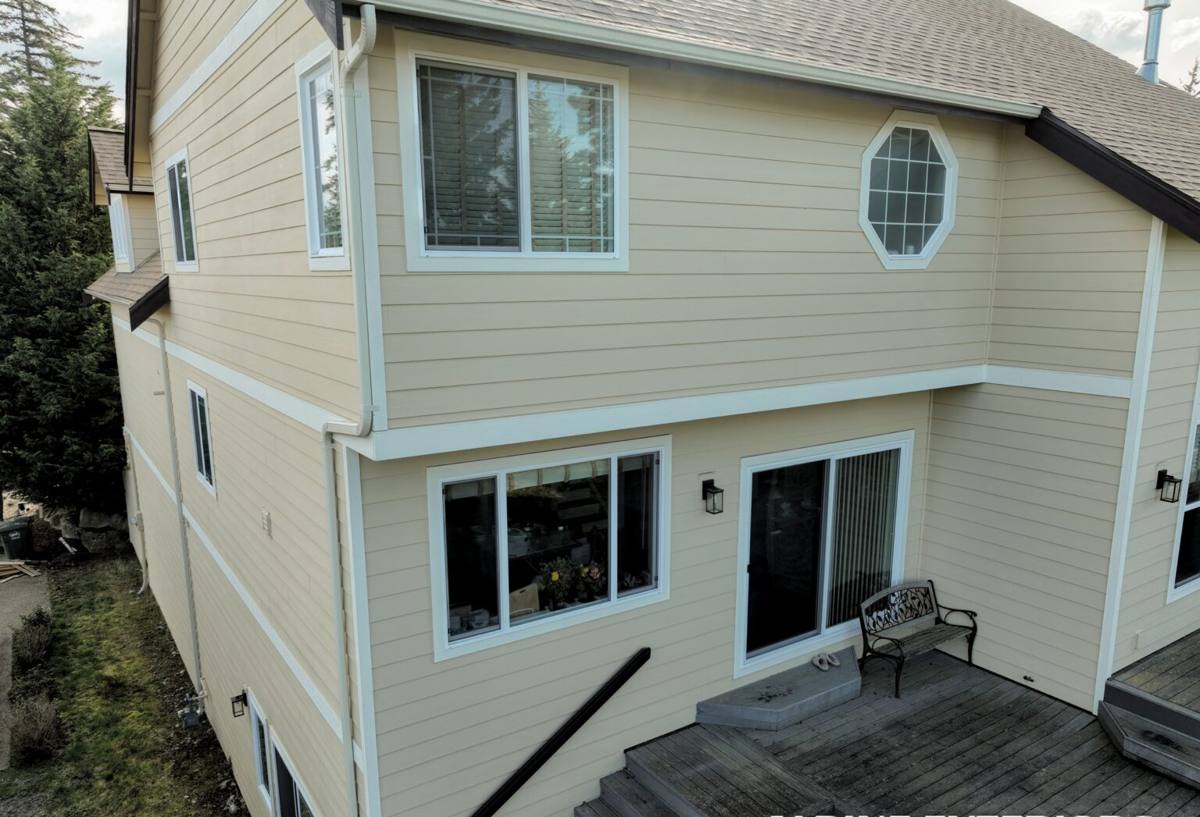
Not every tired-looking deck needs to come out entirely. A deck with isolated board damage, a single soft spot, or a railing section that's come loose can often be repaired without touching the rest of the structure. Full replacement becomes the right call once the problems are structural or widespread rather than cosmetic. Signs it's time to stop patching and start over include:
- Soft, spongy, or spring-feeling framing when you walk across the deck, especially near the house or at the outer edges
- Rot or corrosion damage at more than one ledger, post base, or beam connection, rather than a single isolated spot
- Railing posts that flex or shift under normal pressure — a genuine safety issue, not a cosmetic one
- Widespread fastener corrosion showing as rust streaking across multiple boards, not just a handful of screws
- A deck built before current guardrail height, baluster spacing, or footing depth requirements, where bringing it up to code would mean rebuilding most of it anyway
- Board failure — cracking, splintering, or cupping — across a large share of the surface rather than a few individual boards
If most of what you're seeing falls into one of these categories, a repair is usually a short-term fix that defers the real cost rather than avoiding it. That's the point where full replacement, done correctly, becomes the more honest recommendation.
What Years of Birchwood Weather Do to an Aging Deck
Salt Air and Fastener Corrosion
Salt-laden air moving in off the water accelerates corrosion in exposed metal — deck screws, joist hangers, post brackets, railing hardware — faster than homeowners further inland typically experience. A fastener doesn't need to look rusted through to have already lost meaningful holding strength; corrosion works from the inside of the thread out, which is exactly why an old deck can look structurally sound right up until a board or railing section suddenly doesn't hold.
Wind-Driven Rain and Hidden Rot
Rain in this area rarely just falls and runs off. Wind drives it sideways and forces it up under railing bases, into ledger board connections, and between decking boards that weren't gapped or flashed correctly the first time. Elevated or more exposed Birchwood lots catch this pattern harder than sheltered ones. Over years, that moisture works into framing joints and ledger attachments where it's invisible from the surface — which is exactly why a deck can look presentable right up until a tear-off reveals soft or rotted wood underneath.
A Moss Season That Outlasts Most Deck Finishes
Shaded and north-facing deck surfaces in Birchwood hold moisture long enough, for long enough months of the year, that moss and mildew take hold on almost any decking material that isn't specifically resistant to it. On older wood decking, that usually means a surface that needs re-sealing or staining far more often than the original finish schedule assumed, and a growing number of homeowners simply stop keeping up with it after a few years.
What a Correct Deck Replacement Involves
Full Tear-Off and What It Reveals
Replacing a deck means removing it down to bare ground or foundation, not just the decking boards on top. That's the only way to find out what's actually happened to the framing, ledger connection, and post footings underneath — problems that don't show up in a walk-through inspection because the decking surface is hiding them. It's common to find rot at the ledger, corrosion at hardware connections, or undersized original footings that were never adequate for the deck's actual size and use.
Code Requirements Your Old Deck Was Likely Built Without
A deck built two or three decades ago was very likely permitted under a different, often less strict, version of the building code than applies today. Replacement is the point where those gaps get corrected rather than carried forward. That commonly includes guardrail height, baluster spacing tight enough to meet current safety standards, footing depth and sizing matched to the actual load and frost line, and proper ledger flashing where the deck ties into the house — a detail that a lot of older decks simply never had.
Structural and Fastener Upgrades
A replacement is the natural point to correct exactly what local weather has been attacking for years. That means corrosion-resistant, coastal-grade fasteners and connectors throughout instead of standard hardware, framing lumber rated for sustained moisture exposure, and ledger flashing built into the connection rather than caulked over after the fact. None of this is visible once the deck is finished, which is also why it's the detail most likely to get skipped by a crew focused only on the parts a homeowner will actually see.
Decking Material Selection for the Rebuild
Replacement is also the moment to reconsider whether the original decking material is still the right call. A homeowner replacing 20-year-old wood decking isn't obligated to rebuild in wood — this is the natural point to weigh composite or PVC against the upkeep the old material actually required, given what the site's sun, shade, and wind exposure have shown over the life of the first deck.
Comparing Decking Materials for a Birchwood Replacement
| Material | Handling Salt Air & Wind-Driven Rain | Moss Resistance | Upkeep Going Forward |
|---|---|---|---|
| Cellular PVC | Excellent — no wood fiber to absorb moisture | Strong, smooth non-porous surface | Occasional washing |
| Capped composite | Strong — cap layer resists moisture and staining | Good on most product lines | Occasional washing |
| Uncapped composite | Moderate — some absorption at exposed fiber | Fair; more prone to buildup over time | Periodic cleaning |
| Cedar | Moderate — natural resistance, but needs sealing | Fair when sealed and maintained | Regular oiling or sealing |
| Pressure-treated wood | Weak against sustained salt exposure over time | Poor without regular treatment | Regular sealing or staining |
For a straight one-to-one replacement, matching the original material keeps the cost down and the look consistent with the rest of the property. For a homeowner who's spent the last decade re-sealing wood decking or scrubbing moss off a shaded surface, a replacement is usually the only practical time to switch — retrofitting a different material onto existing framing later rarely makes sense once the substructure is already in place.
Cost Factors in a Birchwood Deck Replacement
| Factor | What It Affects |
|---|---|
| Extent of hidden framing or ledger damage found at tear-off | Whether the rebuild is straightforward or requires additional structural repair |
| Footing and post upgrades to meet current code | Excavation, concrete, and inspection scope beyond the visible deck |
| Decking material chosen | Material cost and long-term maintenance the homeowner takes on afterward |
| Fastener and hardware grade | How well the new structure resists the same salt-air corrosion that affected the old one |
| Railing and stair complexity | Labor time and material cost for custom versus standard configurations |
| Deck size, height, and access | Staging, equipment needs, and site-specific labor time |
Two replacement bids for what looks like the same deck can land far apart once one contractor has actually accounted for footing upgrades and hidden framing repair and the other is quoting as if the substructure will simply be fine. Asking for a written estimate that breaks these items out separately is the clearest way to compare bids that otherwise look identical on the surface.
How Our Deck Replacement Process Works
- On-site inspection: We look at the existing deck in person — framing, ledger connection, post footings, and overall condition — rather than quoting from a description or photo.
- Honest repair-versus-replace assessment: If a repair genuinely makes more sense than a full replacement, we'll say so rather than defaulting to the larger job.
- Material and design discussion: We walk through decking material options, layout, and railing choices based on the site's actual sun, wind, and moisture exposure.
- Permitting: We handle the permit process for the jurisdiction the property falls under, including bringing footings, guardrails, and ledger flashing up to current code requirements.
- Full tear-off: The old deck comes out down to the ground or foundation, and we document anything the tear-off reveals before proceeding.
- Framing, footings, and fastening: The substructure is rebuilt with corrosion-resistant hardware and framing sized for the site's actual conditions, not a generic layout.
- Decking, railing, and finish work: The new surface, railing, and any stairs go on last, followed by a walkthrough covering what the specific material you chose needs going forward.
Why It Matters That We Already Work Birchwood
A contractor who mostly builds decks further inland can still frame a deck competently, but a Birchwood replacement carries specifics that don't come up as often elsewhere in Whatcom County — corrosion-grade fastener requirements from sustained marine exposure, wind-load considerations on more exposed or elevated lots, and a moss season that runs longer here than it does in more sheltered parts of the county. Working this area regularly means those aren't unfamiliar variables on your project. We've torn out enough aging decks here to know what the tear-off is likely to reveal before we even start, and which upgrades are worth the added cost versus which are an unnecessary upsell.
That familiarity also shows up in smaller, practical judgment calls — how to orient a rebuilt deck against the wind a specific lot actually sees, or giving a straight answer about what a deck here genuinely needs to last rather than a generic recommendation.
If your deck is showing its age and you'd like a straight answer on whether it needs repair or full replacement, we're happy to take a look and put together a written estimate you can compare against anything else you've received. Use the form below to request a free, no-pressure estimate.