 Bellingham
 Why Edgemoor Decks Wear Out Faster Than People Expect
Edgemoor sits close to the water, and that proximity is exactly what makes deck replacement here a different job than it is a few miles inland. Salt-laden air moves off Bellingham Bay and settles on everything exposed to it, including fasteners, flashing, and any metal connector holding your deck together. Add in Whatcom County's long wet season and the shade cover common in this neighborhood's mature landscaping, and you get a near-perfect setup for slow, hidden rot and steady moss growth on any horizontal surface that doesn't drain and dry quickly.
Most decks in this area don't fail all at once. They fail in specific spots first: ledger boards where the deck meets the house, post bases sitting in standing water, and joists under boards that never fully dry between rains. By the time the surface boards look bad, the structure underneath has usually been dealing with moisture for years. A replacement done right addresses that structure, not just the walking surface.
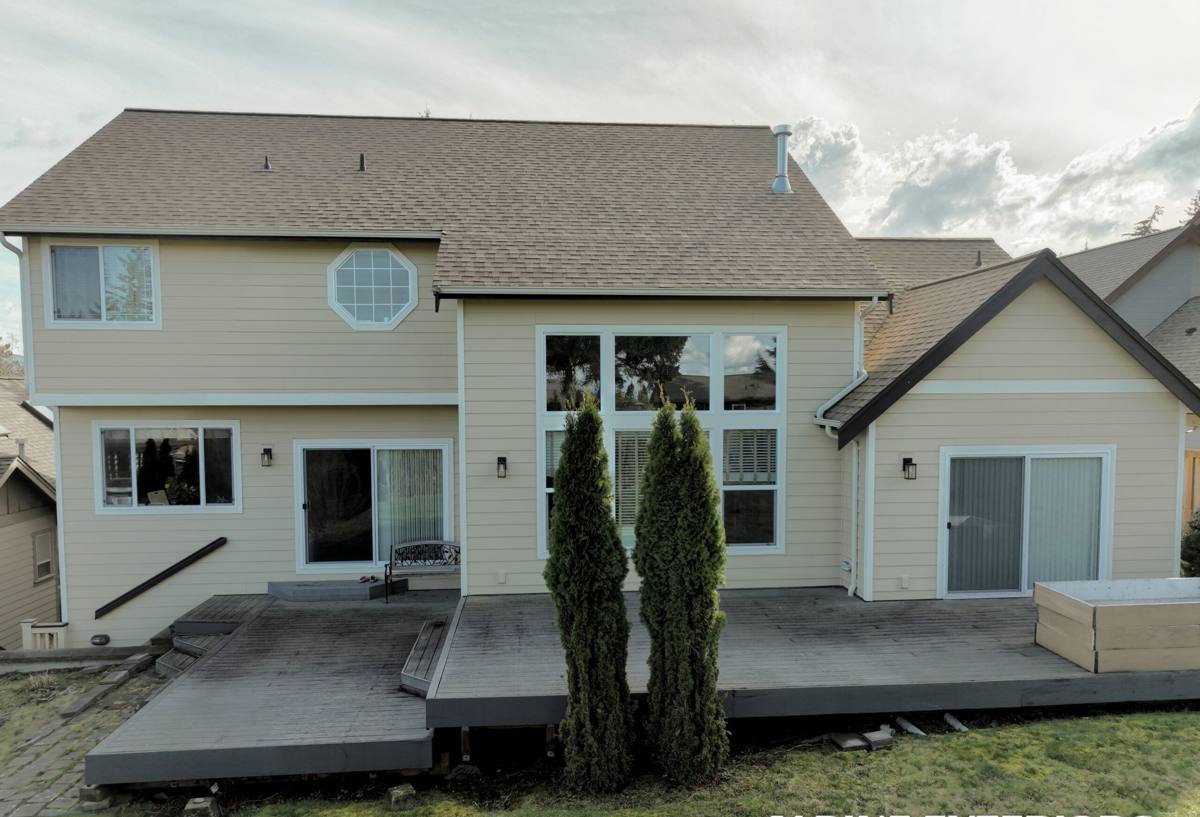
What Edgemoor's Climate Actually Does to a Deck
Salt Air and Metal Hardware
Standard galvanized fasteners and connectors corrode faster near the water than they do further inland. Corroded hardware loses holding strength long before it looks obviously rusted, which is part of why a deck can seem stable right up until it isn't. This is a big reason we're selective about the grade of hardware we use on Edgemoor jobs.
Driving Rain and Wind-Driven Moisture
Rain in this part of Washington doesn't always fall straight down. Wind off the bay pushes moisture sideways, which means it gets up under boards, behind fascia, and into joints that a purely vertical rain wouldn't reach. Flashing and gaps between boards matter more here than they would in a drier, calmer climate.
Moss and the Long Wet Season
Moss needs shade and sustained moisture, and Bellingham's wet season delivers both for months at a time. On a deck, moss isn't just cosmetic. It holds water against the wood surface, slows drying, and turns a walking surface slippery and unsafe well before it looks structurally compromised. Decks under tree cover or on the shaded side of a house need spacing and drainage decisions that account for this from day one.
Signs Your Edgemoor Deck Needs Replacement, Not Repair
- Soft, spongy, or springy spots when you walk across the deck
- Visible gaps or dark staining where the ledger board meets the house
- Post bases sitting in soil or standing water instead of on a dry, elevated footing
- Rust streaks running down from screws, bolts, or joist hangers
- Persistent moss or algae that comes back within weeks of cleaning
- Railings that flex or feel loose when you lean on them
- Boards that have cupped, split, or delaminated at the ends
- A deck older than 15-20 years that has never had the substructure inspected
If what you're seeing is limited to a handful of surface boards and the frame underneath is sound, repair may still make sense. If the ledger connection, joists, or posts are compromised, patching the surface just hides the problem for another season.
What a Correct Deck Replacement Involves
Tear-Out and Structural Assessment
We remove the old decking and inspect the ledger, joists, beams, and posts before deciding what carries forward. In a climate like this one, hidden rot at the ledger-to-house connection is common enough that we treat it as a checkpoint on every job, not an afterthought.
Ledger Flashing and Water Management
The ledger board is where most structural deck failures start, because it's bolted directly to the house and sits at the exact point where water wants to collect. Correct flashing here — installed so water sheds away from the house rather than behind the siding — is one of the most important parts of the whole job and one of the easiest to get wrong.
Footings and Post Bases
Posts need to sit on footings that keep the base of the post out of standing water and off bare soil. In low or shaded parts of a yard, that sometimes means adjusting footing depth or drainage rather than just replicating what was there before.
Framing and Hardware Selection
Given the salt air, we use fasteners and structural connectors rated for corrosion resistance appropriate to a coastal-influenced environment, not the minimum-grade hardware that might be fine further inland. This is a small cost difference at install time and a large difference in how long the frame lasts.
Decking Material and Board Spacing
Board spacing affects how fast a deck dries after rain, which directly affects moss growth and rot risk. We set spacing based on the material, the deck's sun and shade exposure, and how enclosed or open the area underneath is.
Railings and Code Compliance
Railings, guard height, and baluster spacing need to meet current code, which sometimes differs from what was legal when an older deck was originally built. Replacement is the right time to bring these up to current standard.
Decking Material Options for a Coastal Climate
| Material | Moisture & Moss Behavior | Maintenance | Typical Lifespan |
|---|---|---|---|
| Pressure-treated wood | Absorbs moisture; needs sealing to resist moss and rot | Annual cleaning, periodic sealing/staining | 10-15 years with upkeep |
| Cedar | Naturally rot-resistant but still needs care in shaded, wet spots | Regular cleaning and refinishing | 15-20 years with upkeep |
| Composite decking | Doesn't absorb water like wood; still needs cleaning where moss can grow on the surface | Periodic washing, no sealing/staining | 25-30 years |
| PVC decking | Fully moisture-resistant surface, minimal moss adhesion with regular cleaning | Occasional washing | 25-30+ years |
There's no single right answer for every home. A shaded, low-traffic deck in Edgemoor with heavy tree cover is a different situation than an open, sun-exposed deck on the water side of a house, and we'll walk through the honest trade-offs for your specific spot rather than push one product line.
Why We're Careful About What We Won't Do
Some cost-cutting shortcuts show up fine at handoff and cause problems two or three winters later, which is exactly the timeline where they become someone else's warranty claim instead of ours. A few things we hold the line on:
- We don't set posts directly on soil without a proper footing, even when it would save time
- We don't skip ledger flashing to speed up the schedule
- We don't use standard-grade fasteners in exposed, salt-air locations where a corrosion-resistant option exists
- We don't board over a joist or ledger we haven't actually inspected
These aren't dramatic decisions on their own, but skipping any one of them is how a 20-year deck turns into a 10-year deck.
Our Process for an Edgemoor Deck Replacement
- On-site assessment. We look at the existing deck's structure, the ledger connection, drainage under and around the deck, and sun/shade exposure specific to your lot.
- Honest scope discussion. We tell you plainly whether you need a full replacement or whether targeted repair is a reasonable option, and why.
- Material selection. We go through decking and railing options with real trade-offs for your site conditions, not just a catalog pitch.
- Written estimate. Scope, materials, and timeline in writing before any work starts.
- Tear-out and structural work. Old decking removed, framing and footings inspected and corrected as needed, ledger flashing installed properly.
- Decking, railing, and finish work. Installed with spacing and hardware suited to this climate.
- Final walkthrough. We go over the finished deck with you and flag any maintenance you should keep an eye on given your specific sun/shade exposure.
Why Local Experience in Edgemoor Matters
A deck built to a generic national spec can still fail early in a place like Bellingham if it doesn't account for salt air, driving rain, and a wet season that runs much longer than in drier parts of the country. A crew that already works this neighborhood knows which yards tend to hold moisture, which exposures see the worst wind-driven rain, and where moss becomes a recurring maintenance issue rather than an occasional one. That local pattern recognition shows up in small decisions — footing depth, hardware grade, board spacing — that add years to a deck's life.
It also matters for permitting and code compliance specific to Whatcom County and the City of Bellingham, since requirements for railings, footings, and setbacks can differ from other jurisdictions. Working with a contractor who already navigates that process locally means fewer surprises and delays.
Maintaining Your New Deck in This Climate
Even a well-built deck needs some seasonal attention here. A simple annual routine goes a long way:
- Clear leaves and debris from between boards before the wet season sets in
- Rinse off moss and algae buildup on shaded sections before it gets established
- Check railings and stair connections for any looseness once a year
- Keep gutters and downspouts near the deck clear so runoff isn't draining directly onto or under it
- Reseal or refinish wood decking on the schedule appropriate to the product you chose
We'll walk you through the specific maintenance schedule that fits the material and exposure of your new deck when the job wraps up.
If your deck is showing signs of rot, soft spots, or persistent moss, or if it's simply reaching the age where the structure underneath deserves a real look, we're happy to come out and give you a straight assessment. Fill out the form below for a free, no-pressure estimate on your Edgemoor deck replacement.