 Bellingham
 Fairhaven's Roofs Work Harder Than Most
Fairhaven sits close to Bellingham Bay, which means homes here deal with a combination that inland Whatcom County neighborhoods don't face in the same way: salt-laden air off the water, wind-driven rain that hits roof planes from the side instead of straight down, and a moss season that can run most of the year under the district's mature tree cover. Any one of these will shorten a roof's life if it's not accounted for. Together, they're the reason a roof that performs well in a drier climate can fail early here.
A correct new roof installation in Fairhaven isn't just about picking a shingle color and nailing it down. It's about choosing materials and details that hold up against corrosion, keep wind-blown water out of the deck, and don't turn into a moss farm within a few winters. That's the lens we bring to every roof we install in this part of Bellingham.
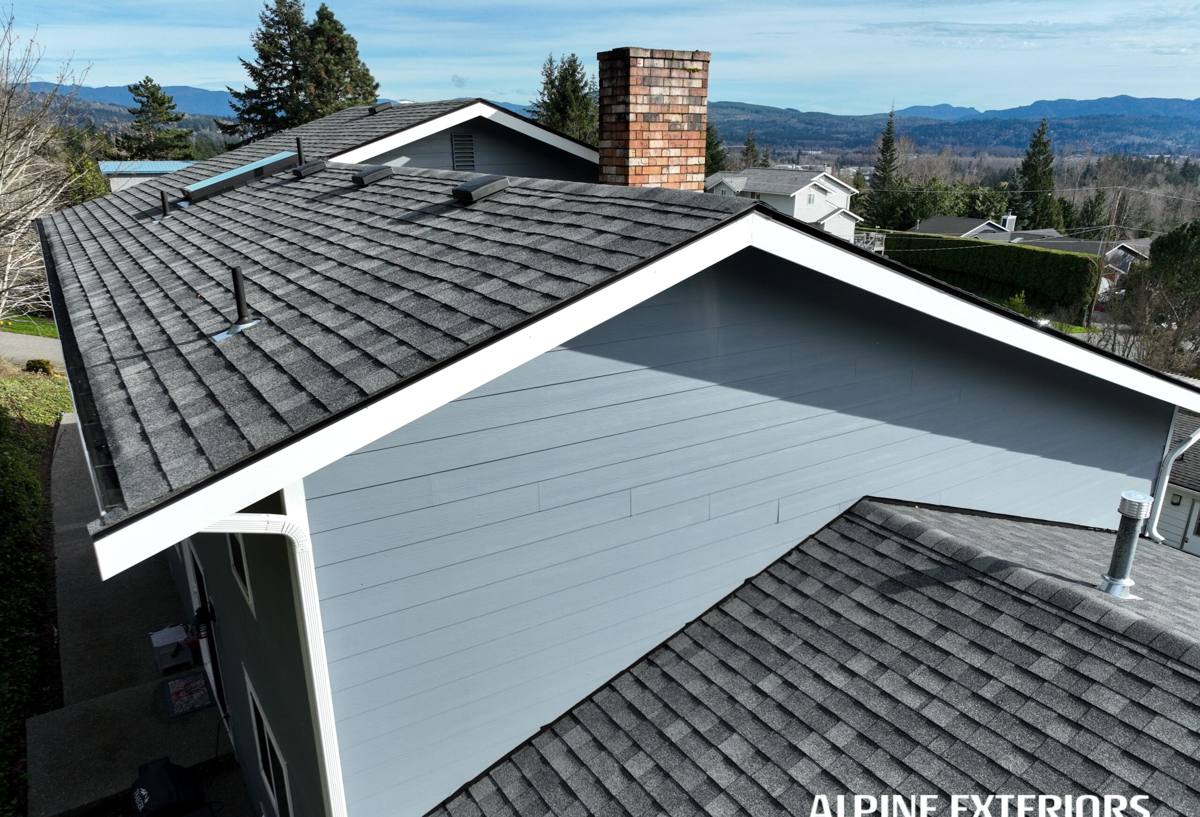
What the Marine Climate Actually Does to a Roof
Salt Air and Metal Corrosion
Proximity to the water means airborne salt settles on every exterior surface, including roofing hardware. Fasteners, flashing, and drip edge that aren't rated for a marine environment corrode faster here than the same products would twenty minutes inland. Once fasteners start to fail, shingles loosen, flashing lifts, and small leaks start showing up in places that are hard to trace back to the source.
Driving Rain and Lateral Water Intrusion
Storms coming off the water often push rain sideways rather than letting it run straight off the roof. That matters at every penetration, valley, and edge — laps and seals that would be fine in calm rain can get water forced underneath them in a wind-driven event. Underlayment coverage and flashing detail carry more of the waterproofing burden here than they would on a simpler, more sheltered roof.
Moss, Algae, and a Long Wet Season
Bellingham's damp, mild climate and Fairhaven's tree canopy create ideal moss conditions for much of the year. Moss doesn't just look bad — it holds moisture against the roofing material, works its way under shingle tabs, and can lift and crack them over time. Roofs with poor airflow or heavy shade need a design that accounts for moss from day one, not a bolt-on treatment after it's already established.
What a Correct New Roof Installation Involves
A new roof is only as good as what happens before the first shingle goes down. We treat installation as a sequence of decisions, each one either protecting the home for decades or setting up a problem that shows up in five years.
Tear-Off and Deck Inspection
We remove the old roofing down to the deck rather than layering over it. That lets us actually see the sheathing — soft spots, delamination, or water staining get found and repaired before they're covered up again. Installing new roofing over a compromised deck just hides the problem and voids most manufacturer warranties anyway.
Underlayment Selection
Given how much wind-driven rain Fairhaven sees, we lean toward synthetic underlayment with full ice-and-water shield coverage at eaves, valleys, and penetrations rather than the minimum a code inspector would require. It costs more up front and pays for itself the first time a winter storm tests it.
Flashing and Penetration Detail
Chimneys, vents, skylights, and wall intersections are where roofs actually leak — the field of the roof rarely fails first. We use corrosion-resistant flashing and proper step-and-counter-flashing details rather than relying on caulk or sealant as a primary water barrier. Sealant is a maintenance item, not a waterproofing plan.
Ventilation and Attic Airflow
Balanced intake and exhaust ventilation keeps attic temperatures and humidity in check, which slows moss growth on the roof surface and prevents condensation issues inside the attic. On a lot of older Fairhaven homes, ventilation was an afterthought in the original build — a re-roof is the right time to correct it.
Choosing Materials for a Salt-Air, Moss-Prone Site
There's no single "best" roofing material for every home — the right choice depends on the home's exposure, tree cover, roof pitch, and the homeowner's maintenance appetite. Here's how the common options stack up for a Fairhaven property specifically.
| Material | Salt Air Performance | Moss Resistance | Maintenance Load |
|---|---|---|---|
| Architectural asphalt shingle | Good, with corrosion-rated fasteners and flashing | Moderate — benefits from copper or zinc strips | Low to moderate |
| Standing seam metal | Very good when properly coated and fastened | Very good — sheds moss more readily than shingles | Low |
| Cedar shake | Requires diligent maintenance near salt air | Needs regular treatment; moss takes hold quickly under shade | High |
| Composite/synthetic shake | Good | Good, with proper ventilation | Low to moderate |
We don't push one material on every roof. What we won't do is install a system without accounting for its specific weak point in this climate — that means corrosion-rated hardware on metal, moss-resistant strategy on shingles, and an honest conversation about the upkeep cedar demands if a homeowner wants that look. The goal is a roof that matches how much maintenance the owner actually wants to do, not just how it looks on day one.
Cost Factors for a Fairhaven Re-Roof
Roofing costs vary by roof size, pitch, layers to remove, and material, but a few factors specific to this area tend to move the number more than homeowners expect.
| Factor | Why It Matters Here |
|---|---|
| Roof access and tree cover | Mature trees common in Fairhaven can require extra care or trimming coordination for safe material staging |
| Deck repair after tear-off | Homes with a history of moss or slow leaks often need more sheathing replacement than expected |
| Upgraded underlayment | Full ice-and-water coverage costs more than code minimum but matters more given wind-driven rain |
| Fastener and flashing grade | Corrosion-resistant hardware costs a bit more but avoids early failures near the water |
| Ventilation corrections | Older homes may need added intake or exhaust vents, which adds labor but reduces moss and attic moisture long-term |
We'd rather explain these line items up front than have a homeowner wonder later why one quote was lower than another — usually it's because something on this list got skipped.
Our Process, Start to Finish
- On-site inspection of the existing roof, deck condition, ventilation, and any signs of moss or water damage
- Written estimate that breaks out material, labor, and any deck repair allowance so there are no surprises mid-job
- Material selection conversation based on the home's exposure, shade, and the owner's maintenance preferences
- Permitting where required, and coordination around weather windows given how much rain the schedule has to work around
- Tear-off, deck inspection and repair, then underlayment, flashing, and ventilation installed before the roofing material goes on
- Final walk-through covering what was done, what to watch for, and basic maintenance guidance for moss and gutter upkeep
Permits, Wind Exposure, and Local Code
Bellingham and Whatcom County have permitting requirements for full roof replacements, and inspectors will check underlayment coverage, flashing details, and ventilation as part of sign-off. Roofs closer to the water, including much of Fairhaven, also warrant a closer look at wind exposure when it comes to fastening patterns and shingle wind ratings — a roof spec that's adequate a few miles inland isn't automatically the right call on a bluff or open-exposure lot near the bay. We handle the permit process and build to the exposure the home actually has, not a generic minimum.
Signs Your Fairhaven Roof May Need Replacement, Not Repair
- Granule loss heavy enough that shingles look patchy or bald in sun-exposed areas
- Persistent moss growth that returns within a season of cleaning
- Soft spots, sagging, or visible staining on the underside of the roof deck from the attic
- Curling, cracked, or missing shingles, especially after a windy winter storm
- Corroded or rusted flashing, vent boots, or fasteners
- Repeated small leaks in different spots rather than one consistent trouble area
- The roof is nearing or past its material's typical service life and repairs are becoming frequent
If a roof is showing one or two of these, a targeted repair might still make sense. Several at once, especially combined with an aging roof, usually means replacement is the more honest recommendation — and we'll tell you that directly rather than stringing along repairs on a roof that's done.
Why a Crew That Already Works Fairhaven Makes a Difference
A roofing crew that works across Whatcom County knows in the abstract that coastal exposure matters. A crew that regularly works Fairhaven specifically knows which streets sit in more open wind exposure, which lots hold onto moss longest because of shade and slope, and which older homes in the neighborhood tend to need ventilation corrections during a re-roof. That local pattern recognition shows up in the estimate, in the material recommendation, and in how the job is detailed — not as a sales pitch, but as fewer surprises during the work and fewer callbacks after it.
It also means we're a known, reachable local business if a question comes up after the job is done, not a crew that finished a project and moved three counties away.
Get a Straightforward Estimate
If your Fairhaven home needs a new roof, we're happy to come take a look, walk you through what we see, and put together a written estimate with no pressure to decide on the spot. Use the form below to request a free estimate and we'll get back to you to schedule a time that works.