 Bellingham
 Why Siding Choice Matters for Columbia Homes
The Columbia neighborhood sits close enough to Bellingham Bay that homes here deal with a specific combination of stresses most siding products were never engineered for: salt-laden air, near-constant winter rain, and long stretches of shade and dampness that keep moss and algae growing well past the season most homeowners expect. Siding in this part of Whatcom County isn't just cosmetic — it's the first line of defense against moisture intrusion that can quietly rot sheathing and framing behind a wall that looks fine from the curb.
We install James Hardie fiber cement siding exclusively, and this page is about why that matters specifically for a home in Columbia, not just in general terms. The right product, installed correctly, holds up to what this climate throws at it. The wrong product, or the right product installed poorly, tends to show its problems slowly, which is worse — by the time you notice, moisture has usually already gotten behind the cladding.
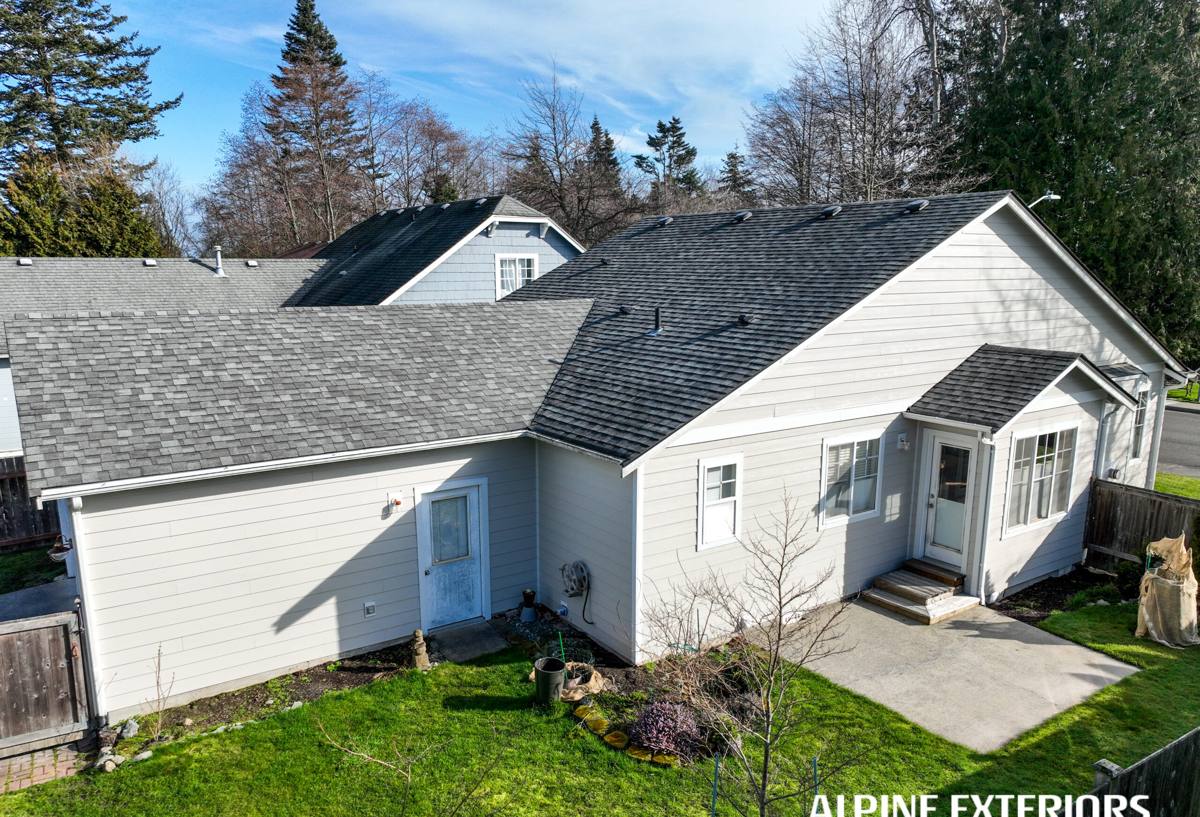
What Bellingham's Climate Actually Does to Siding
Salt Air and Coastal Exposure
Homes within a few miles of Bellingham Bay are exposed to airborne salt that accelerates corrosion on fasteners, flashing, and any metal trim. It also has a slow but real effect on paint and caulk adhesion over time. Materials and finishes that aren't rated for coastal exposure tend to chalk, fade, or fail at seams years before they would inland.
Driving Rain and Wind-Driven Moisture
Whatcom County doesn't just get a lot of rain — it gets rain that's frequently pushed sideways by wind off the water. That matters because it changes where water actually contacts a wall. Horizontal rain finds its way into laps, seams, and penetrations that would stay dry in a climate with mostly vertical rainfall. Siding systems and installation details that work fine in drier regions can leak here if they weren't built with wind-driven rain in mind.
The Long Moss Season
Shaded, north-facing walls and anything near mature trees in Columbia can stay damp for months at a time. That's ideal moss and algae territory. On some siding materials, that constant dampness contributes to swelling, delamination, or paint failure. On others, it's mostly a surface appearance issue that washes off. Knowing which category your siding falls into changes how much maintenance you're signing up for.
Why We Only Install James Hardie
We made a deliberate decision to standardize on James Hardie fiber cement rather than offer a menu of siding brands and materials. Fiber cement itself isn't a Hardie invention, but Hardie's engineering, factory finish process, and climate-specific product lines are the reason we trust it enough to put our name behind it on every job.
Climate-Engineered HZ Product Line
Hardie's HZ5 product formulation is engineered for the wetter, milder climate zones that include the Pacific Northwest, as opposed to the HZ10 formulation built for hot, humid, freeze-heavy regions. That distinction sounds minor, but it affects how the board handles moisture cycling over decades, not just in year one.
ColorPlus Factory Finish
Rather than relying on field-applied paint, Hardie's ColorPlus finish is baked on at the factory in multiple coats under controlled conditions. That finish is significantly more resistant to fading, chipping, and the kind of UV and moisture wear a Bellingham exterior deals with year-round, and it comes backed by its own finish warranty separate from the substrate warranty.
Non-Combustible, Dimensionally Stable
Fiber cement doesn't expand and contract with moisture the way wood-based products do, and it's non-combustible, which matters for insurance considerations as much as fire safety. It also doesn't provide the food source for pests that wood siding does.
What a Correct Installation Actually Involves
Most siding failures we get called out to inspect aren't material failures — they're installation failures. Hardie siding is only as good as the water management system it's installed over. In a climate like Columbia's, the margin for error is smaller than it would be somewhere drier.
| Installation Detail | Why It Matters Here |
|---|---|
| Weather-resistant barrier (house wrap) properly lapped | Backstops any water that gets past the siding face during wind-driven rain |
| Correct fastener type and spacing | Salt air accelerates corrosion on the wrong fastener; loose fastening invites water entry at panel faces |
| Proper clearance from grade, decks, and roof lines | Keeps splash-back and ponding moisture off the bottom edge of the board |
| Flashing at every window, door, and penetration | These are the most common leak points in any siding system, especially under sideways rain |
| Caulking only where Hardie specifies, not everywhere | Over-caulking can trap moisture instead of letting the assembly dry properly |
| Painted or factory-finished cut edges | Raw cut edges absorb moisture fastest; sealing them protects the board's long-term performance |
Any one of these done wrong won't necessarily cause a problem in the first year. That's what makes bad installations dangerous — they tend to surface as rot, staining, or paint failure three, five, even ten years down the road, after the installer is long gone.
Our Process for a Columbia Home
- Inspection and moisture check. We look at the existing siding, sheathing, and any trouble spots — especially on shaded or north-facing walls where moss and moisture tend to concentrate.
- Scope and product selection. We walk through Hardie's plank, panel, and shingle options, plus ColorPlus color choices, based on your home's style and exposure.
- Tear-off and sheathing assessment. Old siding comes off so we can actually see the wall behind it — this is where hidden moisture damage, if any, gets found and addressed before new siding goes on.
- Weather barrier and flashing installation. This is the step that determines whether the wall stays dry for the next 30-plus years, and it's the step that's easiest to rush if a crew doesn't know the region.
- Hardie installation to manufacturer spec. Correct fastening, clearances, and joint treatment, following Hardie's published installation requirements rather than shortcuts.
- Final walkthrough. We go over the finished work with you before we consider the job done.
Cost Factors for James Hardie Siding in This Area
We don't publish flat per-square-foot pricing because it genuinely depends on your home, but these are the variables that move the number most:
| Factor | How It Affects Cost |
|---|---|
| Home size and number of stories | More surface area and taller walls both add material and labor |
| Existing siding removal | Tear-off of old wood, vinyl, or other cladding adds labor beyond a straightforward install |
| Sheathing or framing repair | Any rot found once old siding is off needs to be repaired before new siding goes on |
| Trim and detail complexity | Dormers, multiple gables, and lots of window/door trim take more time than a simple rectangular wall |
| Siding profile chosen | Lap, shingle, and panel styles carry different material and labor costs |
| Color and finish | Factory ColorPlus finishes vary by product line and color selection |
The only way to get an accurate number is a walkthrough of your specific home — anything given without seeing the house is a guess.
Living With It: Maintenance in a Moss-Prone, Salt-Air Environment
James Hardie siding is low-maintenance compared to wood, but "low-maintenance" doesn't mean "no maintenance," especially in a coastal, moss-heavy climate. A little routine care goes a long way toward getting the full lifespan out of the product:
- Rinse siding gently once or twice a year, especially on shaded or north-facing walls where moss and algae tend to build up
- Avoid high-pressure washing directly at seams and joints — use low pressure and a soft brush for stubborn moss
- Keep gutters clear so overflow doesn't run down the siding face repeatedly
- Trim back vegetation and tree limbs that keep a wall section shaded and damp longer than the rest of the house
- Re-caulk at manufacturer-specified joints if you notice cracking or separation, rather than adding caulk everywhere
- Have any impact damage or corner damage repaired promptly rather than leaving cut edges exposed to moisture
Why a Crew That Already Works in Columbia Matters
Installation quality is the single biggest variable in how well siding performs here, and that quality depends heavily on whether a crew actually understands this climate or is just following a generic install checklist. A crew that regularly works in Bellingham and the surrounding Whatcom County neighborhoods already knows which walls in a given orientation tend to hold moisture, how local wind patterns drive rain into seams, and where prior crews in this area have historically cut corners on flashing. That local pattern recognition is hard to replicate from a general contractor's manual — it comes from having stood on ladders on these specific streets, in this specific weather, for years.
It also means faster, more accurate estimates, because we're not guessing at regional pricing or material lead times — we know what's typical for a Columbia-area home and what isn't.
If you're weighing a siding replacement or just want an honest read on the condition of your current siding, we're happy to take a look. The estimate is free, there's no pressure, and you'll get a straight answer about what your home actually needs.