 Bellingham
 Why Lynden's Climate Is Harder on Siding Than It Looks
Lynden sits in a part of Whatcom County that takes weather from two directions. Marine air moving in off Puget Sound and the Strait of Georgia carries salt that settles on every exterior surface in the region, siding included. At the same time, Lynden's agricultural, low-lying setting near the Nooksack River means fog, dew, and standing humidity linger longer here than they do a few miles into town. Add a wet season that can stretch from fall through spring, and you get a siding environment that punishes anything with a weak moisture defense.
Moss is the visible symptom. On north-facing walls, under eaves, and anywhere sun doesn't reach for long stretches, moss and algae take hold on siding that stays damp too long. It's not just cosmetic — moss holds moisture against the surface, which accelerates whatever underlying problem the siding already has, whether that's a failing paint film, swelling wood fiber, or a caulk joint that gave up years ago. Homes in Lynden that go a full siding lifecycle without a moisture-smart product and a correct installation usually show it first in the moss line, then in soft trim, then in paint that won't hold.
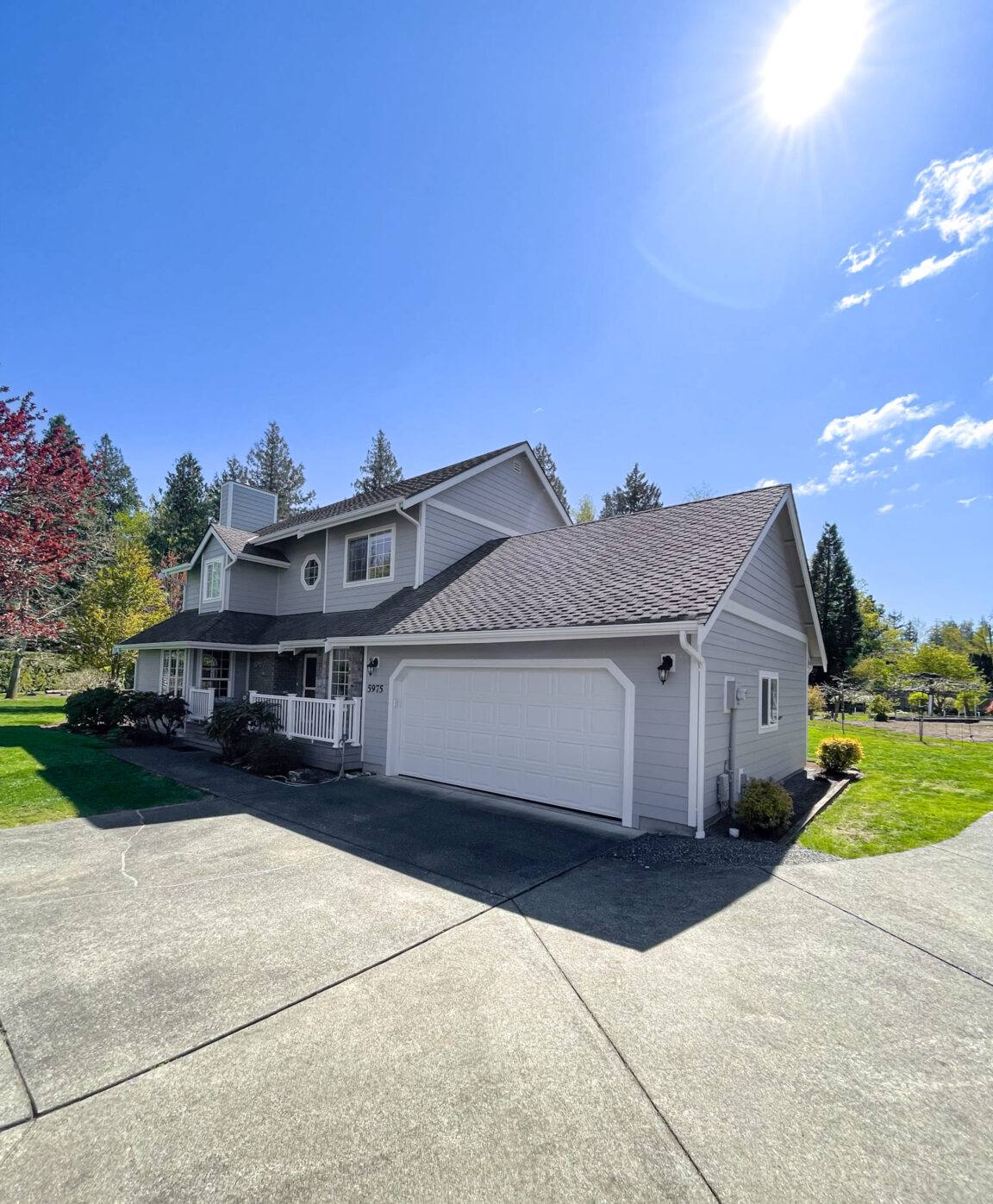
What Fiber Cement Actually Needs to Do Here
Fiber cement siding is cement, sand, and cellulose fiber pressed and cured into a plank. It doesn't rot, it doesn't feed insects, and it doesn't expand and contract with humidity the way wood-based products do. That combination matters directly for Lynden's climate: a material that isn't organic doesn't give moss and mildew the organic surface they prefer, and a material that's dimensionally stable holds paint and caulk lines far longer through repeated wet-dry cycles.
But fiber cement only delivers on that promise when it's installed correctly. The board itself is only half the system — the other half is how it's flashed, gapped, fastened, and finished. A fiber cement job that ignores those details will still eventually let moisture behind the cladding, and once that happens the sheathing and framing underneath pay the price, not the siding face.
The Installation Details That Actually Matter
- Correct clearance at grade, decks, and roof lines — fiber cement needs a gap to keep it out of standing water and splashback, matched to manufacturer minimums.
- Weather-resistive barrier installed and lapped correctly behind the siding, not just present but shingle-lapped so water drains out, not in.
- Rigid flashing at every window, door, and butt joint — not caulk used as a substitute for flashing.
- Fastener placement and depth per the manufacturer's schedule — overdriven or underdriven nails are one of the most common causes of early failure.
- Butt joints back-flashed or sealed with a product rated for the joint, not just caulked and painted over.
- Factory-primed cut edges resealed on site before installation, since a raw cut edge is the fastest path for moisture into the board.
Why This Company Installs Only James Hardie
We install James Hardie fiber cement exclusively. We don't install vinyl, LP SmartSide, primed wood, or cedar, and we don't offer other fiber cement brands as a lower-cost alternative. That's a deliberate standard, not a sales position. Hardie engineers its HZ5 product line specifically for climates with prolonged damp and moderate freeze-thaw exposure — which describes Whatcom County well — and backs it with a factory-applied ColorPlus finish that's baked on under controlled conditions rather than field-painted. For a region where moss, salt air, and driving rain are working against the paint film year-round, that factory finish is the difference between a repaint every several years and a color that holds through the warranty period.
We'd rather turn down a job than install a product we don't trust to perform in this specific climate for the years a homeowner expects it to last. That's the whole reason we standardized on one manufacturer instead of offering several tiers.
HardiePlank Lines Suited to Lynden Homes
| Product | Profile | Best fit for Lynden |
|---|---|---|
| HardiePlank HZ5 | Lap siding, several reveal widths | Standard choice for full re-sides; engineered for damp, moderate-freeze climates like ours |
| HardiePanel | Vertical panel | Accent walls, gables, shop and outbuilding exteriors common on Lynden's larger lots |
| HardieTrim | Trim boards | Window, corner, and fascia trim that won't rot the way primed wood trim does under long moss season exposure |
| HardieSoffit | Vented/non-vented panel | Eave protection where moisture and moss pressure concentrate under overhangs |
Common Problems We See on Lynden Homes Needing Re-Siding
Because Lynden mixes older farmhouses, mid-century homes, and newer construction, we see a wide range of siding failures, but a few patterns repeat:
- Wood or hardboard lap siding with soft, delaminating bottom edges from years of splash-back and moss cover near grade.
- Caulk-dependent butt joints and trim lines that have cracked open, letting water track behind the cladding.
- Heavy moss buildup on north and west elevations that's been painted over repeatedly instead of addressed at the substrate.
- Vinyl siding that's warped or faded on south-facing walls, with rot discovered underneath only once panels are pulled.
- Missing or undersized flashing at windows installed during a prior remodel, found only once the old siding comes off.
None of these are unique to Lynden, but the frequency and severity are higher here than in drier parts of the state, simply because the wet season runs longer and the salt air adds a corrosive element that inland homes don't deal with.
Our Process for a Lynden Fiber Cement Job
1. Assessment and Substrate Check
Before we talk product or color, we look at what's underneath the existing siding. Soft sheathing, hidden rot, or undersized flashing changes the scope of the job, and we'd rather find it during the estimate than after demo starts.
2. Tear-Off and Sheathing Repair
Old siding comes off, damaged sheathing is replaced, and any rot found in framing is addressed before anything new goes up. This is the step that gets skipped on corner-cutting jobs and it's the one that determines whether the new siding lasts.
3. Weather Barrier and Flashing
A new weather-resistive barrier goes on lapped correctly, with rigid flashing at every penetration — windows, doors, hose bibs, light fixtures — before a single piece of Hardie board is hung.
4. Installation to Manufacturer Spec
Boards are hung with correct clearances at grade and roof lines, proper fastener spacing and depth, and sealed cut edges. Butt joints are flashed, not just caulked.
5. Trim, Caulk, and Final Finish
Trim goes on last, joints get a paintable, siding-rated sealant, and touch-up is done to any factory-finished edges that were field-cut.
6. Walkthrough
We walk the finished job with the homeowner, covering what maintenance actually looks like going forward and pointing out anything worth watching, like a low eave or a shaded wall likely to collect moss first.
What Fiber Cement Siding Costs in Lynden
Every re-side is different once tear-off, sheathing repair, and trim scope are factored in, but the variables below are what actually move the number on a Lynden job:
| Cost factor | Why it matters here |
|---|---|
| Extent of hidden rot found at tear-off | Older farmhouses and homes with a history of moss cover often need more sheathing and framing repair than the outside suggests |
| Home size and number of stories | More square footage and elevation directly scale labor and material |
| Trim and accent detail | Gable accents, HardieTrim packages, and shake-style accent panels add labor beyond a straight lap job |
| Color selection | Standard ColorPlus colors are the most cost-efficient; custom color-matching adds cost |
| Site access | Larger rural lots can mean easier staging, but longer runs and outbuildings add scope |
Maintenance Once It's Installed
Correctly installed Hardie siding is low-maintenance, not no-maintenance. In a climate like Lynden's, a little attention prevents most problems:
- Rinse siding annually, focusing on north-facing and shaded walls where moss and algae start first.
- Keep gutters clear so overflow doesn't run down the siding face repeatedly.
- Trim back shrubs and trees holding moisture against the wall.
- Inspect caulk joints at trim and butt joints every couple of years and have any cracked sealant redone before it fails.
- Address any soft-feeling trim or discoloration promptly rather than waiting for it to spread.
Why Hiring a Crew That Already Works in Lynden Matters
A contractor who works this area regularly already knows which elevations on a given lot are going to fight moss, how far up a wall salt-driven weathering typically shows, and where the wet season causes the most trouble on homes with the layout common to this part of the county. That's not something you get from a general contractor working from a different climate zone or a crew that only passes through occasionally. It shows up in small decisions — where extra flashing attention goes, which walls get called out during the walkthrough — that add years to how long the siding performs.
If you're planning a re-side in Lynden and want to know what correct fiber cement installation actually looks like for your home, we're happy to take a look and walk you through it. Fill out the form below for a free, no-pressure estimate.