 Bellingham
 Window Installation Built for Lynden's Climate
Lynden sits inland from Bellingham Bay in the Nooksack River valley, but "inland" doesn't mean dry. Whatcom County's marine-influenced weather still reaches Lynden in the form of long, soaking rain events, heavy valley fog, and damp winters that can stretch from October into April. Homes here don't deal with direct salt spray the way waterfront properties closer to Bellingham and Semiahmoo do, but they take a different kind of beating: sustained moisture, wide seasonal temperature swings, and shaded, tree-lined lots where moss and mildew get a real foothold on anything that stays wet too long.
Windows are one of the first places that shows up. A window that's sealed and flashed correctly sheds water and keeps moving air where it belongs. One that isn't lets water track behind the trim, soak into the framing, and quietly rot a wall from the inside — long before anyone notices a stain on the drywall. That's the whole case for getting installation right the first time, especially in a climate that rarely lets wood framing dry out fully between storms.
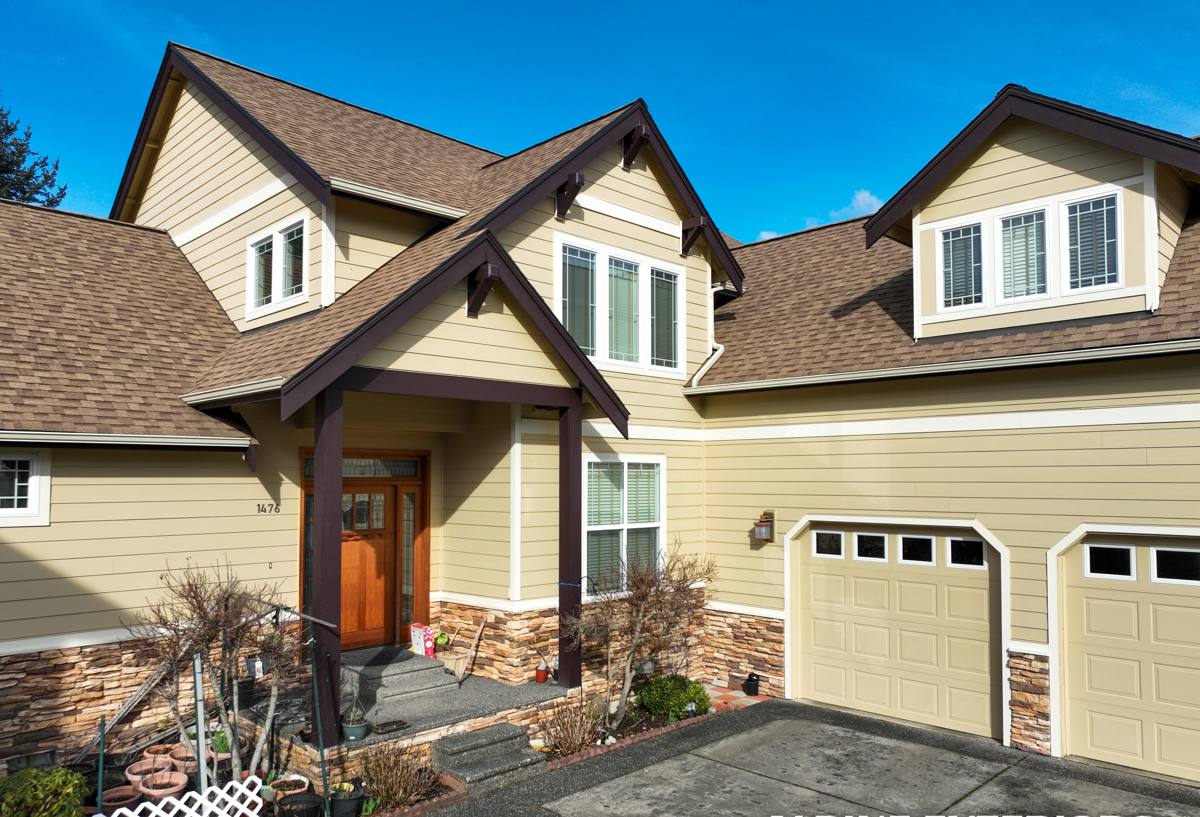
Signs a Lynden Home Needs New Windows
Most window failures here aren't dramatic. They show up as small annoyances that get worse every wet season. Homeowners in Lynden and the surrounding farmland typically start noticing one or more of the following:
- Condensation building up between the panes of a double-pane window — a sign the seal has failed and the insulating gas is gone
- Soft or discolored trim and sill wood around the window opening, especially on north- and west-facing walls that get the most driving rain
- Drafts you can feel by holding a hand near the frame on a windy day
- Difficulty opening, closing, or locking a window that used to operate smoothly — often a sign the frame has shifted or swollen
- Visible moss, algae, or dark streaking on the exterior trim or siding just below the window
- A noticeable rise in heating costs during the winter months with no other explanation
Any one of these on its own might just mean a caulking touch-up. Several at once, or wood that's gone soft to the touch, usually means the window and its surrounding flashing need to come out and be replaced properly.
What a Correct Installation Actually Involves
It's Not Just the Window
A window unit is only as good as the opening it sits in. In a climate that sees this much sustained rainfall, the installation details matter more than the brand name on the glass. A correct job addresses the whole assembly, not just the visible frame.
The Steps That Actually Matter
Every proper installation, whether it's new construction or a replacement, follows the same basic sequence:
- Remove the old unit carefully and inspect the rough opening for rot, soft framing, or prior water intrusion before anything new goes in
- Repair or replace any damaged framing — installing a new window into a compromised opening just hides a problem instead of fixing it
- Install a sloped sill pan so any water that gets past the window has somewhere to go besides straight down into the wall
- Integrate flashing with the house wrap in the correct shingle-lap order (sides, then sill, then head) so water sheds outward and never behind the barrier
- Set the window plumb, level, and square — an out-of-square unit stresses the frame, wears the hardware faster, and can leave gaps that fail early
- Insulate the gap between the frame and rough opening without over-packing, which can bow the frame and cause it to bind
- Seal the exterior with the right sealant for the siding type, leaving the bottom of the flashing system able to weep out any trapped moisture
- Finish and test every sash and lock before calling the job done
Skip the sill pan or reverse the flashing order, and a window can look perfect for two or three years before a wall cavity starts showing damage that costs far more to fix than the original installation would have.
Choosing the Right Window for This Climate
Whatcom County's damp, moderate climate is fairly forgiving on materials compared to areas with extreme heat or hard freezes, but a few factors still matter more here than they would elsewhere: how well a frame handles years of moisture exposure without warping, and how much upkeep it demands in a climate that doesn't give surfaces much time to dry out.
| Frame Material | Moisture Behavior | Maintenance | Typical Fit |
|---|---|---|---|
| Vinyl | Won't rot or corrode; expands/contracts with temperature swings | Low — occasional cleaning | Most retrofit and replacement projects |
| Fiberglass | Very stable in wet, variable climates; minimal expansion | Low | Larger openings, higher-exposure walls |
| Wood (unclad) | Attractive but absorbs moisture without diligent upkeep | High — regular painting/sealing | Historic or design-driven projects only, with eyes open on upkeep |
| Wood-clad (metal or vinyl exterior) | Exterior sheds water; interior keeps wood look | Moderate | Homeowners who want a wood interior without the exterior maintenance |
We steer most Lynden homeowners toward vinyl or fiberglass on the exterior-facing side of things, simply because those materials don't need repainting or re-caulking every few years to keep water out. That's not a knock on wood — it's a genuine, honest trade-off between appearance and the maintenance schedule a wet climate demands. If a homeowner wants a wood interior finish, clad options let them have that look without exposing bare wood to the weather.
Glass Package Matters Too
Beyond the frame, the glass package affects comfort and condensation control. Double-pane, low-E glass with an argon fill is the standard baseline for this region — it cuts heat loss in winter and helps keep interior glass surfaces from fogging up on cold, damp mornings, which is a common complaint in older single-pane homes around Lynden.
New Construction vs. Full Replacement
How a window gets installed depends heavily on whether it's going into new framing or replacing an existing unit:
- New construction / full-frame replacement: The old window and its nailing flange are removed entirely, exposing the rough opening and house wrap. This allows a complete flashing and sill pan installation and is the more thorough option when siding is already off or being replaced.
- Pocket (insert) replacement: A new window is installed inside the existing frame, leaving the old flashing in place. This is faster and less invasive but only makes sense when the existing frame and flashing are confirmed to be in good, dry condition.
We inspect the opening before recommending either approach. Pushing a pocket replacement into a frame that already has hidden water damage just seals the problem inside the wall — it's a shortcut that costs more later.
Cost Factors Homeowners Should Understand
Every project is different, but the price of a window installation in Lynden generally comes down to a handful of factors rather than the sticker price of the window itself:
| Factor | Why It Affects Cost |
|---|---|
| Full-frame vs. pocket replacement | Full-frame requires more labor, trim work, and exterior finishing |
| Hidden rot or framing damage | Discovered once the old window is out; repair adds time and material |
| Window size and configuration | Larger units, bays, and custom shapes cost more to source and install |
| Frame material | Vinyl is typically the most economical; fiberglass and wood-clad cost more upfront |
| Number of openings | Whole-house projects reduce per-window setup and mobilization costs |
| Siding and trim work | Matching or repairing surrounding siding adds to the finish scope |
We'd rather walk a homeowner through these factors honestly during an on-site look than quote a number over the phone that doesn't hold up once we see the actual condition of the opening.
Our Process, Start to Finish
Every job follows the same sequence, whether it's a single window or a whole house:
- On-site assessment — we look at every window in question, check for hidden moisture or framing issues, and take accurate measurements
- Straightforward proposal — a clear scope and price based on what we actually find, not a generic estimate
- Scheduling around weather — in a climate like ours, we plan installation days to minimize how long a rough opening sits exposed
- Installation — old units out, framing repaired as needed, new units set with proper flashing and sealing
- Cleanup and final walkthrough — every window operated and checked before we consider the job done
Why Local Experience in Lynden Matters
Whatcom County's building conditions aren't uniform. A crew that mostly works drier inland climates can miss details that matter here — the sill pan, the shingle-lap flashing order, the sealant that stays flexible through a long wet season instead of cracking after one winter. A crew that regularly works Lynden and the surrounding valley knows what these houses face year after year: prolonged rain, shaded lots that hold moisture longer, and a moss season that starts earlier and lasts longer than it does in drier parts of the state.
That local pattern recognition is what separates a window installation that looks fine at handoff from one that's still performing correctly five and ten years later.
After Installation: What Keeps Windows Performing
A correctly installed window still benefits from basic upkeep in this climate:
- Rinse pollen, moss spores, and grime off exterior frames and trim a couple of times a year
- Check exterior caulking annually for cracking or gaps, especially after a hard winter
- Keep gutters clear so overflow doesn't run down directly over window heads
- Operate every sash a few times through the year so hardware doesn't seize up from disuse
- Watch for soft trim or bubbling paint below a window — early signs worth a quick inspection
If you're noticing drafts, fogged glass, or soft trim around your windows, or you're planning ahead for a renovation, we're happy to take a look and give you a straightforward, no-pressure estimate — no hard sell, just an honest read on what your windows actually need.