 Bellingham
 Metal Roofing Built for Silver Beach's Conditions
Silver Beach sits close enough to the water that homes here take a different kind of weathering than roofs just a few miles inland. Salt-laden air accelerates corrosion on anything that isn't properly coated or fastened. Driving rain off the water finds every weak seam and under-flashed penetration. And Whatcom County's long, wet moss season means anything with a north-facing pitch or heavy tree cover stays damp for months at a stretch. A roof that would hold up fine in a drier part of the state can start showing problems here in half the time if it wasn't specified and installed with these conditions in mind.
Metal roofing, done correctly, handles all three of these stresses better than most alternatives — but "done correctly" is doing a lot of work in that sentence. The panel material, the fastening method, the underlayment, and the flashing details all have to be chosen for a coastal-influenced, moss-prone climate, not a generic install. This page covers what that actually means for a Silver Beach home.
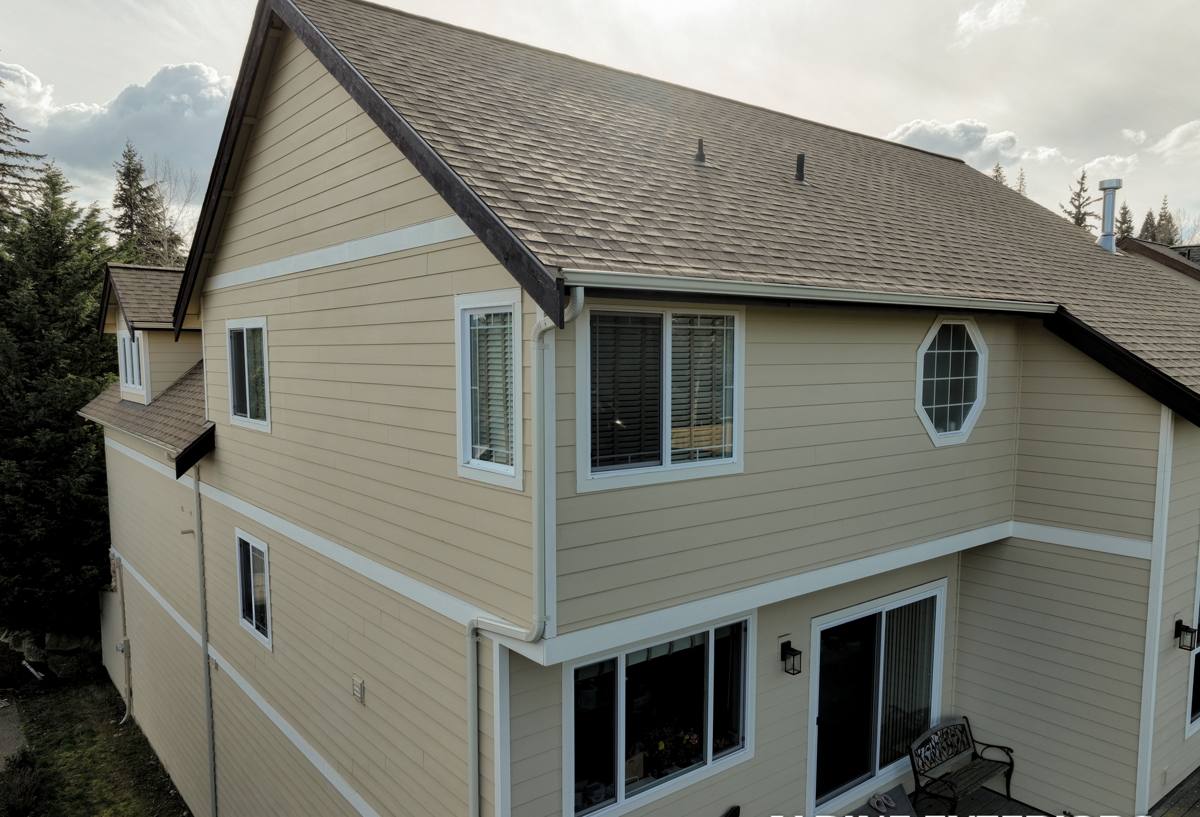
What Salt Air, Rain, and Moss Actually Do to a Roof
Salt Air and Corrosion
Airborne salt doesn't need to be blowing in off open ocean to matter — moisture carrying dissolved salts settles on roofing metal, fasteners, and flashing, and over years it works on any exposed steel edge, scratch in the coating, or bare fastener head. Galvanized-only steel with no additional coating layer is the first thing to show rust streaks in this kind of environment. Stainless or properly coated fasteners, and panels with a real paint or coating system rather than bare mill finish, are the difference between a roof that still looks clean in fifteen years and one that's streaking with rust in five.
Driving Rain and Wind-Driven Water
Storms moving through Whatcom County often come with enough wind to push rain sideways and uphill under poorly lapped panels or undersized flashing. Standard install details that are "good enough" in a calm, dry climate aren't good enough here. Every penetration — vent pipes, chimneys, skylights — is a spot where wind-driven rain will find a gap if the flashing wasn't built to shed water uphill and to the sides, not just straight down.
Moss, Algae, and Prolonged Moisture
Bellingham's moss season runs long, and Silver Beach's tree cover and lake-and-marine-influenced humidity keep roof surfaces damp well after a storm has passed. On asphalt shingles, moss roots into the granule surface and lifts it. On metal, moss and algae don't root into the panel, but they do trap moisture against the surface and against fastener heads, which is exactly the condition that accelerates coating breakdown and corrosion at those points. A metal roof isn't immune to moss — it's just far less vulnerable to it than shingles, and only if it was installed with enough slope and clean water flow to keep debris from building up in the first place.
What a Correct Metal Roofing Job Involves
A metal roof is only as good as everything underneath and around the panels. The visible metal is the part homeowners see, but the parts that actually determine whether the roof performs for thirty-plus years are mostly hidden.
Underlayment
We install a high-temperature synthetic underlayment rated for use under metal, with self-adhered ice-and-water membrane at eaves, valleys, and around penetrations — the spots most likely to see wind-driven water intrusion during a coastal storm. This layer is the backup system if wind ever gets under a panel edge, and it's not optional in this climate.
Fastening and Panel Attachment
Exposed-fastener panels use gasketed screws matched to the panel material, driven to the correct torque — overdriven screws crush the gasket and leak, underdriven ones back out over time. Concealed-fastener standing seam systems use clips that let the panel expand and contract with temperature swings without stressing the fastener points, which matters more here than in a drier, more stable climate because of the amount of moisture cycling the roof goes through.
Flashing and Penetration Detail
Valleys, chimney saddles, vent boots, and wall-to-roof transitions get custom-bent flashing sized for the actual roof geometry, not a generic off-the-shelf boot. This is where the majority of real-world metal roof leaks originate, and it's the detail that separates a crew that specializes in metal from one that mostly does asphalt and treats metal as a side offering.
Ventilation
Proper intake and exhaust ventilation keeps the attic space dry and temperature-balanced, which reduces condensation on the underside of the panels and helps the roof shed the moisture load this climate puts on it. Skipping or shorting ventilation is one of the more common ways we see metal roofs underperform their expected lifespan.
Choosing a Metal Roofing System for Silver Beach
Not every metal roofing system is the same, and the right choice depends on the home's roofline, budget, and how much the homeowner wants a low-profile, clean look versus a more traditional appearance.
| System | Fastener Style | Best For | Trade-Offs |
|---|---|---|---|
| Standing Seam | Concealed clips, no exposed screws on the field | Homes wanting the longest service life and cleanest look; coastal-influenced sites | Higher material and labor cost; requires an experienced installer |
| Exposed-Fastener Panel | Gasketed screws through the panel face | Budget-conscious projects, outbuildings, simpler rooflines | Gaskets and fasteners need periodic inspection and eventual replacement |
| Metal Shingles/Shakes | Interlocking panels, concealed fasteners | Homeowners who want a traditional shingle or shake look with metal's durability | More seams and detail work than standing seam; installer skill matters more |
For homes this close to the water, we lean toward standing seam or a quality interlocking shingle system with a strong factory coating, simply because they have fewer exposed fastener points for salt air to work on over time. Exposed-fastener panels are a legitimate, cost-effective option too — they just carry a maintenance conversation about fastener life that we'll walk through honestly before you decide.
Coating and Gauge
Panel gauge (thickness) and coating type both affect longevity. Heavier-gauge steel resists denting and oil-canning better. A quality paint system with a strong warranty against chalking and fading holds its color and protective value longer in a climate with this much UV-and-moisture cycling. We'll go over the specific gauge and coating options available for your project and what each one actually buys you, rather than upselling a spec you don't need.
Our Process, Start to Finish
- On-site assessment — we walk the roof (or inspect from the ground and attic when steep pitch or access requires it), check the decking condition, ventilation, and existing flashing details.
- Honest scope and estimate — you get a clear breakdown of material options, what's included, and what the job will actually require, in writing.
- Tear-off or overlay decision — we'll tell you straight whether your existing roof can support a metal overlay or whether tear-off to the deck is the right call for a lasting result.
- Deck repair as needed — any soft, rotted, or damaged sheathing gets replaced before anything goes back on. Metal panels won't hide a bad deck; they'll just fail faster over it.
- Underlayment and flashing install — ice-and-water membrane at vulnerable points, synthetic underlayment across the field, custom flashing fabricated for your roof's actual valleys and penetrations.
- Panel installation — set to manufacturer spec for fastener torque, seam engagement, and expansion allowance.
- Final walkthrough — we go over the finished roof with you, including what routine maintenance (if any) it needs going forward.
Maintenance in a Moss-and-Salt Climate
One of the real advantages of metal is how little routine maintenance it needs compared to asphalt — but "little" isn't "none," especially this close to the water.
- Clear gutters and valleys of needles and debris at least twice a year so water isn't sitting against panel edges
- Trim back overhanging branches to cut down on the shade and debris load that feeds moss growth
- Do a visual check after major windstorms for lifted flashing or panel edges
- Rinse off heavy moss or algae buildup with a garden hose and soft brush rather than a pressure washer, which can force water under seams or strip coating
- Have fastener heads and sealant points on exposed-fastener systems inspected every few years, since these are the first spots salt air affects
- Keep an eye on any dissimilar-metal contact points (like copper flashing against steel panels), which can accelerate corrosion through galvanic reaction if not properly isolated
Signs Your Current Roof Is Losing the Battle
If you're not sure whether it's time to consider a new roof or a repair, a few warning signs are worth acting on before they turn into interior damage:
- Rust streaking at fastener heads or panel seams on an existing metal roof
- Visible moss mats holding moisture against the roof surface for weeks at a time
- Soft spots, sagging, or staining on the attic-side decking
- Flashing that's visibly lifted, cracked, or separated at chimneys and vents
- Granule loss and curling on an aging asphalt roof that's due for replacement
Cost Factors for a Silver Beach Metal Roof
Every roof is different, and we won't quote a number without seeing the actual job, but these are the main factors that move the price up or down:
| Factor | Effect on Cost |
|---|---|
| Roof pitch and complexity (valleys, dormers, penetrations) | More cuts, flashing, and labor time |
| Tear-off vs. overlay | Tear-off adds disposal and deck-repair costs but is often the more honest long-term choice |
| Panel system (exposed-fastener vs. standing seam) | Standing seam runs higher in material and labor due to specialized tools and clip installation |
| Gauge and coating quality | Heavier gauge and stronger coatings cost more upfront, less in long-term maintenance |
| Access and site conditions | Steep pitch, limited staging area, or difficult access add labor time |
Why Hire a Crew That Already Works This Area
Metal roofing rewards experience in a way that's easy to underestimate. The panel material itself is fairly forgiving — the flashing details, fastener choices, and underlayment strategy are where a roof either holds up to Whatcom County's weather or doesn't. A crew that regularly works Bellingham and the surrounding neighborhoods already knows which details matter most for homes near the water: where wind-driven rain tends to find gaps, which coatings actually hold up to the salt exposure, and how much slope and airflow a roof needs to keep moss from taking hold. That local pattern recognition doesn't show up in a generic install — it shows up in fewer callbacks and a roof that's still doing its job two decades from now.
We also stand behind our own workmanship on top of whatever manufacturer warranty comes with the material, and we'll walk you through both in plain language before any work starts — no fine print you find out about later.
Get a Free, No-Pressure Estimate
If you're weighing a metal roof for your Silver Beach home, or trying to figure out whether your current roof needs a repair or a full replacement, we're happy to take a look and give you a straight answer. Fill out the form below to schedule a free estimate — no pressure, no pushy sales pitch, just an honest assessment of what your roof actually needs.