 Bellingham
 Building New in Ferndale? The Windows Deserve as Much Attention as the Foundation
When a home is going up from the ground in Ferndale, the windows are one of the few components that have to perform on every front at once: they carry structural loads from the framing above them, they're the main air and water barrier in the wall assembly, and they're expected to look right for decades. On a remodel, a bad window install shows up as a leak you can point to. On new construction, a bad window install gets buried behind siding and trim before anyone notices — and by the time it shows up as rot or a moldy sill, it's a much bigger repair than it would have been to do right the first time.
Ferndale sits close enough to the water and the lowland weather patterns that come off it that new-construction windows here are working under real load from day one: salt-laden air, wind-driven rain that hits walls sideways instead of just falling, and a long wet season that keeps everything damp for months at a stretch. We install new-construction windows on homes throughout Whatcom County, and Ferndale's specific mix of coastal exposure and rural/semi-rural lots means we treat every install as if it has to survive worse weather than the label on the box implies — because eventually, it will.
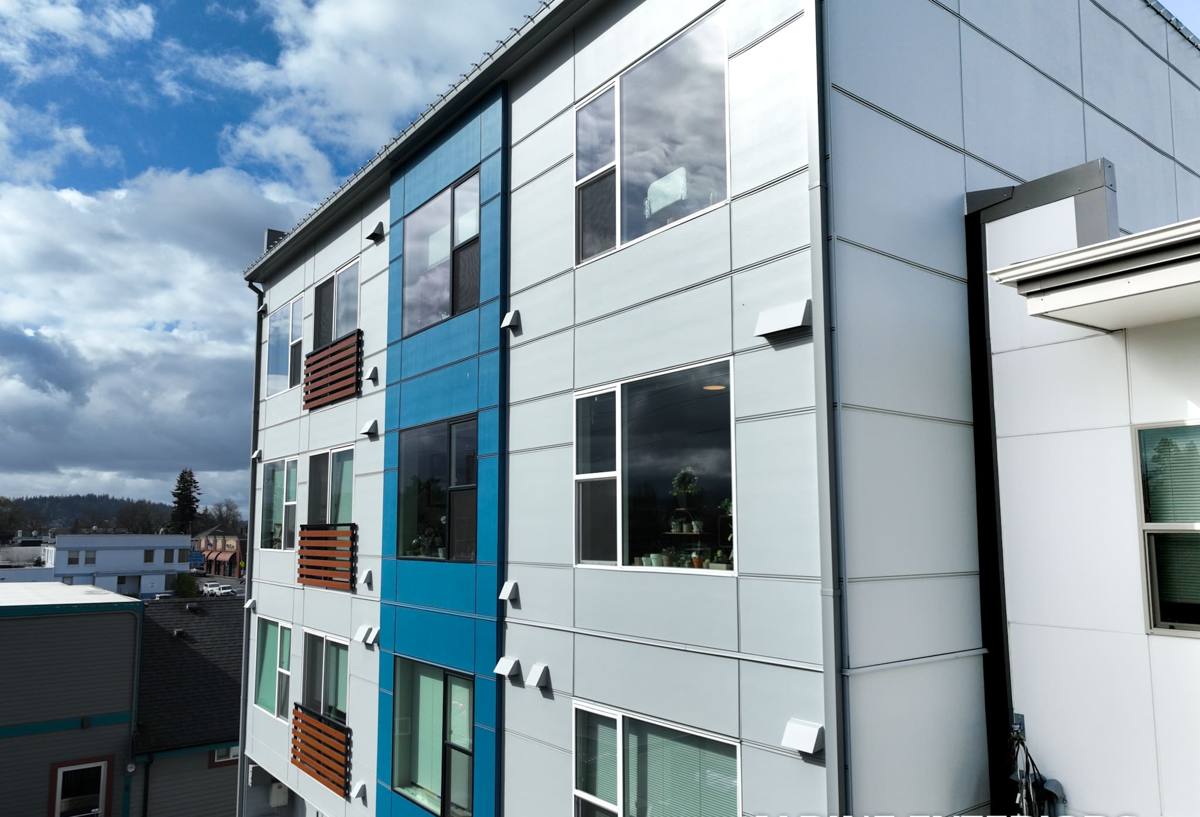
What "New-Construction" Windows Actually Means
New-construction windows are different from replacement windows, and the difference matters for how the whole wall performs. A new-construction window has a nailing flange (also called a nail fin) around the perimeter of the frame — a flat lip that gets fastened directly to the sheathing and integrated into the house wrap and flashing before siding goes on. A replacement window, by contrast, is designed to slide into an existing rough opening with the old frame still partially in place, with no flange to tie into the wall's water management system.
Because new construction gives us access to the whole wall assembly before it's closed up, this is the one point in a home's life where the window-to-wall connection can be built exactly right — full flashing, a proper sill pan, correct shingle-lap sequencing with the house wrap. Get it right here and it's invisible for the life of the house. Get it wrong here and no amount of caulking after the siding is on will fully fix it.
Why This Matters More in Ferndale Than in a Drier Climate
In a climate with light, mostly-vertical rainfall, a window installed with average care and average materials can go years without showing a problem. Whatcom County doesn't give installers that margin. Wind-driven rain pushes water sideways and upward into gaps that would stay dry elsewhere, and the salt content in coastal air accelerates corrosion on fasteners, flashing, and hardware that isn't rated for it. A shortcut that would take a decade to show up in a drier inland climate can show up in a Ferndale winter or two.
The Whatcom County Climate Factors That Drive Our Window Specs
We don't spec windows for Ferndale the same way we would for a home fifty miles inland. Three regional factors drive nearly every decision we make on a new-construction job here:
- Salt air: Proximity to Bellingham Bay and the Strait means airborne salt reaches building materials even on homes that aren't waterfront. Salt accelerates corrosion of steel fasteners, aluminum components, and lower-grade hardware, and it degrades some sealants faster than inland use would.
- Driving rain and wind exposure: Storms coming off the water hit exposed walls with real lateral force. Flashing details that would be adequate in a sheltered inland lot need to be more conservative on exposed elevations, especially west- and south-facing walls that catch the prevailing weather.
- A long moss and mold season: Extended damp periods keep window sills, tracks, and the surrounding wall assembly wet for longer stretches than most of the country experiences. Any place water can pool or linger becomes a place moss, algae, or wood rot can take hold if drainage isn't built in correctly.
None of these factors are exotic — they're just constant here in a way they aren't everywhere, which is why "good enough" specs from a catalog aren't always good enough for a Ferndale exterior wall.
What a Correct New-Construction Window Install Actually Involves
A window install is really a sequence of overlapping water-management steps, not a single task. Skipping or reordering any one of them is where problems start.
Sill Pan and Flashing Sequence
Before the window ever goes in, the rough opening needs a sloped sill pan so any water that gets past the window has somewhere to go — out, not into the wall cavity. Flashing tape and house wrap then need to be integrated in the correct shingle-lap order (bottom, sides, top) so water draining down the wall sheds over each layer instead of behind it. This sequence is where we see the most corner-cutting industry-wide, because it's slower and it's invisible once the siding goes on.
Fastening and Structural Integration
The nailing flange needs to be fastened per the manufacturer's schedule with corrosion-resistant fasteners — not whatever's left in the nail gun. In a coastal-air environment, we don't treat fastener corrosion resistance as optional; standard fasteners can start showing rust well before the siding does.
Air Sealing and Insulation
The gap between the window frame and the rough opening needs to be sealed and insulated correctly — enough to stop air leakage and condensation risk, but with a low-expansion foam or backer rod and sealant rather than a product that can bow the frame and affect operation. An over-filled gap is a common cause of windows that stop opening and closing smoothly within a year or two.
Exterior Sealant and Weep Path
Sealant joints on the exterior need to be continuous where they should be continuous and open where the window's weep system needs to drain — sealing a weep path shut traps water inside the frame instead of letting it out, which is a common way a "well-sealed" window ends up rotting from the inside.
Choosing the Right Frame Material for a Ferndale Exterior
Frame material matters more here than in a mild, dry climate, because the material is dealing with moisture and salt exposure year-round. There's no single right answer for every home — it depends on budget, the home's design, and how exposed the specific elevation is — but here's how the common options stack up for this climate:
| Frame Material | Moisture/Salt Air Performance | Maintenance | Typical Fit |
|---|---|---|---|
| Vinyl | Good — won't rust or rot, though quality varies widely by manufacturer | Low | Most budgets, good all-around choice for new construction |
| Fiberglass | Very good — dimensionally stable, resists moisture and salt corrosion well | Low | Higher-exposure elevations, longer-term ownership |
| Wood-clad (exterior clad) | Good if clad material and flashing details are correct; the wood interior needs to stay dry | Moderate | Homeowners who want a wood interior look with protected exterior |
| Aluminum (uncoated/lower grade) | Weaker in salt-air environments unless properly coated — more prone to corrosion and thermal transfer | Moderate to high | Situations where a specific look or budget point is required; we discuss trade-offs upfront |
We'll walk through these trade-offs against your specific plans, elevation exposure, and budget rather than push one product line — the "right" window is the one specified correctly for where it sits on the house, not just the one with the best brochure.
Our Process, From Rough Opening to Final Walkthrough
New-construction window work happens in coordination with framing, house wrap, and siding crews, so timing and communication matter as much as the install itself.
- Plan review and window schedule: We review the architectural plans and confirm window sizes, egress requirements, and specs against the framed rough openings before anything is ordered.
- Rough opening verification: Before install day, we check that each opening is square, plumb, and sized correctly. Catching a framing discrepancy now is far cheaper than after the window shows up.
- Sill pan and flashing installation: Sloped sill pans and flashing tape go in first, integrated with the house wrap in the correct sequence for that wall's exposure.
- Window setting and fastening: The window is set, shimmed level and plumb, and fastened per manufacturer schedule with corrosion-resistant fasteners.
- Insulation and interior air sealing: The perimeter gap is insulated and air-sealed without over-filling the cavity.
- Exterior sealant and weep check: Sealant is applied where it belongs and left open where drainage needs to happen.
- Final walkthrough: Every window is operated, checked for square and smooth function, and confirmed against the original schedule before we sign off.
Common Mistakes We See in New-Construction Window Installs
Most window problems on newer homes trace back to a handful of recurring shortcuts. Whether you're vetting your own contractor or just want to know what to ask about, this is the checklist we hold ourselves to on every job:
- Sill pan skipped or installed flat instead of sloped to drain
- House wrap and flashing tape overlapped in the wrong order (trapping water instead of shedding it)
- Standard fasteners used in a coastal-air environment instead of corrosion-resistant ones
- Weep holes or drainage paths sealed shut by over-application of exterior caulk
- Perimeter gap over-filled with high-expansion foam, bowing the frame out of square
- Rough opening not verified square/plumb before the window was set
- No final operational check before siding crews close up the wall
Why a Crew That Already Works Ferndale Homes Matters
Window specs that work fine in a sheltered inland subdivision aren't automatically right for a more exposed Ferndale lot, and a crew that mostly works drier climates may not default to the flashing and fastener choices this area calls for. A crew that regularly works Whatcom County new construction already knows which elevations on a given lot catch the worst of the driving rain, understands the local building department's inspection expectations, and is used to coordinating window installation around the pace of framing and siding crews on active job sites. That familiarity shows up as fewer callbacks and fewer surprises once the home is closed in and lived in through its first wet season.
Maintenance That Protects the Install Long-Term
A correctly installed window still benefits from basic upkeep, especially in a moss-prone, salt-air climate. A yearly check is enough for most homes:
- Clear debris and moss buildup from sills and tracks before it holds moisture against the frame
- Inspect exterior sealant joints for cracking or separation and have gaps re-sealed promptly
- Confirm weep holes are clear and draining, not blocked by dirt, moss, or paint
- Operate each window at least once a season to catch hardware issues early
None of this replaces a correct install — it just protects the investment once the install is done right.
Ready to Talk Through Your Ferndale New-Construction Windows?
If you're planning new construction in Ferndale or elsewhere in Whatcom County, we're glad to walk through window specs, frame material trade-offs, and timing with your framing and siding schedule. Reach out for a free, no-pressure estimate using the form below — we'll talk through what your specific lot and elevation exposure actually call for.