 Bellingham
 New construction in the York neighborhood comes down to one truth: whoever sets the windows during framing determines how that house performs for the next 30 years. Get the flashing, the sill pans, and the window selection right before the siding closes everything up, and you've built in decades of protection against Whatcom County's weather. Get it wrong, and no amount of trim or paint will hide it — you'll just be paying to fix it later, from the inside out.
Bellingham sits on Bellingham Bay, and neighborhoods like York get a steady diet of salt-laden air, wind-driven rain coming off the water, and the shaded, damp conditions that keep moss thriving on roofs and siding for much of the year. New-construction windows here need to be chosen and installed with that reality in mind from day one, not treated as a catalog decision made after the framing crew has already moved on to the next job.
What Bellingham's Climate Asks of New Windows
A window that performs fine in a drier inland climate can struggle here. Three regional factors matter most when a house is going up new:
- Salt air corrosion: Proximity to Bellingham Bay means airborne salt settles on exterior hardware, screws, and unprotected metal flashing over time. Fasteners and components rated for coastal exposure hold up; bargain hardware pits and stains.
- Driving rain during construction: Whatcom County storms often come in sideways off the water. A rough opening that sits exposed for even a few weeks between framing and siding can take on water if it isn't temporarily protected and properly flashed the moment the window goes in.
- A long moss and mildew season: Shade, moisture, and mild temperatures mean anything that traps water — a poorly lapped flashing layer, a flat sill instead of a sloped one — stays wet longer here than it would in a drier climate. That extended dampness is exactly what lets rot and mold get a foothold behind the wall.
None of this means new construction here is harder than anywhere else. It means the sequence and the details matter more, and skipping steps that might get away with it in a drier region won't get away with it in York.
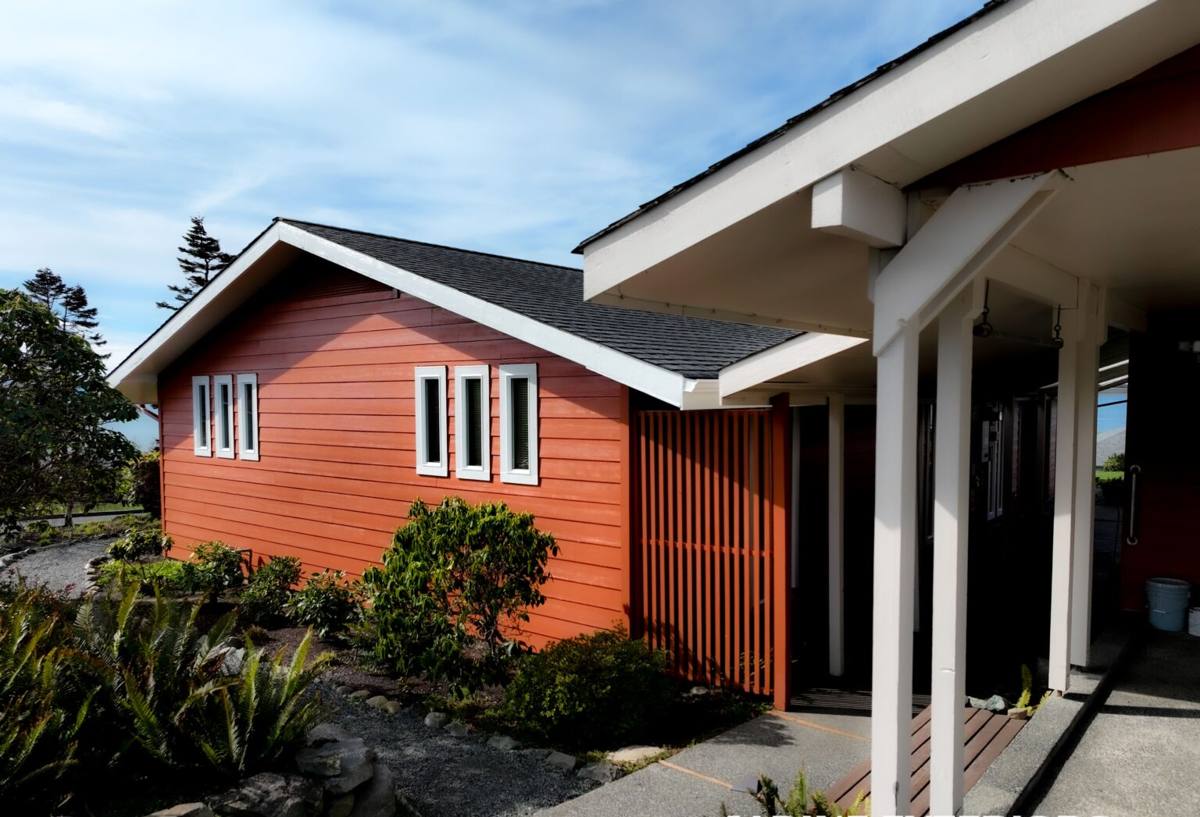
New Construction Is a Different Job Than Replacement
Homeowners sometimes assume window work is window work. On a new build, it isn't. Replacement windows go into an opening that's already framed, sided, and weathered — the job is about matching an existing envelope. New construction is the opposite: the window itself becomes part of the water management system for the whole wall, installed before the siding, house wrap, and trim are finished around it.
Working With the Rough Opening, Not Around It
On a new build, we're setting windows into raw rough openings, checking that they're plumb, level, and square before the window ever goes in, and confirming the opening dimensions match the window's actual specs rather than the plan set. A rough opening that's slightly out of square is a much easier fix at this stage than after siding is on.
Sequencing With Your Framer and Siding Crew
New-construction windows have to land at the right point in the build — after the weather-resistive barrier is on but before siding starts, with flashing tape and pan flashing installed in the correct order underneath, around, and over the window flange. Get the sequence wrong and you can end up with flashing that directs water into the wall instead of away from it, even if every individual product used was good quality.
Getting the Water Management Right, Layer by Layer
Most window failures in this climate aren't glass failures — they're water management failures. The window itself is usually fine; what fails is everything built around it. On new construction we control every layer, which is the real advantage over a replacement job.
Sill Pans and Sloped Sills
Every rough opening gets a sloped sill pan before the window sets, so any water that does get past the window drains back out instead of sitting on the framing. A flat, unsloped sill is one of the most common shortcuts we see on jobs we're called to fix later, and it's invisible once trim goes on.
Integrating the Window Flange With the Weather-Resistive Barrier
Flashing tape at the sides and head needs to lap over the housewrap correctly — shingle-style, so water always sheds down and out, never behind the barrier. This is a detail that takes minutes to do right and months to discover if it's done wrong.
Head Flashing That Actually Sheds Water
Above each window, a proper head flashing (and drip cap where the design calls for it) keeps water from driving in during the kind of horizontal rain York gets off the bay. This is a small material cost with an outsized effect on long-term performance.
Choosing Frame Material and Glass for This Climate
Material choice affects how a window handles salt air, humidity, and years of Pacific Northwest weather. There's no single "best" window for every project — it depends on budget, the home's design, and how much maintenance you want to take on.
| Frame Material | Salt Air / Moisture Handling | Maintenance | Typical Lifespan |
|---|---|---|---|
| Vinyl | Good — won't corrode or rot; seams and hardware quality vary by manufacturer | Low — occasional cleaning | 20–30 years |
| Fiberglass | Very good — dimensionally stable, resists moisture and salt exposure well | Low | 30–40+ years |
| Wood-clad | Depends heavily on cladding integrity and finish maintenance near the coast | Higher — finish and seals need periodic attention | Varies widely with upkeep |
| Aluminum | Prone to corrosion in salt air unless marine-grade and well-finished | Moderate | Varies with coating quality |
Beyond frame material, glass performance matters just as much. For new construction in Whatcom County's climate zone, we typically recommend double- or triple-pane glass with a U-factor and Solar Heat Gain Coefficient suited to a marine climate — enough insulating value to handle our mild-but-damp winters without overdoing solar gain we don't get much of anyway. Your builder's energy code compliance path (prescriptive or performance-based) will usually set the minimum, and we'll work within whatever that requires.
Our New-Construction Window Process
- Plan review: We review window schedules, rough opening sizes, and manufacturer specs against the actual framing before ordering anything.
- Opening inspection: Every rough opening gets checked for square, level, and correct dimensions before installation day.
- Sill pan and flashing installation: Sloped sill pans go in first, followed by jamb and head flashing integrated with the weather-resistive barrier.
- Window setting: Units are set plumb, level, and square, shimmed and fastened per manufacturer specs — not "close enough."
- Sealing and insulation: Gaps are sealed and insulated correctly around the frame, avoiding both air leaks and over-compression that can bow a frame.
- Final check: Every window is tested for smooth operation and proper seal before we sign off and the siding crew closes the wall.
Permits, Code, and Inspections
New-construction window work in Bellingham falls under the same building permit as the rest of the structure, and it's inspected as part of the framing and weather barrier stages before the wall gets closed up. We coordinate with your builder or general contractor so window installation happens at the right point for inspection sign-off, and so egress sizing, tempered glass locations (near doors, stairs, and bathrooms), and energy code glazing requirements are handled correctly the first time — not flagged after the wall's already covered.
Why a Crew That Already Works York Matters
York is a smaller, established neighborhood, and infill and new-build projects there come with their own quirks — lot sizes, tree cover, and drainage patterns that differ block to block. A crew that's already worked in the neighborhood has a feel for how water moves across a given lot, how much wind exposure a particular site gets off the bay, and what kind of moss and moisture buildup to expect on north-facing walls. That local familiarity doesn't replace good technique, but paired with it, it means fewer surprises during the build and fewer callbacks after.
Before You Sign a New-Construction Window Contract
- Confirm who installs the sill pan flashing and how it integrates with the weather-resistive barrier — get this in writing, not a verbal assurance.
- Ask what frame material and glass package meets or exceeds the local energy code for this climate zone, and why.
- Verify the crew coordinates directly with your framer and siding contractor on sequencing, rather than working in isolation.
- Check that fasteners and exposed hardware are rated for coastal/salt-air exposure, not standard interior-grade hardware.
- Make sure tempered glass locations (stairs, doors, bathrooms) are identified against code before ordering, not after.
If you're building new in York and want windows installed right the first time — properly flashed, correctly sequenced with your framer and siding crew, and matched to what Whatcom County weather actually demands — we're happy to take a look at your plans and put together a free, no-pressure estimate. Use the form below to get started.