 Bellingham
 Roofing in Cordata Isn't the Same Job as Roofing Inland
Cordata sits close enough to Bellingham Bay and the Salish Sea that homes here deal with a different combination of stresses than a roof twenty miles inland. You've got salt-tinged marine air working on metal fasteners and flashing, wind-driven rain that doesn't just fall straight down but gets pushed sideways under laps and around penetrations, and enough shade and moisture through the fall and winter to keep moss and moss spores active for months at a time. None of these things alone is unusual for Western Washington. Together, on a roof that wasn't detailed with them in mind, they shorten a roof's working life by years.
A new roof installation in this part of Whatcom County has to be built for that combination from the decking up — not just shingled over and hoped for. That's the whole focus of this page: what a correct new roof looks like for a Cordata home, and why the installation details matter more here than they would somewhere drier.
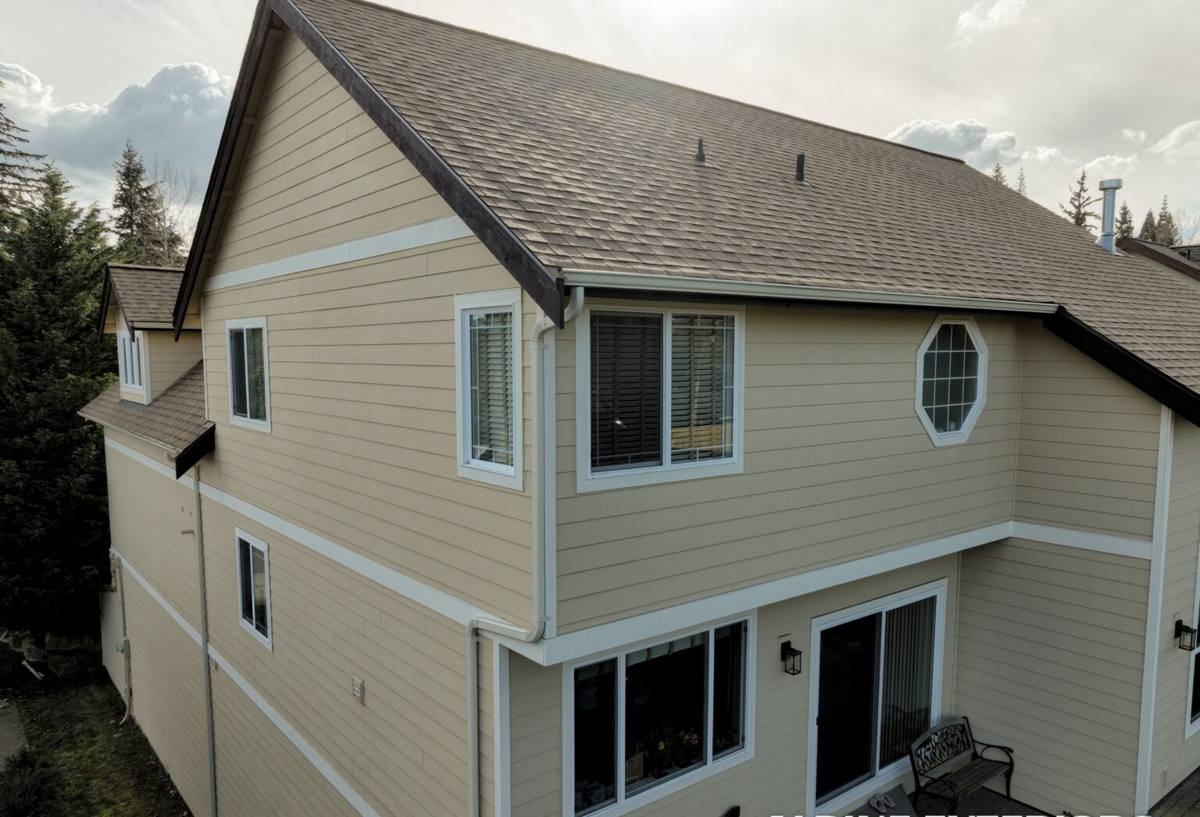
What Whatcom County Weather Actually Does to a Roof
Driving Rain
Bellingham's rain doesn't arrive gently most of the year. Fall and winter storms come in off the water with real wind behind them, which means rain gets forced sideways into laps, valleys, and anywhere flashing meets a wall or chimney. A roof that would shed straight-down rain just fine can still leak if the underlayment, ice-and-water membrane, and flashing details weren't built for wind-driven moisture. This is one of the most common reasons a roof leaks years before it should — not a failed shingle, but a detail that was never rated for sideways rain in the first place.
Long Moss Season
Between the tree cover common in north Bellingham neighborhoods and the number of damp, low-light months in a typical Whatcom County year, moss has a long window to establish itself. Moss holds moisture against the roofing material, works its way under shingle edges, and lifts tabs as it grows — all of which speeds up wear and opens the door to leaks. A roof surface, underlayment system, and ventilation setup chosen without moss in mind will need moss treatment and cleaning far more often than one that accounts for it from day one.
Salt Air
Proximity to the water means airborne salt is a real, if slower-moving, factor. It accelerates corrosion on unprotected metal — flashing, fasteners, vents, and any exposed hardware. Over enough years, corroded fasteners and pitted flashing are a bigger point of failure than the roofing material itself. Choosing corrosion-resistant hardware and properly coated flashing isn't optional upgrade talk near the coast — it's a baseline requirement for a roof that's supposed to last.
Signs a Cordata Roof Is Due for Replacement
Roofs rarely fail all at once. Most homeowners see a combination of smaller signs before a full leak shows up inside. Worth checking for:
- Granules collecting in gutters or at downspout outlets — a sign the shingle surface is wearing down
- Shingles that are curling, cupping, or lifting at the edges, especially on north- or west-facing slopes
- Persistent moss or dark algae streaking that keeps coming back within months of cleaning
- Soft or spongy spots when walked, which usually means the decking underneath has absorbed moisture
- Daylight visible through the roof deck from inside the attic, or damp insulation
- Rusted, cracked, or lifted flashing around chimneys, skylights, and roof-to-wall transitions
- A roof that's 20+ years old on asphalt shingle, or nearing the manufacturer's rated lifespan for its material
Any one of these on its own might just need a repair. Several at once, or a roof that's already past its expected service life, is usually a sign that continuing to patch is costing more over time than a properly built replacement would.
Choosing a Roofing System Built for This Climate
There's no single "best" material for every home — it depends on budget, roof pitch, HOA or neighborhood expectations, and how much long-term maintenance a homeowner wants to take on. But in a climate with heavy moss pressure and salt air, some options hold up with less fuss than others.
| Material | Moss & Moisture Behavior | Salt Air Durability | Typical Lifespan |
|---|---|---|---|
| Architectural asphalt shingle (algae-resistant) | Good with proper ventilation; copper/zinc strips help control moss | Good with corrosion-resistant fasteners and flashing | 25–30 years |
| Standard 3-tab asphalt shingle | Fair — more prone to moss buildup and granule loss over time | Fair | 15–20 years |
| Standing seam metal | Excellent — sheds moisture fast, little surface for moss to grip | Very good with properly coated panels and stainless fasteners | 40–60 years |
| Cedar shake | Poor without diligent maintenance — retains moisture, feeds moss | Fair; needs regular treatment near salt air | 20–30 years with upkeep |
For most Cordata homes, a mid-to-premium architectural asphalt shingle with algae-resistant granules offers the best balance of upfront cost and low-maintenance performance. Metal is a strong option for homeowners planning to stay long-term or who want to minimize moss and maintenance calls altogether, at a higher installed cost. Whatever the material, the installation details underneath it matter as much as the surface layer.
What a Correctly Installed Roof Actually Involves
The shingles or panels on top are the part everyone sees, but most roof failures in this climate trace back to what's underneath or around them. A correct installation includes:
Deck Inspection and Repair
Every square foot of decking gets checked once the old roofing is off. Soft, delaminated, or water-stained plywood or boards get replaced before anything new goes down — roofing over a compromised deck just hides a problem that will resurface.
Ice-and-Water Membrane at Vulnerable Areas
Eaves, valleys, and roof-to-wall transitions get a self-adhering waterproof membrane underneath the underlayment. These are the areas most exposed to wind-driven rain and ice damming, and they're where the majority of leaks originate on an under-built roof.
Synthetic Underlayment
A quality synthetic underlayment across the full roof adds a second line of defense against wind-driven moisture that works its way under shingle tabs, and it holds up better over time than older felt products in a consistently damp climate.
Balanced Ventilation
Intake at the eaves and exhaust at the ridge keep air moving through the attic space, which controls moisture buildup, reduces the conditions moss and mold need to establish, and helps shingles last their full rated lifespan instead of cooking or trapping condensation from below.
Corrosion-Resistant Flashing and Fasteners
Given the salt air exposure this close to the water, flashing, drip edge, and fasteners get chosen for corrosion resistance, not just lowest cost. This is one of the details that separates a roof built for this specific location from a generic install.
Our Process for a Cordata New Roof Installation
- On-site inspection and assessment — we check the deck, current ventilation, flashing points, and roof pitch, and talk through material options based on your home and budget.
- Written estimate — a clear scope of work and pricing, no vague allowances or surprise add-ons buried in the fine print.
- Permitting — where required by the City of Bellingham or Whatcom County, we handle the paperwork so you don't have to chase it down.
- Tear-off and deck inspection — old roofing comes off, decking is inspected and repaired as needed before anything new is installed.
- Underlayment, membrane, and flashing installation — the protective layers that actually keep water out go down first, detailed for wind-driven rain and moss resistance.
- Roofing material installation — shingles or panels installed to manufacturer specification, which is also what keeps the material warranty valid.
- Ventilation check and final walkthrough — we confirm intake and exhaust are balanced, clean up the site, and walk the finished roof with you.
What Influences the Cost of a New Roof
Every roof is priced based on its own specifics, but the same handful of factors drive most of the variation between one job and another:
| Factor | Why It Matters |
|---|---|
| Roof size and pitch | Steeper roofs take longer to work safely and use more material per square foot of coverage |
| Number of layers to remove | Tear-off of multiple existing layers adds labor and disposal cost |
| Deck condition | Rotten or delaminated decking found during tear-off requires replacement before roofing can proceed |
| Material choice | Standard asphalt, premium architectural shingle, and metal carry different material and labor costs |
| Roof complexity | Valleys, dormers, skylights, and multiple penetrations all add flashing and labor time |
| Ventilation upgrades | Adding or correcting intake/exhaust ventilation is sometimes needed to meet code or protect the new roof |
Because of this range of variables, we don't quote roof prices sight unseen. A written estimate after an on-site look is the only way to give you a number that actually reflects your roof, not a generic average.
Why Local Experience in Cordata and North Bellingham Matters
A roofing crew that regularly works in this part of Whatcom County already knows what to expect before the first shingle comes off: the moss pressure on shaded, tree-lined lots, the way wind off the bay drives rain into east- and south-facing flashing details, and how salt air shortens the life of unprotected hardware. That's not something a crew coming from a drier or inland market necessarily accounts for by default. It's the difference between a roof that's technically installed to code and one that's actually built for the conditions it's going to sit under for the next few decades.
We also know the local permitting process, work within the expectations of Bellingham's neighborhoods, and stand behind our installations with straightforward workmanship coverage — not vague promises that are hard to act on later.
Get a Free, No-Pressure Estimate
If your roof is showing wear, past its expected lifespan, or you just want an honest read on its condition, we're happy to take a look. Fill out the form below to schedule a free estimate for your Cordata home — no pressure, no pushy sales pitch, just a straight assessment and clear pricing.