 Bellingham
 Puget's Roofing Challenge: Salt Air, Driving Rain, and Moss
Homes in the Puget area near Bellingham take on a specific combination of punishment that a lot of roofing materials and installation shortcuts simply weren't built for. Proximity to the water means a steady dose of salt-laden air working on fasteners, flashing, and metal components year-round. Add in the driving, wind-pushed rain that comes through Whatcom County during fall and winter storms, and you get water pressure-tested into every seam, lap, and penetration on a roof — not just gentle rainfall sitting on a slope. Then there's the moss. Between the marine humidity, the tree cover common in this part of Bellingham, and a wet season that can stretch for months, moss and algae get a long runway to establish themselves on any roof that isn't installed and maintained with that in mind.
None of this means Puget homes need exotic materials or gimmicks. It means the installation has to be done correctly, with attention to the details that matter in this climate specifically — underlayment coverage, flashing quality, ventilation, and material selection that accounts for constant moisture rather than occasional rain.
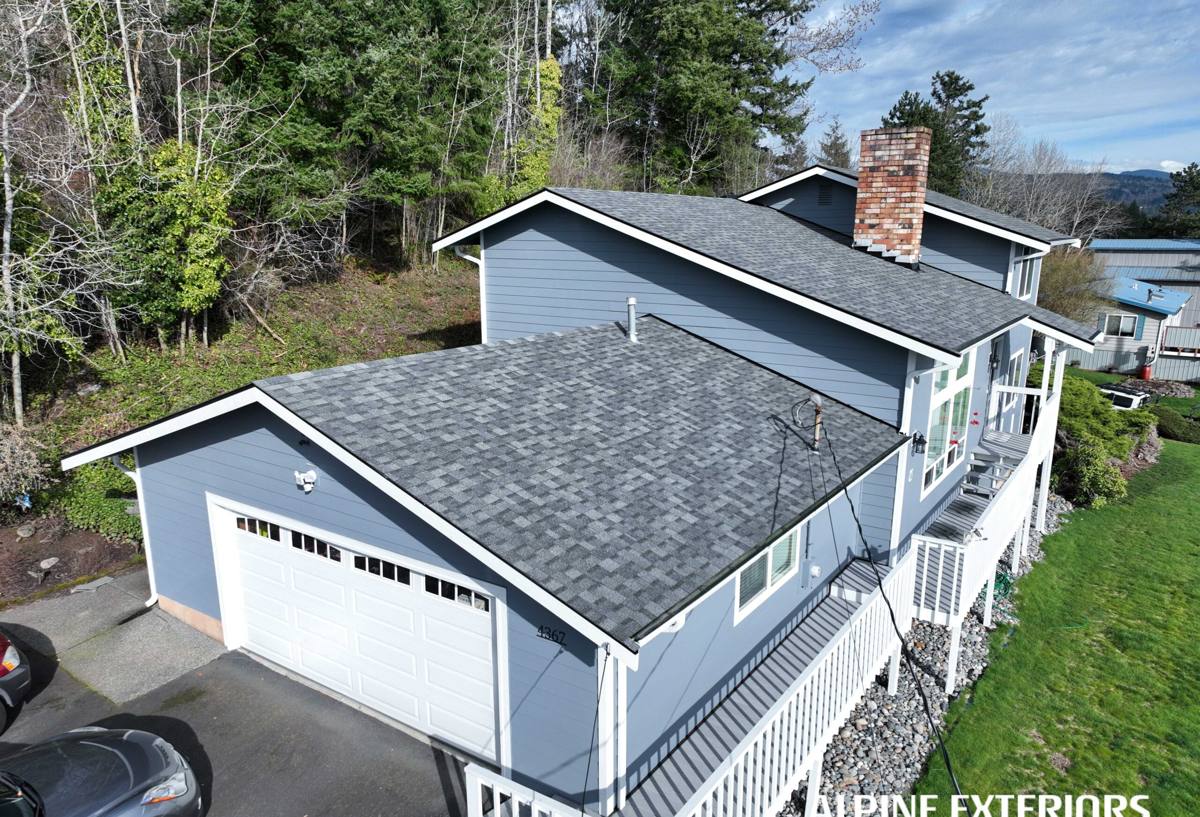
Signs a Puget Roof Needs Full Replacement, Not Another Repair
Repairs make sense when a roof has isolated damage and the rest of the system is sound. Replacement makes sense when the underlying materials are past their service life or the damage is spread across the roof rather than confined to one spot. In our experience working roofs in this climate, a few signals reliably point toward replacement:
- Granule loss heavy enough that shingles look patchy or bald, especially on south- and west-facing slopes exposed to weather
- Moss growth that keeps coming back within a season or two of cleaning, which usually means it has worked under the shingle edges
- Curling, cupping, or cracked shingles across multiple sections of the roof rather than one isolated area
- Soft spots or sagging when walked, which points to deck damage underneath
- Repeated leaks in different locations after storms, rather than one recurring spot
- Flashing that's rusted, lifted, or was never properly integrated with the roofing material to begin with
- A roof that's simply reached the end of its rated lifespan, even if it looks okay from the ground
If a roof is showing two or three of these at once, patch repairs tend to become a cycle of chasing new leaks every wet season rather than solving the underlying problem.
What a Correct New Roof Installation Includes
A new roof is only as good as what happens underneath the visible shingles or panels. This is where the difference between a roof that holds up for decades in Puget's climate and one that starts failing in five years actually gets decided.
Tear-Off and Deck Inspection
We remove the old roofing down to the deck rather than layering over it. That's the only way to actually see the condition of the sheathing underneath. In a marine climate, it's common to find sections of deck that have softened from long-term moisture intrusion, particularly around old flashing points, valleys, and anywhere moss has been sitting against the roof for years. Any compromised sheathing gets replaced before anything new goes down — installing new roofing over a weak deck just guarantees a shorter lifespan and voids most manufacturer warranties.
Underlayment and Ice-and-Water Protection
Underlayment is the roof's real waterproof layer — the visible roofing material is the first line of defense, but underlayment is what keeps the deck dry when wind-driven rain gets past it. For Puget homes, we pay particular attention to eaves, valleys, and any low-slope transitions, using self-adhering waterproof membrane in the areas most exposed to wind-driven water and ice damming, with synthetic underlayment across the rest of the field. This is one of the areas where cutting corners doesn't show up as a problem until years later, when it's much more expensive to fix.
Flashing Details
Flashing around chimneys, skylights, sidewalls, and roof-to-wall transitions is where the majority of roof leaks actually originate — not in the open field of shingles. We install new flashing with every roof replacement rather than reusing old pieces, and we pay close attention to how it integrates with the underlayment and siding, since a flashing detail that looks fine but isn't lapped correctly will leak eventually, especially under the sideways rain this area sees.
Ventilation
Proper intake and exhaust ventilation keeps the attic space at a stable temperature and moisture level. In a humid marine climate, poor ventilation contributes to trapped moisture, which shortens the life of the deck and roofing material from underneath and can contribute to mold and mildew issues in the attic. We check existing ventilation on every replacement and correct it where it's inadequate, rather than just matching what was there before.
Choosing a Roofing Material That Holds Up Locally
There isn't one "best" roofing material for every home — it depends on budget, roof pitch, architectural style, and how much long-term maintenance a homeowner wants to take on. What matters is picking a material honestly, with realistic expectations about how it performs in salt air, driving rain, and a long moss season.
| Material | Moss & Moisture Resistance | Wind/Rain Performance | Typical Lifespan | Relative Cost |
|---|---|---|---|---|
| Standard Asphalt Composition Shingle | Moderate — needs regular cleaning in shaded areas | Good when installed with proper underlayment and nailing pattern | 20–25 years | Lowest |
| Architectural / Dimensional Shingle | Better than standard 3-tab; thicker profile sheds debris more effectively | Very good; rated for higher wind exposure | 25–30 years | Moderate |
| Standing Seam Metal | Excellent — smooth surface resists moss and algae buildup | Excellent in driving rain and wind | 40–50+ years | Higher upfront |
| Synthetic / Composite Shingle | Good; varies by product line | Good to very good depending on manufacturer specs | 30–40 years | Moderate to higher |
We'll walk through these trade-offs honestly during the estimate — including maintenance expectations, not just upfront price — so the decision fits the home and the budget rather than a sales pitch.
Managing Moss and Algae Long-Term
No roofing material is completely immune to moss and algae in a climate as consistently damp as Whatcom County's. What makes the real difference is a combination of installation choices and ongoing habits. During installation, we can integrate zinc or copper strips near the ridge on shingle roofs — as rain washes over them, trace metal ions carry down the roof surface and inhibit moss and algae growth without chemical treatment. We also make sure ventilation is adequate, since a roof that stays cooler and dries out faster after rain gives moss less opportunity to establish itself in the first place.
Beyond installation, trimming back overhanging branches to let more sun and airflow reach the roof, and keeping gutters clear so water isn't sitting against the lower courses of roofing, both go a long way. None of this eliminates the need for occasional gentle cleaning, but it significantly extends the time between cleanings and reduces how aggressively moss works its way under shingle edges.
Our Process From Estimate to Cleanup
Homeowners in Puget generally know within the first conversation whether a contractor actually understands what this climate does to a roof. Here's how we handle a new roof installation from start to finish:
- On-site inspection and honest assessment. We look at the existing roof, the attic, ventilation, and any problem areas before recommending replacement over repair.
- Written estimate with material options. We walk through the trade-offs between materials for this specific home and roof pitch, with a clear scope of work — no vague line items.
- Scheduling around weather. Tear-offs are scheduled with realistic weather windows in mind, since an open roof deck and a sudden Pacific storm don't mix.
- Tear-off and deck inspection. Old roofing comes off, the deck is inspected, and any repairs are discussed and approved before covering it up.
- Underlayment, flashing, and installation. Waterproofing layers go down first, followed by the roofing material, installed to manufacturer specifications for wind and fastening.
- Ventilation check and correction. Intake and exhaust are verified and corrected if the existing setup is inadequate.
- Cleanup and magnetic sweep. The property is cleared of debris and swept for nails and stray fasteners before we consider the job done.
- Final walkthrough. We go over the finished roof with the homeowner and answer any questions before closing out the job.
Permits, Codes, and Warranty Coverage in Whatcom County
Roof replacements in Bellingham and the surrounding Whatcom County area typically require a building permit, and inspections check that things like underlayment coverage, flashing, and ventilation meet current code — not just the finished appearance. We handle the permitting process as part of the job rather than leaving it for the homeowner to sort out. On the manufacturer side, most shingle and metal roofing warranties require installation by a certified or approved installer and proper ventilation to remain valid — details that are easy to overlook but matter if a warranty claim is ever needed years down the road. We make sure the paperwork and installation both support the coverage a homeowner is actually paying for.
Why Hiring a Crew That Already Works Puget Matters
A roofing crew that works this specific area regularly has already seen how salt air corrodes cheap fasteners, how wind-driven rain finds the weak points in a flashing job, and how fast moss reestablishes itself under the wrong conditions. That's not something you get from a general contractor's spec sheet — it comes from doing the work here repeatedly and paying attention to what holds up and what doesn't over time. It also means being available and familiar with the area when storm damage needs a fast response, rather than working from out of town on a schedule that doesn't match Bellingham's weather patterns.
If your Puget-area home is due for a new roof, or you're not sure whether repair or replacement makes more sense, we're happy to take a look and give you a straightforward answer. Reach out below for a free, no-pressure estimate — we'll walk the roof, explain what we find, and lay out honest options before any work begins.