 Bellingham
 Roofing in Blaine's Marine Climate
Blaine sits right up against the Salish Sea, with Semiahmoo Bay and Drayton Harbor feeding a steady flow of moist, salt-laden air onto every roof in town. That marine exposure is different from what a roof faces even a few miles inland in Bellingham. Salt air accelerates corrosion on exposed metal fasteners, flashing, and vents. Wind-driven rain off the water finds its way under shingles and around penetrations that would stay dry in a calmer setting. And Whatcom County's long, wet stretch from fall through spring gives moss and algae months to establish themselves on north-facing slopes and shaded valleys.
None of this means a Blaine roof is doomed to constant problems. It means the repair work has to account for conditions a generic roofing job might not. A patch that would hold up fine in a drier climate can fail here within a season or two if it doesn't respect how water, wind, and salt actually behave on a coastal Whatcom County roof.
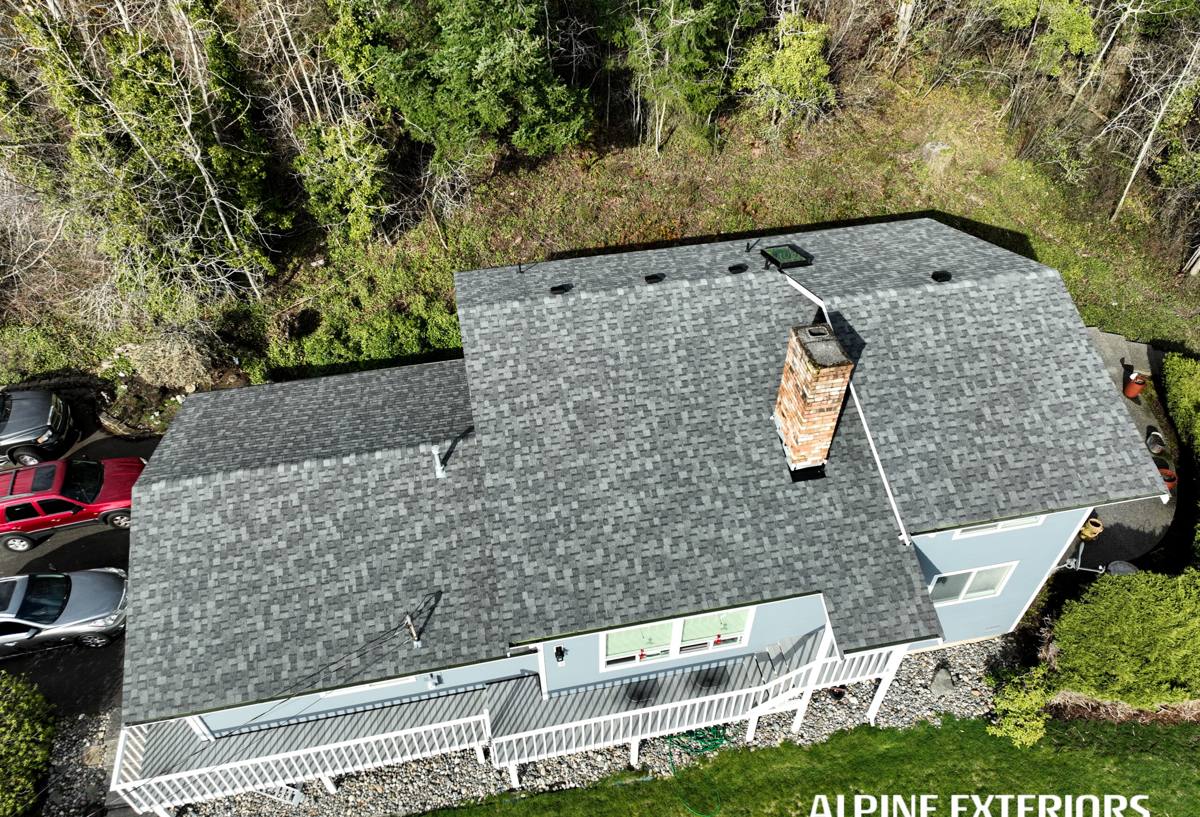
What Blaine's Weather Actually Does to a Roof
Salt Air and Metal Fatigue
Nails, flashing, drip edge, and vent boots are usually the first parts of a roof to show wear near the water. Salt in the air speeds up oxidation, and once a fastener starts to corrode, it loses grip and can back out or leave a gap that water works its way into. We pay close attention to metal condition on every Blaine inspection, not just the shingles or panels themselves.
Driving Rain and Wind-Driven Water
Storms coming off the Strait of Georgia often bring rain sideways, not straight down. That matters because a lot of roofing details are built to shed water moving downhill, not water being pushed uphill or sideways by wind. Flashing laps, valley construction, and the seal around chimneys, skylights, and vent stacks all take more punishment here than they would in a sheltered inland spot.
Moss, Algae, and a Long Wet Season
Whatcom County's mild, damp winters and shoulder seasons give moss plenty of time to take hold, especially on shaded, north-facing slopes and in areas with tree cover. Moss doesn't just look bad — its root structure lifts shingle edges and holds moisture against the roof deck, which is exactly the combination that leads to rot and granule loss over time.
Signs a Blaine Roof Needs Repair
Most roof problems don't announce themselves with a dramatic leak on day one. They show up as small, easy-to-miss signs first. Catching them early is usually the difference between a repair and a much bigger job.
- Granules collecting in gutters or at downspout outlets
- Moss or dark algae streaking on shaded or north-facing slopes
- Curling, cupping, or lifted shingle edges, especially near eaves and valleys
- Rust staining or visible corrosion around vents, flashing, or fasteners
- Soft or spongy spots when walking the roof (a sign of deck moisture)
- Water stains or discoloration on interior ceilings, especially after wind-driven rain
- Daylight visible through the attic at roof boards or around penetrations
- Loose, cracked, or missing flashing around chimneys, skylights, or wall intersections
Any one of these on its own might be minor. Two or three together, especially near the same area of the roof, usually means active water intrusion that's worth addressing before the next wet season.
What a Correct Repair Actually Involves
A roof repair that's done right isn't just about covering the visible damage. It's about finding why that spot failed and fixing the underlying cause so the same problem doesn't come back in a different form next year.
Diagnosis Before Anything Gets Touched
We start by tracing water intrusion back to its actual source, which is often several feet away from where the interior stain shows up. Water travels along the underside of the roof deck and rafters before it drips somewhere visible, so a repair aimed only at the ceiling stain can miss the real problem entirely.
Matching the Repair to the Material
Composition shingle, cedar shake, and metal roofing each fail differently and need different repair techniques. Shingle repairs involve replacing damaged courses and re-lacing them properly into the surrounding field. Metal roof repairs often center on fastener replacement and sealant renewal at penetrations. Getting the technique wrong for the material is a common source of repeat failures.
Flashing and Penetrations First
Given how much of Blaine's roof damage traces back to flashing and penetration details rather than the field material itself, we treat those areas as the priority, not an afterthought. That includes chimney flashing, skylight curbs, valley metal, and every vent boot and pipe penetration on the roof.
Moss and Debris Treatment
Where moss is contributing to the problem, removal and a proper cleaning are part of the repair, not a separate upsell. We also check gutters and valleys for debris buildup, since clogged drainage paths are one of the most common causes of water backing up under shingles.
Our Process for Blaine Roof Repairs
- Inspection: A full roof walk (or a close visual inspection from ladder and drone where a walk isn't safe) covering the field, flashing, penetrations, and attic underside.
- Honest diagnosis: We tell you what we actually found, including whether it's a straightforward repair or something that points toward a bigger issue.
- Written scope and estimate: Clear on what will be repaired, with what materials, and why — before any work starts.
- The repair itself: Done to the same standard as new work, not a quick patch meant to last just long enough to pass a glance.
- Cleanup and walk-through: Debris and old materials hauled off, and we show you what was done before we call it finished.
Repair or Replace? How to Tell
Not every roof problem calls for a full replacement, and not every roof is a good candidate for another round of patching. This is usually a judgment call based on the roof's age, condition, and how widespread the damage is.
| Factor | Leans Toward Repair | Leans Toward Replacement |
|---|---|---|
| Roof age | Under 15-18 years (asphalt shingle) | Near or past manufacturer's expected service life |
| Damage location | Isolated to one area or detail | Spread across multiple slopes |
| Deck condition | Solid, no soft spots | Soft or rotted decking in multiple areas |
| Moss/algae extent | Surface-level, recently developed | Long-established with visible shingle lift |
| Repair history | First or second repair in this area | Repeated repairs to the same spot |
When a roof is on the fence between these categories, we'll say so directly and lay out the trade-offs rather than pushing toward whichever job is bigger.
Why a Crew That Already Works Blaine Matters
Roofing crews based well inland don't always price or plan for coastal conditions the way a crew that regularly works Blaine and the rest of Whatcom County's shoreline does. That shows up in a few concrete ways: knowing which fastener and flashing materials hold up against salt air, knowing which slopes in this area tend to hold moss longest based on sun exposure and tree cover, and knowing how local wind patterns off the water affect where wind-driven rain actually gets in.
It also means fewer surprises on scheduling. A crew already working jobs in Bellingham and Blaine doesn't need to build long travel time into every estimate, and can usually get to a leak faster when the timing matters.
What Affects the Cost of a Roof Repair
Repair costs vary enough with roof type, access, and extent of damage that a real number only comes from an actual inspection. In general, cost is driven by a handful of factors:
| Cost Factor | Why It Matters |
|---|---|
| Roof material | Metal, cedar, and composition shingle repairs use different labor and materials |
| Extent of damage | A single flashing repair costs far less than deck replacement in multiple spots |
| Roof pitch and access | Steep or hard-to-reach roofs take longer and require more safety setup |
| Underlying deck condition | Rotted decking found during the repair adds material and labor |
| Moss/debris removal | Heavier buildup takes more time to clear safely before repairs begin |
Simple, isolated repairs are often a modest expense. Repairs involving deck replacement or extensive flashing work naturally run higher. We'll always give you the range and the reasoning behind it before starting.
Maintaining a Blaine Roof Between Repairs
A few habits go a long way toward stretching the life of a repair in this climate:
- Keep gutters and downspouts clear, especially heading into fall storms
- Have moss treated before it spreads across an entire slope, not after
- Trim back tree limbs that shade the roof and keep it damp longer than necessary
- Schedule a visual inspection after any major windstorm off the water
- Address small leaks promptly rather than waiting for them to become interior damage
If you're dealing with a leak, missing shingles, moss buildup, or just want an honest read on your roof's condition, we're happy to take a look. The form below gets you a free, no-pressure estimate from a crew that already knows what Blaine roofs are up against.