 Bellingham
 Roofing in Sehome: A Neighborhood With Its Own Set of Demands
Sehome sits close enough to Bellingham Bay to catch salt-laden air off the water, and close enough to Sehome Hill's tree canopy to live with shade, needle drop, and moss most of the year. Add in the mix of older bungalow and craftsman-style homes near Western Washington University alongside newer infill construction, and you get a neighborhood where roofs age differently than they would ten miles inland. A roof that's doing fine in a sunnier, more open part of Whatcom County can be well past its service life here simply because it never gets a chance to fully dry out between rain events.
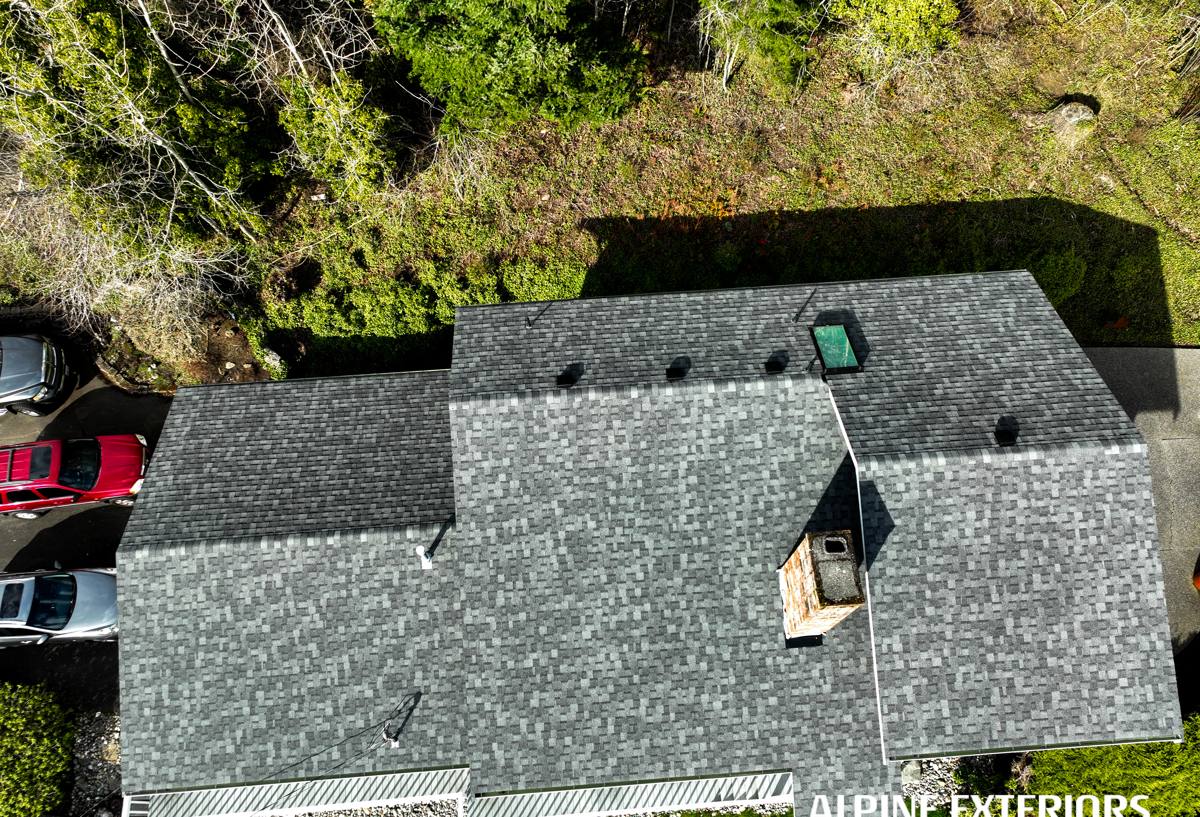
When we install a new roof in Sehome, we're not just matching a product to a budget. We're accounting for tree cover, prevailing wind and rain direction off the bay, and the reality that moss and moisture are working against the roof nearly every month of the year. That context changes material choices, ventilation design, and even how we sequence the tear-off and dry-in.
What Bellingham's Climate Does to a Roof Over Time
Salt Air and Metal Fatigue
Homes in and around Sehome that are within a few miles of the bay see slow corrosion on unprotected metal — fasteners, flashing, and vents — faster than homes further inland. This doesn't mean metal roofing is off the table; it means the metal, coatings, and fastener specs have to be chosen for a marine-influenced environment, not a generic catalog spec.
Driving Rain and Wind-Driven Moisture
Bellingham doesn't just get rain, it gets rain pushed sideways during fall and winter storms. Roofs with marginal flashing details or underlayment coverage can handle vertical rain fine and still leak under wind-driven conditions. Valleys, chimney flashing, and sidewall step flashing are where this shows up first.
The Long Moss Season
Shade from mature trees, combined with near-constant moisture from roughly October through May, gives moss and moss spores a long runway to establish on shaded roof sections. Once moss takes hold, it holds water against the roof surface, lifts shingle edges, and accelerates granule loss — which is exactly the kind of damage that shortens a roof's real-world lifespan well below its rated warranty.
Signs a Sehome Home Needs a New Roof (Not Just a Repair)
- Granules collecting in gutters or at downspout outlets, especially after a heavy rain
- Moss or dark streaking covering more than isolated patches, particularly on north-facing or shaded slopes
- Curling, cupping, or cracked shingles visible from the ground
- Soft spots or sagging when walked on, which usually signals deck-level moisture damage
- Daylight visible through the attic roof deck, or damp insulation near the eaves
- Repeated leak repairs in the same area over the past few years
- A roof original to a home built before the early 2000s that has never been fully replaced
Any one of these can sometimes be handled with a repair. Several at once, or a roof approaching 20-25 years old, usually means repair spending is going toward a system that's fundamentally at the end of its service life.
What a Correct New Roof Installation Actually Involves
Tear-Off and Deck Inspection
We remove the existing roofing down to the deck rather than layering over it. That's the only way to actually see the condition of the sheathing — soft, delaminated, or water-stained plywood or boards need to be replaced before anything new goes down, not covered up. In a wet climate like this, skipping that step is how a new roof ends up with a hidden problem underneath it.
Underlayment and Ice/Water Protection
Given how much wind-driven rain this area sees, we pay particular attention to underlayment coverage at eaves, valleys, and any roof-to-wall transitions, along with self-adhered membrane in the areas most exposed to water intrusion. This is one of the least visible parts of a roofing job and one of the most important for long-term dryness.
Flashing at Every Penetration and Transition
Chimneys, skylights, plumbing vents, and sidewalls all need step flashing, counterflashing, or boot flashing sized and installed correctly — not just caulked. Caulk fails; properly lapped and integrated flashing doesn't rely on a sealant to stay watertight.
Ventilation That Matches the Home
Balanced intake (soffit) and exhaust (ridge or roof vents) ventilation keeps the attic dry and temperature-regulated, which matters for both moisture control and shingle life. Many older Sehome homes were built with minimal or mismatched ventilation, and we'll flag that during the estimate if it needs correcting alongside the roof itself.
Material Installation to Manufacturer Spec
Nail placement, exposure, and starter course details all affect wind resistance and warranty validity. This is standard professional practice, but it's worth stating plainly: cutting corners here is invisible on installation day and expensive to fix later.
Choosing the Right Roofing Material for a Shaded, Wet Neighborhood
| Material | Performance in Sehome's Conditions | Trade-Offs to Know |
|---|---|---|
| Architectural asphalt shingle | Good moisture and wind performance when properly ventilated; widely available in algae-resistant (moss/streak-resistant) versions | Still needs periodic moss and debris removal in heavily shaded areas; standard-grade shingles without algae resistance will streak faster here |
| Standing seam metal | Sheds moss and standing moisture well due to smooth, steep-shed surface; long service life | Requires marine-grade fasteners and coatings near the bay; higher upfront cost; installation sensitivity is higher, so crew experience matters |
| Synthetic/composite shingle | Resists moisture absorption and moss better than wood; consistent appearance over time | Product line and warranty structure vary by manufacturer; not every style suits every home's character |
| Cedar shake | Traditional look that suits some of the neighborhood's older homes | Highest maintenance burden in a shaded, wet climate — moss and moisture retention require a disciplined upkeep schedule; we're upfront with clients about this before they commit |
We don't push one product on every home. We do steer clients away from choices that will create a heavy, ongoing maintenance burden in a specific shaded or exposed location, and we explain why in plain terms rather than just saying "trust us."
What Drives Cost on a New Roof
- Roof size and number of stories (steeper, taller roofs cost more to access and work safely)
- Roof complexity — valleys, dormers, and multiple penetrations add labor and flashing detail
- Deck condition once the old roofing is off (undiscovered rot adds material and labor)
- Material chosen, from standard asphalt through metal or synthetic options
- Ventilation upgrades if the current attic system is inadequate
- Tear-off and disposal of the existing roofing layers
We give a firm, itemized estimate before work starts, so cost factors like these are spelled out rather than discovered mid-project.
Our Process, Start to Finish
- On-site inspection — we walk the roof and attic, check the deck where accessible, and note ventilation, flashing, and moss/moisture patterns specific to the home's exposure.
- Written estimate — material options, scope, and price are laid out clearly, with any deck repair or ventilation work called out as a possibility rather than a surprise.
- Scheduling around weather — we plan tear-off days around the forecast and keep the deck protected if conditions turn while work is in progress.
- Tear-off and deck assessment — old roofing comes off, the deck is inspected, and any needed repairs are reviewed with the homeowner before covering it back up.
- Underlayment, flashing, and material installation — installed to manufacturer specification, with extra attention to the wind-driven-rain areas noted above.
- Final walkthrough — we review the finished roof, ventilation, and cleanup with the homeowner directly.
Why Local Experience in This Specific Neighborhood Matters
A crew that regularly works Sehome already knows which slopes hold moss longest, how tree cover affects drying time after a storm, and what ventilation gaps tend to show up in the neighborhood's older housing stock. That's not something you can fully substitute with a generic checklist. It also means practical familiarity with the area's tighter lots and street parking near campus, so crews can plan material staging and dumpster placement without it becoming a hassle for the homeowner or neighbors.
Beyond convenience, local experience shows up in the details that actually protect the roof: which valleys need extra membrane, which homes need a ventilation correction as part of the job rather than an upsell, and which material choices hold up versus which ones create years of moss maintenance for a homeowner who wasn't warned upfront.
After Installation: Keeping a New Roof Performing in This Climate
A new roof in Sehome still lives under the same tree cover and marine air that aged the old one. A little upkeep goes a long way toward protecting the investment:
- Keep gutters and valleys clear of needles and leaf debris, especially heading into fall
- Have moss growth addressed early on shaded slopes rather than letting it establish
- Trim overhanging branches where practical to reduce shade and debris buildup
- Schedule a periodic roof check-up rather than waiting for a visible leak
If you're weighing a new roof for a Sehome home, we're glad to take a look and walk you through what your specific roof needs — no pressure, no guesswork. Reach out for a free estimate using the form below.