 Bellingham
 Siding Built for the Barkley Neighborhood's Climate
Barkley sits close enough to Bellingham Bay and the surrounding wetlands that homes here deal with a specific combination of weather stress: salt-tinged air drifting in off the water, long stretches of driving rain through the fall and winter, and a moss season that seems to stretch longer every year. None of that is unusual for Whatcom County, but it does mean siding decisions that work fine in a drier inland climate can fail early here. When we install siding in Barkley, we're not just matching a color to a house — we're building an assembly that has to shed water for decades, resist the slow creep of moss and mildew, and hold up to salt-laden moisture without swelling, cracking, or rotting.
This page focuses on one job, done right, in one place: full siding installation for Barkley homes. If you're comparing materials, methods, or contractors for this specific project, this is the detail that matters.
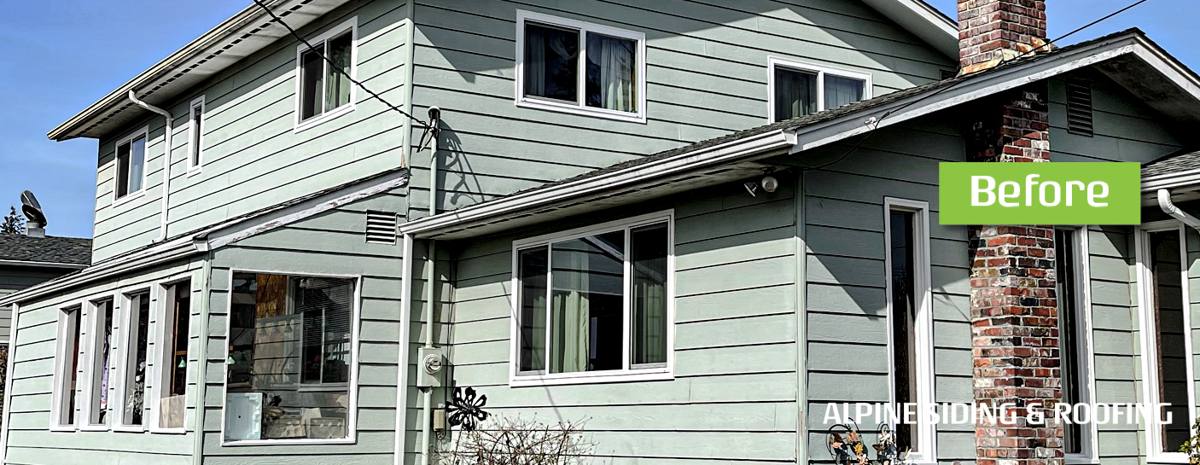
What Barkley Homes Actually Need From Their Siding
Bellingham's marine climate is generally mild, but "mild" doesn't mean "easy" on a house. In Barkley specifically, three conditions do most of the damage over time:
- Salt air exposure — even a few miles from the water, airborne salt accelerates corrosion of fasteners and trim, and it degrades cheap paint finishes faster than manufacturers' warranties assume.
- Driving rain — wind-driven rain doesn't just hit siding, it pushes water sideways and upward at laps, seams, and penetrations. A siding system with weak water-shedding detail will eventually let moisture behind the cladding.
- Extended moss season — shaded lots, mature trees, and consistent moisture mean moss and algae get a long runway to establish themselves on north-facing walls and anything close to overhanging vegetation.
Put those three together and you get a simple conclusion: siding that can absorb moisture, swell, or lose its finish early is a poor match for this neighborhood, no matter how good it looks on day one.
Why This Rules Out Some Common Siding Choices
We only install James Hardie fiber cement siding, and Barkley is exactly the kind of neighborhood where that standard pays off. Vinyl siding can warp and its seams can allow wind-driven rain to work behind panels over time. Wood-based products — primed spruce, cedar, and engineered wood siding like LP SmartSide — are organic materials at their core, which means they're vulnerable to moisture absorption and rot if the finish is ever compromised, and a long wet season with heavy moss growth is a tough environment for that vulnerability to sit in for 20-30 years. We don't install those products, and on a job like this, that's a climate decision as much as a quality one.
What a Correct Siding Installation Involves
Siding is a system, not a single product. The board itself matters, but so does everything behind and around it. A correct installation for a Barkley home includes:
Weather-Resistive Barrier and Flashing
Before any siding goes up, the wall needs a properly lapped weather-resistive barrier and correctly integrated flashing at every window, door, and penetration. This is the layer that actually stops bulk water from reaching the sheathing — the siding itself is the second line of defense, not the first. Given how much driving rain Barkley sees, sloppy flashing work here is the single most common cause of hidden rot we find when we tear off old siding.
Rainscreen or Drainable Housewrap
A small air gap or drainable wrap behind the siding lets any moisture that does get past the cladding drain and dry out instead of sitting against the sheathing. In a climate with this much sustained rainfall, that drainage plane is what keeps a minor water intrusion from becoming a structural problem.
Fastening and Clearances
James Hardie siding has specific fastener spacing, nail penetration, and clearance requirements — including a minimum gap at grade, roof lines, and decks — that exist specifically to keep the board out of standing water and splash-back. Skipping these details voids the warranty and, more importantly, shortens the life of the siding regardless of paperwork.
Caulking and Trim Details
Every joint, corner, and trim intersection needs the right sealant and the right gap. Over-caulking traps moisture; under-caulking lets it in. This is a place where experience with this exact product, in this exact climate, shows up in the finished product ten years down the road.
Why James Hardie Fits This Job
We standardized on James Hardie fiber cement because it's engineered for exactly the conditions Whatcom County throws at a house. A few specifics that matter for Barkley:
- Non-combustible material — fiber cement doesn't burn, rot, or provide a food source for moss and mildew the way organic siding materials can.
- HZ5 climate-engineered formulation — Hardie's HZ product lines are engineered for specific moisture zones, and the Pacific Northwest falls into the higher-moisture category that calls for it.
- ColorPlus factory finish — a baked-on finish that resists fading and holds up to UV and salt air far better than field-applied paint, which matters when your finish is fighting airborne salt year-round.
- Dimensional stability — fiber cement doesn't expand and contract with moisture the way wood-based products do, so seams and caulk joints stay tighter over time.
None of this means Hardie is maintenance-free. It still needs periodic cleaning to keep moss and algae from taking hold, especially on shaded, north-facing walls common on wooded Barkley lots. But it starts from a material base that isn't fighting the climate from day one.
Comparing Siding Options for a Barkley Home
| Factor | James Hardie Fiber Cement | Vinyl | Wood-Based (Cedar, Primed Spruce, Engineered Wood) |
|---|---|---|---|
| Moisture absorption | Minimal — cement-based, not organic | None, but seams can let water behind panels | Higher — organic material can absorb and swell |
| Salt air resistance | Strong with ColorPlus factory finish | Moderate — finish can chalk and fade | Requires diligent refinishing to hold up |
| Moss/algae resistance | Good; benefits from periodic cleaning | Good on the surface, but trapped moisture is a risk | More vulnerable if moisture reaches the substrate |
| Fire resistance | Non-combustible | Combustible | Combustible |
| Typical lifespan when installed to spec | Multiple decades | Decades, with earlier warping/fading risk | Shorter without diligent maintenance |
This isn't a claim that other products fail immediately — it's a summary of the trade-offs we weighed before deciding what we'd stand behind on every job we take on, including in Barkley.
Our Installation Process for Barkley Homes
The process doesn't change dramatically from house to house, but the details we pay closest attention to do shift based on where a home sits and what it's exposed to.
1. On-Site Assessment
We walk the property, note exposure to prevailing wind and rain direction, check for existing moss or moisture staining, and assess tree cover and shading — all of which affect where extra flashing detail or drainage capacity matters most.
2. Tear-Off and Substrate Inspection
Removing the old siding is when we find out what's actually happening behind the wall. Any rot, compromised sheathing, or failed flashing gets addressed before new siding goes up — covering a problem with new siding just delays it.
3. Weather Barrier and Flashing Installation
New weather-resistive barrier, correctly lapped, with flashing integrated at every opening and penetration.
4. James Hardie Installation to Manufacturer Spec
Proper fastener spacing, correct clearances at grade and roof lines, and manufacturer-approved caulking and trim details.
5. Final Walkthrough
We review the finished job with you, point out any maintenance items (like keeping vegetation trimmed back to reduce moss buildup), and make sure you know what to expect from the product going forward.
What to Ask Before Hiring a Siding Contractor in Barkley
Not every contractor who "does siding" has real experience with fiber cement in a wet, salt-influenced climate. Before hiring, it's worth asking:
- Do you install James Hardie regularly, and are you a certified installer?
- What's your approach to flashing at windows, doors, and roof lines?
- Do you install a rainscreen or drainable wrap behind the siding?
- What clearance do you leave at grade, decks, and roof intersections?
- Can you walk me through what you found during tear-off on past jobs in this area?
A contractor who works in Bellingham and Whatcom County regularly should have straightforward, specific answers — not vague reassurances.
Why Local Experience in Barkley Matters
A crew that already works in this neighborhood knows which lots hold more moisture, which orientations get hit hardest by driving rain, and where moss tends to establish first. That's not something you can fully substitute with a general checklist — it comes from having done the tear-offs, seen what failed and why, and adjusted the installation approach accordingly. For a Bellingham home in Whatcom County, especially one exposed to the salt air and long wet season that come with living near the bay, that local pattern recognition is part of what a correct installation actually requires.
Ready for a Free Estimate?
If your Barkley home's siding is showing its age — fading, staining, softness at the bottom edge, or moss that keeps coming back — we're happy to take a look and give you a straightforward, no-pressure assessment of what's going on and what it would take to fix it right. Use the form below to request a free estimate.