 Bellingham
 Why Silver Beach Windows Take More Punishment Than Most
Silver Beach sits in one of the wetter, greener corners of Bellingham, and that's exactly what makes window replacement here different from a job on the dry side of the mountains. The marine air moving in off Bellingham Bay carries salt that slowly works on metal hardware and painted wood trim. Driving rain off the Strait doesn't just fall straight down here — wind pushes it sideways into every gap a window has. And the long, mild, wet stretch from October through April gives moss and mildew months to take hold on sills, trim, and anywhere water sits instead of draining away.
None of that means windows in this neighborhood are doomed. It means the installation has to account for moisture from the first cut, not just the finished look. A window that's a perfect fit for a dry inland climate can still fail early here if the flashing, sealing, and material choices aren't matched to what Whatcom County actually throws at a house.
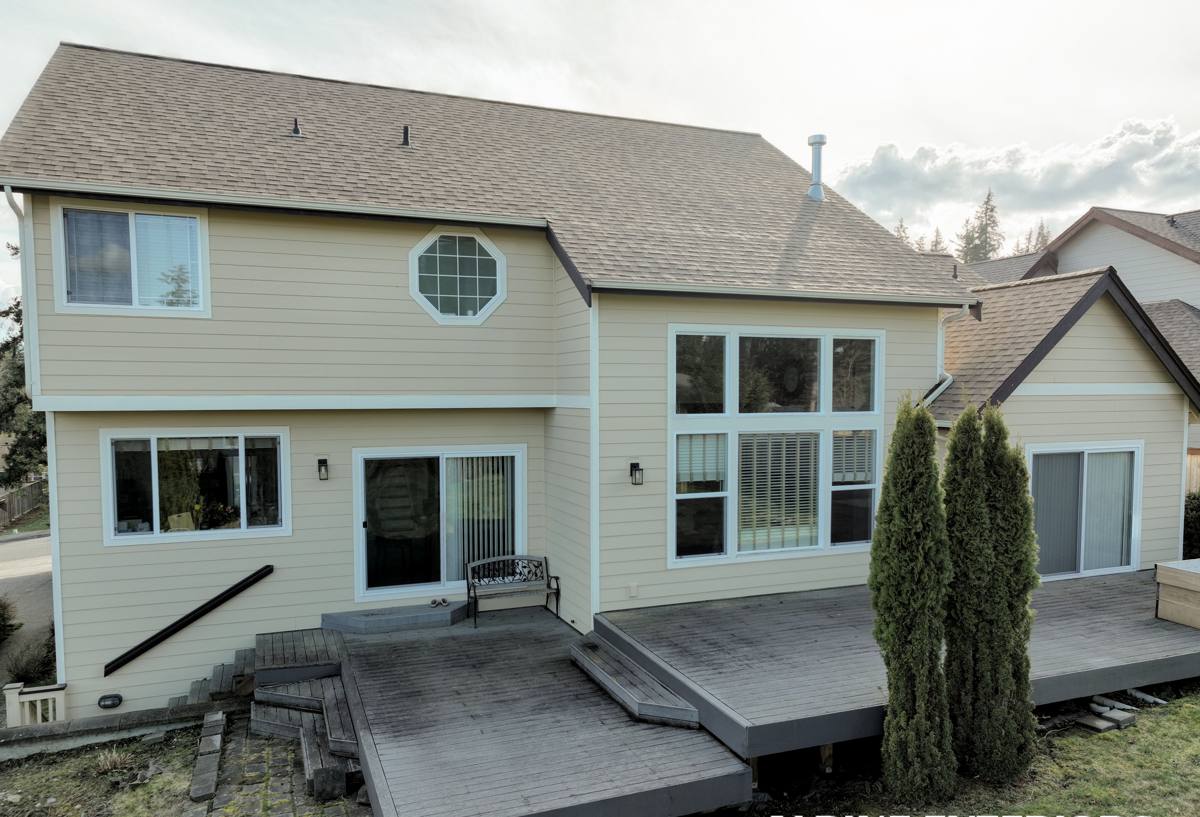
Signs Your Current Windows Are Already Losing That Fight
Most window failures in this climate are slow. By the time a homeowner notices, the damage has usually been building for a season or two. Worth checking for:
- Fogging or a hazy film between panes of a double-pane window — the seal has failed and the gas fill is gone
- A steady draft you can feel with your hand near the frame, even with the window latched
- Sills that feel soft, spongy, or slightly give under pressure
- Paint that's bubbling, peeling, or cracking along the frame or exterior trim
- Windows that stick, bind, or are hard to latch — often a sign the frame has swollen from trapped moisture
- Moss, algae, or black mildew staining building up on the sill or bottom trim
- Visible daylight or a whistling sound around the frame during a windy rain
- A noticeable jump in heating costs without any other explanation
Any one of these can be a minor fix. Several at once, especially on the same window, usually means the unit is past the point where caulk and weatherstripping will solve it.
What a Correct Custom Window Installation Actually Involves
Water Management Comes First
The single biggest difference between a window that lasts and one that rots out early isn't the brand — it's how water is managed at the opening before the window ever goes in. That means a proper sloped sill pan so water drains outward instead of pooling, flashing tape integrated correctly with the house's weather-resistant barrier, and a head flashing detail that sheds water past the window rather than into the wall. Caulk alone is not a substitute for this. Caulk fails; a correctly built water path doesn't depend on it staying perfect forever.
Sizing and Fit for Older Framing
"Custom" matters because Bellingham's housing stock spans many decades, and framed openings are rarely perfectly square, especially in older homes that have settled over the years. A true custom-sized unit, measured and built to the actual opening, seals tighter and looks straighter than forcing a stock size to fit with extra shimming and gap-filling.
Insulation and Air Sealing Around the Frame
The gap between the window frame and the rough opening needs to be filled with a low-expansion foam or fiberglass insulation — not packed so tight it bows the frame, and not left loose enough to leave cold spots. Done right, this step is invisible once the trim goes back on, but it's a major factor in how drafty or quiet a room feels afterward.
Choosing a Frame Material That Holds Up to Marine Air
There's no single "best" window material — the right choice depends on the house, the budget, and how much upkeep an owner wants to take on. In a climate with salt-laced air and a long damp season, though, some materials simply ask less of you over time.
| Material | Moisture / Salt Air Resistance | Maintenance | Typical Cost Tier |
|---|---|---|---|
| Vinyl | Very good — won't rot or corrode | Low; occasional cleaning | Lower |
| Fiberglass | Excellent; stable in temperature swings and damp air | Low | Mid to upper |
| Aluminum-clad wood | Good exterior protection, but any breach exposes wood beneath | Moderate | Upper |
| Solid wood | Handsome but the most vulnerable to this climate without diligent upkeep | High; regular repainting and sealing | Upper |
We're honest with homeowners who want the look of solid wood: it can be done well here, but it requires a maintenance commitment most people underestimate. For that reason, we often steer clients toward fiberglass or a clad option when they want a wood-look interior without repainting exterior trim every few years.
Glass Packages Worth Paying For in This Climate
Bellingham's marine climate is mild but relentlessly damp, which changes what glass upgrades are actually worth paying for compared to a hotter, drier region. A few things matter more here than a high-end sales sheet might suggest:
- Low-E coatings help hold heat inside during our long heating season and cut UV fading on floors and furniture during the brighter summer months
- Argon or krypton gas fill between panes improves insulation value without changing how the window looks
- A strong U-factor rating matters more here than solar heat gain — we're trying to keep warmth in through a wet winter, not block intense heat
- Triple-pane glass is worth considering for north-facing rooms, bedrooms near a busy road, or anyone especially sensitive to drafts, but it isn't always necessary for every window in the house
Double-pane with a good Low-E coating and gas fill is the right call for most rooms. Triple-pane earns its extra cost in specific spots rather than across an entire project.
Our Installation Process, Start to Finish
- On-site assessment and measurement of each opening, noting framing condition and any signs of past water intrusion
- Product and glass package selection based on the room, the home's style, and budget
- Careful removal of the old window, with the opening inspected for hidden rot or moisture damage before anything new goes in
- Repair of any damaged sheathing or framing found — this is common enough in older Whatcom County homes that we plan for it rather than treating it as a surprise change order
- Installation of the sill pan, flashing, and new window per manufacturer specification and correct water-management sequencing
- Insulation of the gap between frame and opening, followed by interior and exterior trim work
- Final adjustment, operation check, and cleanup before we walk the job with the homeowner
What Drives the Cost of a Custom Window Project
Every project is different, but the same handful of factors move the price up or down on nearly every job we bid in this area.
| Factor | Why It Matters |
|---|---|
| Number and size of windows | More or larger openings mean more material and labor |
| Frame material and glass package | Vinyl runs lower than fiberglass or clad-wood; triple-pane adds cost per unit |
| Condition of the existing opening | Hidden rot or water damage found during removal adds repair time before the new window goes in |
| Access and height | Second-story or hard-to-reach openings take more setup and labor time |
| Trim and interior finish work | Matching existing trim profiles or painting adds to the scope |
Broadly, straightforward vinyl replacements land at the lower end of the range, while larger custom shapes, upper-tier materials, or jobs that uncover structural repair cost more. We'll always tell you plainly if we find something during removal that changes the scope before we move forward.
Why It Matters to Hire a Crew That Already Works Silver Beach
A window crew that only sees this neighborhood occasionally is guessing at things a local crew already knows: which decades of Bellingham homes tend to have thinner original flashing details, how far moss and moisture damage typically travels before it shows on the surface, and what Whatcom County and City of Bellingham permitting actually requires for a given project. That local familiarity shows up in fewer surprises during the job and a install that's built for the specific way weather hits homes in this part of town — not a generic install method that happens to work fine somewhere drier.
It also matters after the job is done. A crew that works this area regularly is easy to reach if a question comes up a year or two later, and stands behind its own flashing and sealing work because its reputation in the neighborhood depends on it.
Keeping New Windows Performing for the Long Haul
A correctly installed window in this climate should need very little from you, but a few habits extend its life:
- Clear debris and moss from sills and tracks each fall before the wet season sets in
- Check that weep holes on vinyl and fiberglass frames stay clear so water can drain
- Wipe down sills periodically rather than letting standing water and organic debris sit
- Have caulking and exterior sealant checked every few years, since this is the one part of the system that does wear over time
If you're weighing a window project for a home in Silver Beach, we're glad to take a look and give you a straightforward, no-pressure estimate — including an honest read on what your current windows and openings actually need. There's a form below to get that started.