 Bellingham
 South Hill's Siding Challenges: Elevation, Shade, and Moisture
South Hill sits above much of Bellingham, and that elevation cuts both ways. Homes up here often catch more wind-driven rain off Bellingham Bay than houses tucked into lower, more sheltered parts of the city, and the mature tree canopy that gives the neighborhood its character also means a lot of siding never gets a full day of sun to dry out. That combination — more moisture exposure, less drying time — is exactly the kind of environment that finds every weak point in a siding system, whether that's a failed caulk joint, a cracked panel, or a spot where flashing was never installed correctly in the first place.
Salt Air and Driving Rain from the Bay
Whatcom County's marine climate means siding here deals with salt-laden air and sideways rain more often than siding in drier inland regions. Salt air accelerates corrosion on fasteners and metal trim, and driving rain pushes water into gaps that would stay dry in a calmer climate. Over years, that's what turns a small cosmetic issue — a hairline crack, a loose piece of trim — into a moisture problem behind the siding where you can't see it.
A Long Moss Season Under Mature Tree Canopy
Bellingham's moss season runs long, and South Hill's tree-shaded lots make it longer still. Moss and algae hold moisture against the siding surface for extended periods, which is hard on paint finishes and can accelerate deterioration on materials that aren't built to handle sustained dampness. It also hides problems — a section of siding matted with moss can conceal cracking, soft spots, or fastener failure that would be obvious on a cleaner surface.
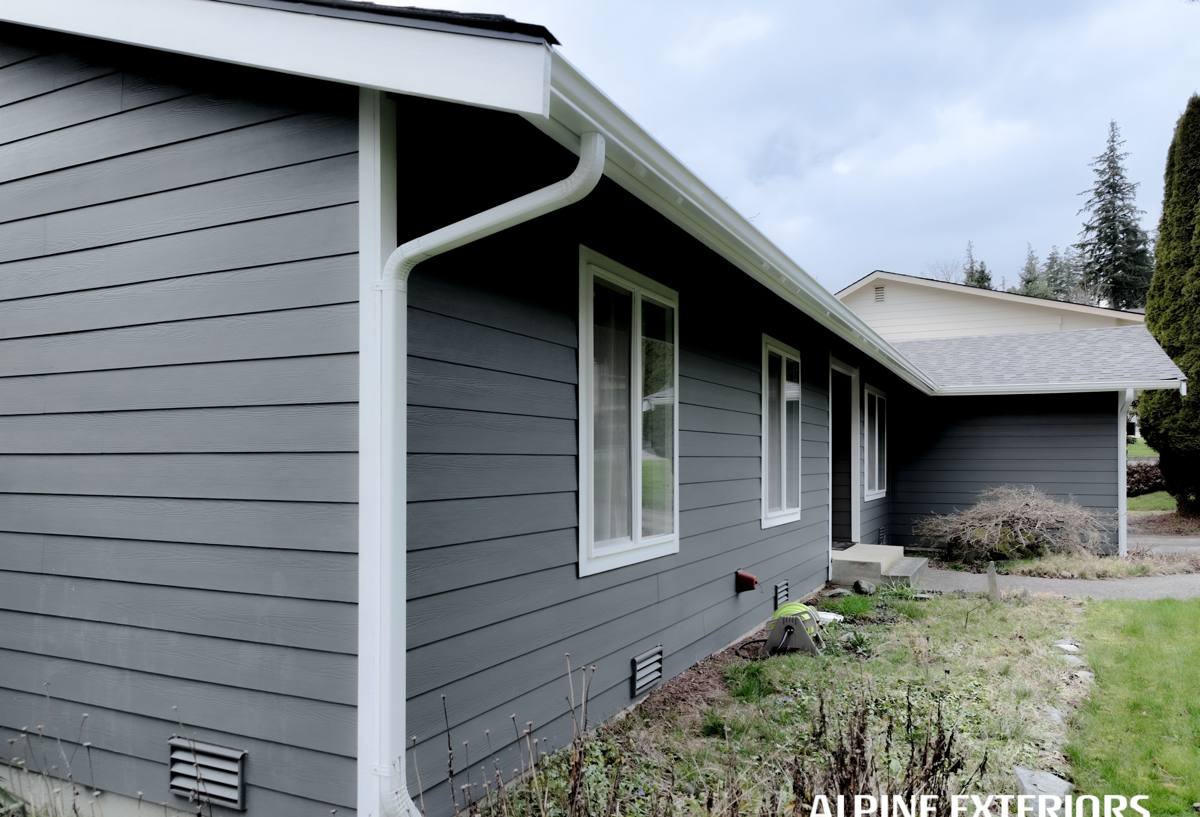
Signs Your South Hill Home Needs Siding Repair
Most siding repair calls start with something a homeowner noticed during a walk around the house or while cleaning gutters. The list below covers what we look for first, and what should prompt you to get a professional opinion sooner rather than later.
- Cracked, warped, or buckled siding panels, especially near corners or seams
- Soft or spongy spots when you press on the siding, which usually means moisture has gotten behind it
- Peeling paint or a chalky, faded finish concentrated on shaded, moss-prone sides of the house
- Gaps opening up at trim, window and door casings, or where siding meets the foundation
- Visible mold, mildew, or persistent moss growth that keeps returning after cleaning
- Bubbling or discoloration on interior walls that back up to exterior siding
- Nail pops, loose panels, or sections that flex or rattle in wind
Repair or Replace? How We Make That Call
Not every problem area needs a full re-side. A lot of damage on South Hill homes is localized — a section that took the brunt of wind-driven rain, a spot where a tree limb rubbed against the wall, or trim that was never flashed correctly. The table below outlines how we think through repair versus replacement.
| Factor | Favors Repair | Favors Replacement |
|---|---|---|
| Extent of damage | Isolated to one or two areas | Spread across multiple walls or elevations |
| Moisture intrusion | Surface-level, no sheathing damage found | Rot or moisture found in sheathing or framing |
| Age of existing siding | Siding is relatively young and otherwise sound | Siding is near or past its expected service life |
| Material match available | Existing product/color can be matched closely | Discontinued product with no reasonable match |
| Underlying cause | One-time or localized cause, since corrected | Systemic issue (bad original install, wrong product for site) |
We won't push a full replacement when a targeted repair will genuinely hold up — but we also won't patch over a moisture problem that's going to resurface in a year. Part of an honest estimate is telling you which situation you're actually in.
What a Correct Siding Repair Actually Involves
Checking What's Behind the Siding
Any repair worth doing starts with removing enough siding to see what's underneath — the house wrap or weather-resistive barrier, the flashing at penetrations and transitions, and the sheathing itself. On a South Hill home that's had years of driving rain and shaded dampness, this step matters more than usual. Patching over damaged wrap or compromised flashing just seals the moisture problem in rather than solving it. If we find soft sheathing or signs of ongoing water intrusion, we'll show you what we found and explain the options before doing any further work.
Matching Material and Finish
A repair that stands out visually is a repair that wasn't done carefully. For James Hardie fiber cement, that means matching the plank profile, exposure, and ColorPlus finish as closely as possible, and paying attention to how the new section transitions with existing caulk lines and trim. Fastener pattern and flashing details get replicated to match the original installation, not shortcut just because it's a smaller job.
Why We Repair Exclusively in James Hardie Fiber Cement
We install and repair one siding system: James Hardie fiber cement. We don't do vinyl, LP SmartSide, Cemplank, Allura, or wood siding repairs, and that's a deliberate standard, not a limitation of what we're capable of. When we repair a Hardie home, we're working with a product engineered for exactly the wet, shaded, moss-prone conditions common on South Hill — it's non-combustible, it doesn't rot the way wood-based products can, and its factory-applied ColorPlus finish holds color and resists the kind of moisture-driven fading that plain painted siding struggles with over time.
If your existing siding is a different product, we'll still give you an honest assessment of what's going on and what your options are. But when it comes time to replace a section — or the whole exterior — fiber cement is what we put on the house, because it's what we trust to hold up long-term in this climate without turning into a recurring maintenance project.
Our Siding Repair Process in South Hill
- On-site inspection. We walk the exterior, check the areas you're concerned about, and look for related issues nearby — damage rarely stays perfectly contained to one spot.
- Moisture and structural check. We open up affected sections to inspect the wrap, flashing, and sheathing before quoting anything.
- Written estimate. You get a clear scope — what's being repaired, what material is used, and why — with no pressure to upsell into a full re-side unless that's genuinely what the house needs.
- Repair work. Damaged sections are removed, any underlying moisture issues are corrected, and new James Hardie material is installed and finished to match.
- Cleanup and walkthrough. We clear debris, including any moss or organic buildup we removed to access the work area, and walk the finished repair with you.
Why Hiring a Crew That Already Works in South Hill Matters
Hillside Access and Site Conditions
South Hill's terrain, mature landscaping, and tighter lots in some areas change how a repair job gets staged — ladder placement, material access, and protecting plantings and hardscape during the work. A crew that's worked the neighborhood before doesn't have to figure that out on the fly.
Timing Around Bellingham's Wet Season
Knowing when South Hill's tree cover keeps siding damp longer after a storm, and scheduling repair work accordingly, is the kind of local judgment that only comes from doing this work here repeatedly. It affects everything from when caulk and paint will actually cure properly to how urgently a moisture issue needs to be addressed before it spreads.
Caring for Your Siding After the Repair
A good repair should hold up with routine care, not constant attention. Keep tree limbs and shrubs trimmed back from the siding so air can circulate and shaded areas get some sun exposure. Rinse off moss and algae buildup periodically, especially on north-facing or heavily shaded walls, before it has a chance to hold moisture against the surface. Take a look at caulking around trim, windows, and penetrations once a year, since that's usually the first thing to fail in this climate. And if you notice a new soft spot, crack, or recurring damp patch, get it looked at while it's still a small repair — on South Hill, small problems don't stay small for long once moisture gets involved.
If you're seeing any of the warning signs above, or just want a second opinion on a section of siding that's been bothering you, we're happy to take a look. Estimates are free and there's no pressure — fill out the form below and we'll set up a time to come by.