 Bellingham
 Sudden Valley's Setting Is Tougher on Siding Than Most Homeowners Realize
Sudden Valley sits in the trees above Lake Whatcom, tucked into terrain that keeps a lot of homes shaded for large parts of the day. That shade feels good in July, but it's a problem for exterior walls the other ten months of the year. Water that lands on a shaded, tree-covered wall doesn't evaporate the way it does on a sun-exposed wall in a more open Bellingham neighborhood. It sits. It soaks into anything porous. And in a community with this much tree canopy, that cycle repeats itself for months at a stretch.
Add in the driving rain that comes through Whatcom County during fall and winter storm systems, a moss season that can run from early fall through late spring on north- and east-facing walls, and the salt-tinged marine air that moves inland off Bellingham Bay, and you've got a siding environment that punishes anything with a weak moisture story. We've worked enough homes in and around Sudden Valley to know which products hold up under those conditions and which ones start showing problems within a few years.
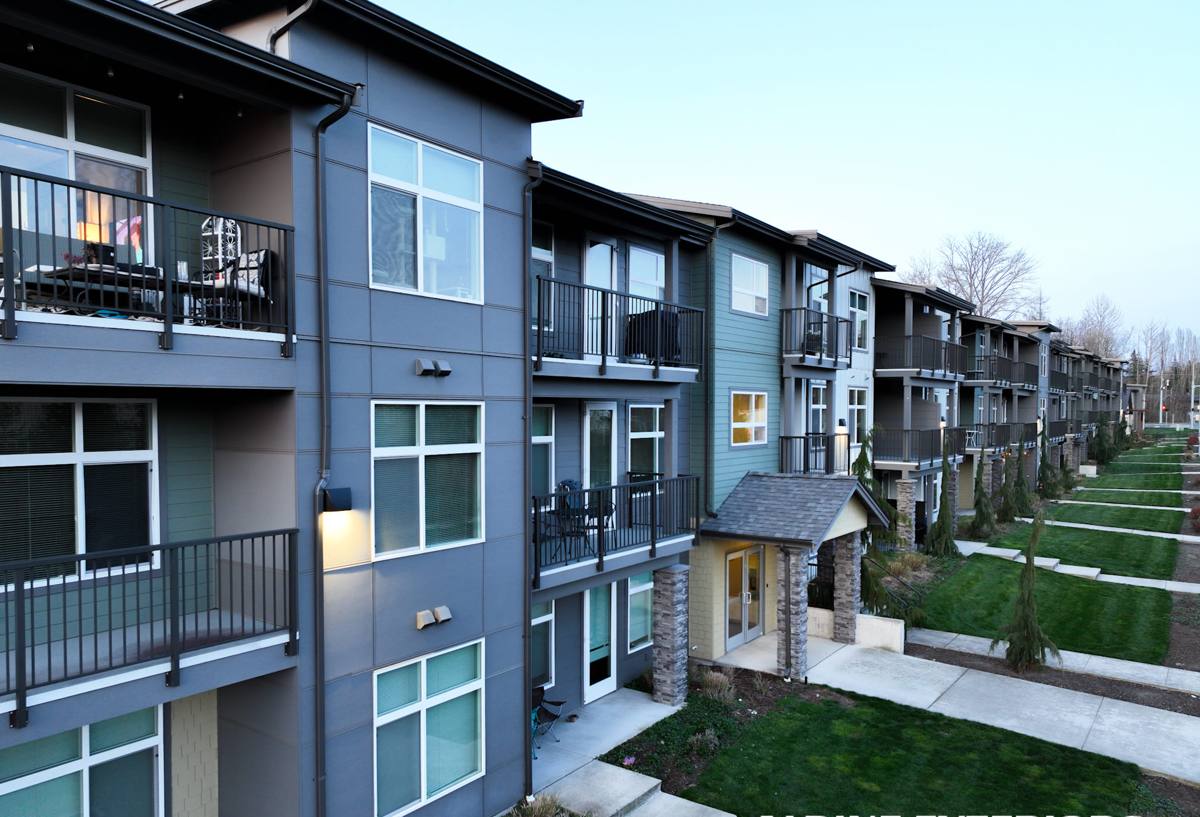
Why We Standardized on James Hardie Fiber Cement
James Hardie siding is fiber cement — a mix of cellulose fiber, sand, and Portland cement pressed and cured into planks and panels. It doesn't have an organic core that can absorb water and swell, which is the failure point for most of the alternatives homeowners ask us about. It's also non-combustible, which matters in a region where wildfire smoke and dry-season fire risk have become a real part of homeowner planning, even in a generally wet climate like ours.
We don't install LP SmartSide, vinyl, Cemplank, Allura, primed spruce, or cedar, and Sudden Valley's climate is a big part of why. Wood-based composite siding has an engineered wood core — great for cost and workability, but it depends entirely on caulking and paint staying intact at every cut edge and seam. On a shaded, high-moisture lot, that margin for error shrinks fast; a missed touch-up at a butt joint can let water into the core, and once that happens the damage doesn't reverse. Vinyl handles moisture fine on its own, but it's thin, it can crack in a cold snap, and it takes real damage from falling branches and debris — an everyday hazard on wooded lots like the ones common through Sudden Valley. Cedar looks great going up, but it needs regular refinishing to keep moss and mildew from taking hold, and in a shaded moss season that runs half the year, that maintenance schedule gets demanding quickly. James Hardie's cement composition sidesteps all three of those failure modes, which is why it's the only product we put on homes.
HardieZone HZ5 and Picking the Right Product Line
James Hardie engineers its siding by climate zone, not as a one-size-fits-all product. Whatcom County falls in the HZ5 zone, which is formulated for cold, wet climates — it accounts for freeze-thaw cycling and sustained moisture exposure in a way that a generic national product doesn't. For a Sudden Valley home specifically, the product line and finish matter as much as the material itself:
| Product | Best Use on a Sudden Valley Lot | Why It Fits |
|---|---|---|
| HardiePlank Lap Siding | Most home exteriors, standard wall runs | Traditional lap profile sheds water efficiently; widest color and texture selection |
| HardiePanel Vertical Siding | Accent walls, gables, modern or A-frame designs | Fewer horizontal joints for water to work into on steep or shaded gable faces |
| HardieTrim Boards | Corners, window and door surrounds, fascia | Matches the plank's moisture resistance so trim doesn't become the weak point |
| ColorPlus Factory Finish | Any of the above | Baked-on finish resists fading and holds up to moss/mildew cleaning better than field paint |
ColorPlus finish is worth calling out on its own. It's cured at the factory under controlled conditions rather than sprayed on-site, and it comes with its own finish warranty separate from the substrate warranty. On a home that's going to spend a lot of its life in shade and damp air, that finish durability is the difference between repainting in eight years and not touching the color for two decades.
What a Correct Installation Involves on a Shaded, Wet Lot
Clearance and Drainage
Every manufacturer's install guide calls for minimum clearances — siding above grade, above roofing, above decks and patios. On Sudden Valley lots, we tend to be more conservative than the bare minimum where a home sits close to trees or a slope keeps ground moisture from draining away. A rain screen or drainage gap behind the siding gives any moisture that does get past the surface a way out instead of a place to sit against the sheathing.
Flashing and Fastening
Flashing at every window, door, and roof-to-wall intersection is where most siding failures actually start, regardless of what material is on the wall. We flash penetrations before a single plank goes up, use fasteners at the spacing and depth James Hardie specifies for HZ5 conditions, and keep butt joints properly caulked and, where possible, backed rather than left as a simple face joint.
Airflow and Vegetation Clearance
On a wooded lot, the siding itself can be installed perfectly and still stay damp longer than it should if branches and shrubs are pressed right up against the wall. Part of doing this job right in Sudden Valley is talking through vegetation clearance with the homeowner — a few inches of breathing room between plantings and the wall lets the siding actually dry between rain events instead of staying wet against foliage.
Our Process for a Sudden Valley Siding Project
- Site walk: we look at tree cover, sun exposure by wall, drainage patterns, and existing moisture damage before recommending anything.
- Sheathing check: once old siding comes off, we inspect the sheathing underneath — this is the point where hidden rot from a prior product's failure gets found and fixed before new siding goes up over it.
- Material and color selection: we walk through HardiePlank, HardiePanel, and trim options and ColorPlus color selections against how much sun and shade each wall actually gets.
- Installation to spec: flashing, clearances, fastening pattern, and joint treatment done to James Hardie's HZ5 requirements, not shortcuts to save a day of labor.
- Final walk and punch list: we go around the house with the homeowner before calling the job done, not after.
Cost Factors on a Sudden Valley Project
James Hardie siding generally costs more than vinyl and less than ongoing cedar upkeep once you account for repainting cycles, but the real cost swing on any individual job comes from site conditions more than material choice. A few factors move the number up or down:
| Factor | Why It Matters Here |
|---|---|
| Access and staging | Wooded lots and sloped driveways common in Sudden Valley can limit where equipment and material staging go, affecting labor time |
| Existing sheathing condition | Moisture-related rot found after tear-off adds repair scope before new siding can go up |
| Wall complexity | Multiple gables, dormers, and trim details take more cutting and flashing time than a simple rectangular wall |
| Product line mix | Combining lap siding, panel accents, and trim boards costs more than a single product but often fits the design better |
| HOA or design review | Approved color palettes or material guidelines can add a step to the timeline but rarely change the core scope |
Maintenance Checklist for Sudden Valley Homeowners
James Hardie siding is low-maintenance, not no-maintenance. In a moss-prone, shaded climate, a short annual check goes a long way toward protecting the investment:
- Rinse siding annually with a garden hose and soft brush — avoid pressure washers, which can force water behind joints and caulking
- Check caulking at butt joints, window and door trim, and corner boards for cracking or gaps once a year
- Trim back branches and shrubs so nothing is in direct contact with the siding
- Watch for moss or algae buildup on shaded, north-facing walls and clean it before it spreads
- Clear gutters and downspouts so overflow doesn't run down the wall behind the siding
- Look at ground-level clearance after mulch or landscaping work — soil and bark should never be built up against the siding
Why a Crew That Already Works Sudden Valley Matters
Sudden Valley isn't a typical flat suburban subdivision. Sloped lots, tree cover, private roads, and a community with its own design and architectural review standards all shape how a siding job actually gets done here — where equipment can stage, how material gets moved to the house, what color and material approvals need to happen before work starts. A crew that's worked in the neighborhood before isn't guessing at any of that on day one, and that shows up in how smoothly the job runs from tear-off to final walk-through.
It also shows up in the finished product. Knowing that a given wall gets four hours of afternoon sun instead of eight changes how we think about product line, clearance, and even which walls get extra attention during flashing. That's the kind of judgment that only comes from having done this work on homes like yours, in this specific setting, more than once.
If your Sudden Valley home needs new siding — or you're just trying to figure out whether what's on the walls now is holding up the way it should — we'll come take a look and give you a straight, no-pressure estimate. Use the form below to get started.