 Bellingham
 Storm Damage Roofing for Sudden Valley Homes
Sudden Valley sits in a pocket of Whatcom County that gets its own version of bad weather. The community is tucked against Lake Whatcom and surrounded by heavy tree cover, which means storm damage here doesn't always look like it does on an open lot closer to town. It's less about hail and more about wind funneling down through the trees, limbs coming down on slopes that never fully dry out, and moss quietly working into a roof that already took a hit and never got a proper follow-up inspection. If you've had a storm move through and you're not sure whether your roof just needs a look or needs real repair, this page is about that specific situation for this specific area.
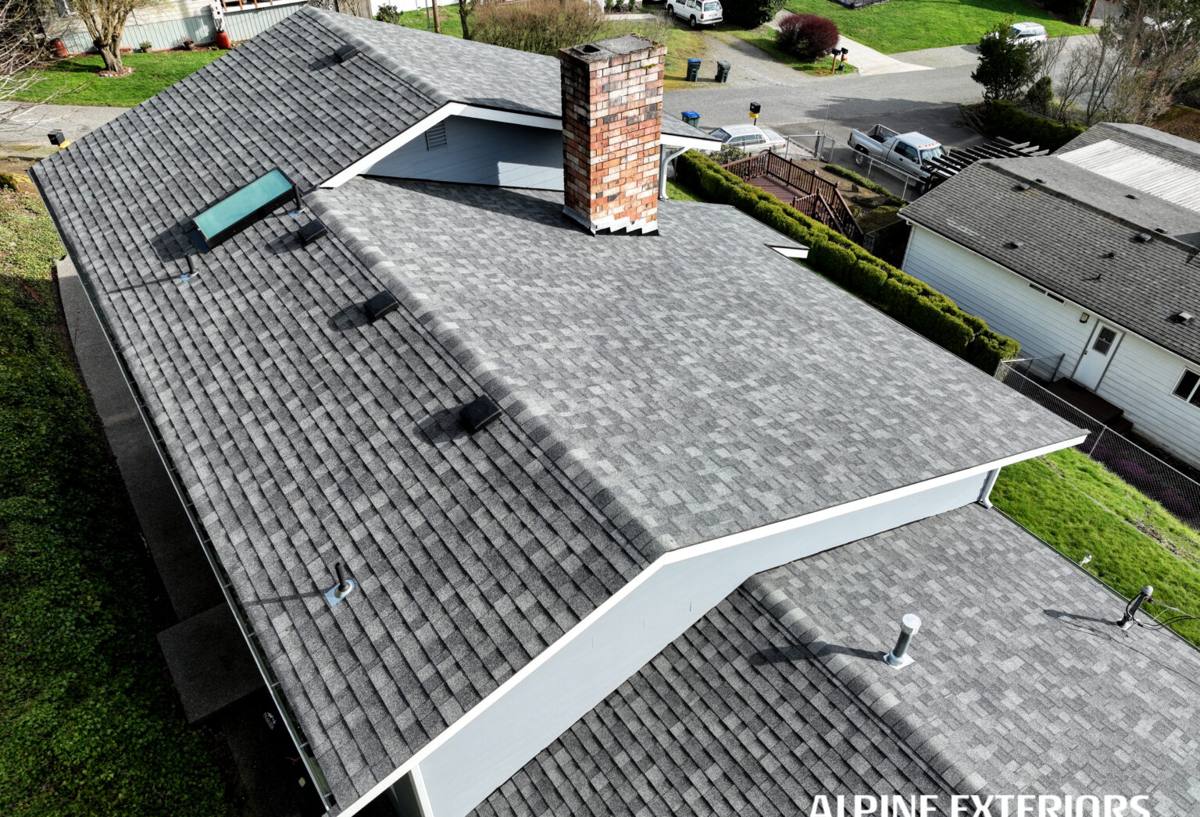
Why Storm Damage Behaves Differently in Sudden Valley
Most of Whatcom County deals with driving rain, salt-tinged air near the coast, and a moss season that can run most of the year. Sudden Valley shares the rain and moss problem, but because it's inland along Lake Whatcom and heavily wooded rather than coastal, its biggest storm risk is different: tree exposure. Mature conifers and big-leaf maples throw shade that keeps roofs damp longer, and the same trees that provide privacy also drop limbs and debris in wind events. A gust that would be a non-event on a bare rooftop can crack a branch loose thirty feet up and send it straight down onto a shake or shingle roof.
That combination — constant shade, damp roof decking, and overhead limbs — is why we treat storm damage calls in Sudden Valley differently than a typical Bellingham storm call. We're not just checking for missing shingles. We're checking whether the moss and moisture that were already established before the storm have masked or worsened whatever the storm just did.
What This Means for Your Roof Specifically
- North-facing and heavily shaded slopes hold moisture longer after a storm, so damage shows up as soft spots and granule loss before it shows up as a visible leak
- Limb strikes often crack or bruise shingles without knocking them off completely — the damage is there, it's just not obvious from the ground
- Gutters and valleys clogged with needles and moss back water up under the roofing during heavy rain, which can look like storm damage but is really a maintenance issue a storm exposed
- Private, tree-lined access roads mean debris cleanup and material delivery sometimes take more coordination than a typical in-town job
What Actually Counts as Storm Damage
Homeowners often assume "storm damage" means a hole in the roof. In practice, most of what we find after a wind event in this area is more subtle, and subtle damage is exactly what turns into a bigger repair bill if it sits through a wet winter.
| Type of Damage | What It Looks Like | Why It Matters |
|---|---|---|
| Wind-lifted shingles | Edges curled up, creased, or partially detached | Breaks the seal, lets wind-driven rain get underneath |
| Limb impact | Cracked shingles, dented shakes, bruised or punctured felt underneath | Creates a direct path for water even if nothing looks "broken" on the surface |
| Granule loss | Bald patches on asphalt shingles, granules in gutters | Exposes the asphalt mat to UV and moisture, shortens roof life |
| Flashing displacement | Metal at chimneys, vents, or valleys bent or pulled loose | One of the most common sources of a "mystery leak" after a storm |
| Underlayment tears | Not visible without lifting shingles | Can leak for weeks before it shows up as a ceiling stain |
Why Waiting Costs More Here Than Elsewhere
In a drier climate, a homeowner can reasonably wait a season to deal with minor storm damage. That's not really an option in Whatcom County, and it's especially not an option in Sudden Valley given the tree cover and shade. A cracked shingle that would take months to become a problem in full sun can start letting water into the decking within a few heavy rain events here, because the roof rarely gets a full dry-out period between storms.
Moss compounds this. Moss doesn't just sit on top of a roof — it holds moisture against the shingle or shake surface and works its way under tabs and into nail lines over time. A roof that already has moss establishing itself is more vulnerable to storm damage turning into a leak, because the moss has already been prying up the surface it's growing on. If your roof was due for moss treatment or cleaning before the storm, that's now part of the repair conversation, not a separate issue to deal with later.
What a Correct Storm Repair Actually Involves
A rushed storm repair is one of the most common ways a roof ends up with a repeat leak the following winter. Doing it right means treating the storm event as a reason to check the whole roof section, not just the spot that's obviously damaged.
The Repair Sequence We Follow
- Emergency stabilization — if there's active leaking or an opening, we tarp or temporarily seal it the same visit so water damage doesn't spread while repairs are scheduled
- Full-slope inspection — not just the damaged area; we check the whole roof plane for related wind or impact damage, plus existing moss or moisture issues nearby
- Decking check — any spot with a suspected leak gets checked for soft or delaminated decking underneath, not just a shingle swap
- Underlayment and flashing repair — this is where most storm leaks actually originate, so it gets addressed even when it means removing more shingles than the visible damage alone would suggest
- Matching materials — shingles, shakes, or metal repaired to match existing coloring and profile as closely as possible, since patch jobs that stand out are usually a sign shortcuts were taken underneath
- Debris and cleanup — broken limbs, old shingle material, and nails cleared from the roof, gutters, and ground
Repair vs. Full Slope or Full Roof Replacement
Not every storm-damaged roof needs replacing, and not every roof can be reasonably patched. The right call depends on the roof's age, how much of it was affected, and what condition it was in before the storm hit.
| Factor | Favors Repair | Favors Replacement |
|---|---|---|
| Roof age | Under 12-15 years, materials still sound | Near or past expected lifespan for the material |
| Extent of damage | Isolated to one slope or area | Multiple slopes, or damage scattered across the roof |
| Pre-existing moss/moisture | Minimal, roof was otherwise maintained | Significant moss coverage or known soft spots before the storm |
| Decking condition | Dry, solid where inspected | Soft, delaminated, or water-stained in multiple spots |
| Insurance scope | Adjuster approves targeted repair | Adjuster's own inspection identifies broader damage |
We'll always tell you honestly which side of this table your roof falls on. A repair that's going to need redoing in two years isn't a favor to you — it's just a second bill.
Working With Insurance on Storm Claims
Most storm damage repairs in this area go through homeowners insurance, and the process goes smoother when the documentation is solid from the first visit. We photograph the damage, note wind or impact patterns, and provide a written scope that an adjuster can work from directly. If the adjuster's initial assessment misses damage we found during our own inspection — which happens, especially with shaded, hard-to-see slopes — we can walk through our findings with them or with you. We're not a public adjuster and we don't handle your claim for you, but we make sure the roof itself doesn't get under-scoped because the damage wasn't easy to spot from a ladder or a drone photo.
Why a Crew That Already Works Sudden Valley Matters
Sudden Valley isn't a typical in-town job site. It's a private community with its own roads, and getting a crew, a dumpster, or a material delivery in and staged correctly takes a bit more planning than a standard Bellingham address. A contractor who's worked here before knows to coordinate access ahead of time, knows how tight some of the lots and driveways are under the tree canopy, and isn't figuring that out for the first time while your roof is open to the weather.
There's also a practical safety angle. Storm repair work around large mature trees means watching for hung-up limbs that didn't fully come down, checking overhead before setting up ladders or lifts, and sometimes coordinating with a tree service before roof work can safely start. That's routine for a crew that works this neighborhood regularly — it's not something you want a contractor learning on your roof.
Questions Worth Asking Before You Hire Anyone After a Storm
- Do you carry current liability insurance and workers' comp, and can you show proof without being asked twice?
- Will you document the damage in a way my insurance adjuster can actually use?
- Will you check the whole slope and the decking, or just patch the visible spot?
- Have you worked in Sudden Valley or similar tree-covered, private-road communities before?
- Is the repair estimate written out, with materials and scope specified, rather than a verbal number?
After the Storm: What to Check Yourself
Before any repair crew gets there, there are a few things a homeowner can safely check from the ground.
- Look for shingle pieces, granules, or shake fragments in the yard or gutters — a sign of wind or impact damage even if the roof looks fine from below
- Check ceilings and attic spaces (if safely accessible) for new water stains, especially after the first heavy rain following a storm
- Note any limbs that broke but are still hanging in the canopy above the roof — these need to come down safely before repair work starts
- Avoid getting on the roof yourself, especially on shaded, moss-prone sections that are often slicker than they look
- Take photos of any visible damage and debris as soon as it's safe to do so, before cleanup, for your insurance file
If a recent storm has left your Sudden Valley roof with visible damage, a slow leak, or you just want a second set of eyes after a windy night, we're glad to come take a look. The estimate is free, there's no pressure to sign anything on the spot, and if the answer is "you're fine, keep an eye on it," we'll tell you that too. Use the form below to get a visit scheduled.