 Bellingham
 Why Board & Batten Suits Sunnyland Homes
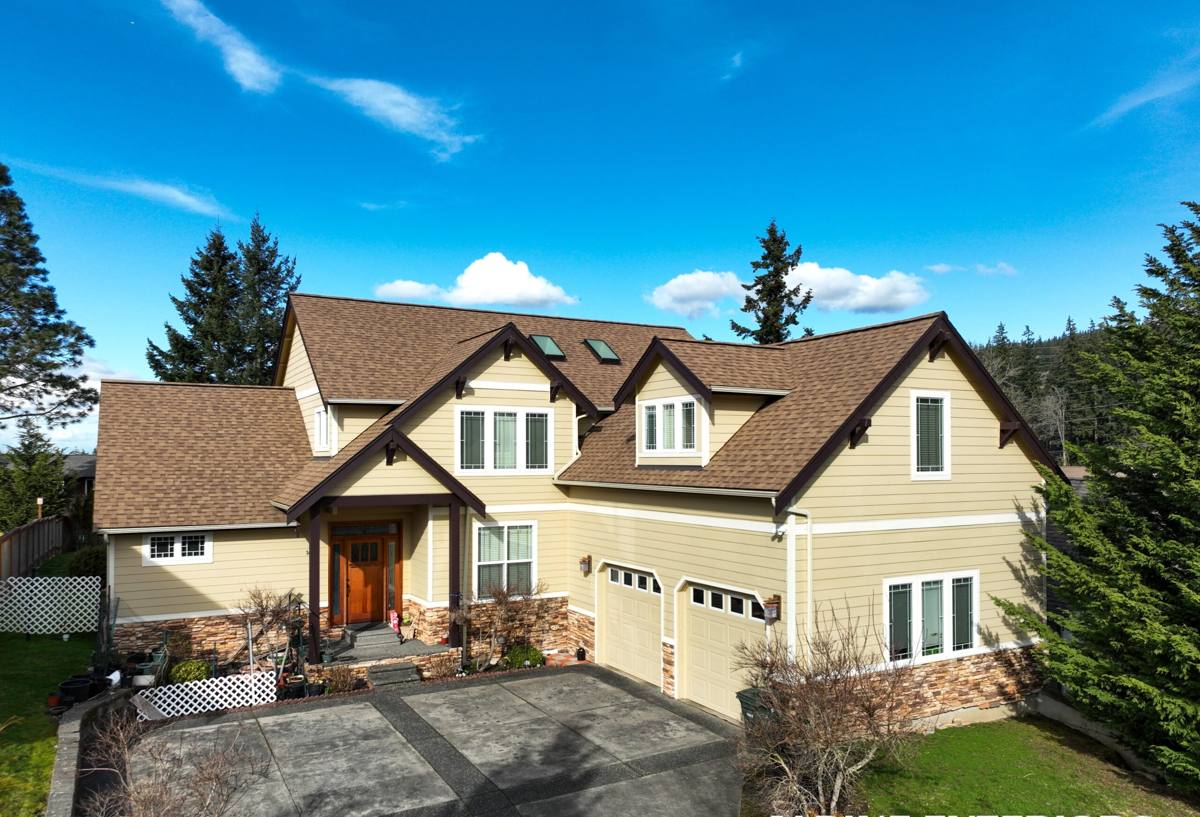
Board and batten is one of the most requested siding profiles in Sunnyland, and it's easy to see why. The vertical lines and crisp shadow reveals work well on the mix of mid-century ranches, craftsman-style homes, and newer infill builds you'll find through the neighborhood. It reads as clean and architectural without looking out of place next to older Bellingham housing stock, and it pairs naturally with the wood-and-stone accents common in Whatcom County home design.
But board and batten isn't just a look. The profile has real functional trade-offs depending on what it's made of, and in a climate like ours — with salt air off the bay, driving rain, and a long moss season — the material behind that vertical line matters as much as the line itself. This page covers what a correct board and batten installation looks like for a Sunnyland home, and why we only install it in one material: James Hardie fiber cement.
What Bellingham's Climate Does to Vertical Siding
Sunnyland sits close enough to Bellingham Bay and the Whatcom County coastline that salt-laden air is a real factor on exterior materials, not a theoretical one. Add in the wind-driven rain that comes through the fall and winter, plus the deep shade and dampness that keeps moss active for most of the year, and you've got a climate that's genuinely hard on siding — especially a vertical profile with lots of seams and edges for water to find.
Salt Air and Coastal Moisture
Salt air accelerates corrosion on exposed metal fasteners and flashing, and it keeps moisture sitting on exterior surfaces longer than drier inland air would. Materials that absorb water, or fasteners that aren't rated for coastal exposure, break down faster here than they would 50 miles east.
Driving Rain and Wind-Driven Water
Vertical board and batten has more butt joints, trim edges, and batten strips than a standard lap profile — which means more opportunities for wind-driven rain to get pushed up and behind the siding if the drainage plane and flashing details aren't done right. This is where a lot of board and batten failures actually start: not from the face of the material, but from water working in at the joints.
The Long Moss Season
Bellingham's shaded, damp conditions keep moss and algae active on north-facing and tree-shaded walls for much of the year. On materials that hold moisture at the surface, that growth can contribute to premature finish breakdown and an ongoing maintenance chore for the homeowner.
Why We Install Board & Batten Only in James Hardie Fiber Cement
Board and batten can be built in cedar, engineered wood, vinyl, or fiber cement, and each material behaves differently once it's actually on a house in this climate. We made a standing decision to install board and batten exclusively in James Hardie fiber cement, and it comes down to how each option holds up to salt air, driving rain, and moss over years, not just how it looks on installation day.
Cedar board and batten looks great new, and we understand the appeal — it's a traditional material with real warmth. But solid wood battens and boards move with moisture, and in a climate that stays damp for long stretches, that movement shows up as cupping, checking, and open joints that let water in behind the material. Keeping cedar looking right here means a real, ongoing maintenance commitment: refinishing on a schedule, staying ahead of moss, and replacing boards that rot at the base or around fasteners.
Vinyl board and batten panels are low-maintenance in the sense that they don't need refinishing, but they're a thin, flexible material that expands and contracts significantly with temperature swings, and that movement is more visible on a vertical profile where straight batten lines are the whole point. Vinyl can also become brittle and prone to cracking in cold snaps, and it's not a fire-resistant material.
Engineered wood siding (like LP SmartSide) improved on some of solid wood's weaknesses, but it's still a wood-based product with a resin binder — it depends heavily on intact factory sealing and correct field sealing at every cut edge to resist moisture. In a climate with this much sustained dampness, any breach in that seal is a long-term liability.
James Hardie fiber cement doesn't share these weaknesses. It's dimensionally stable, so battens stay straight and joints stay tight instead of opening up as the material moves with the weather. It's non-combustible, it doesn't feed moss the way organic materials can, and its ColorPlus factory finish is baked on and warrantied against fading and cracking — not something we're relying on caulk and repainting to maintain over time. That combination is why it's the only material we put behind a board and batten profile.
How Board & Batten Options Compare
| Material | Behavior in Coastal PNW Climate | Maintenance Burden | Fire Resistance |
|---|---|---|---|
| Cedar | Absorbs moisture; moves, cups, and checks with repeated wet/dry cycles | High — regular refinishing and moss treatment | Combustible |
| Vinyl panels | Expands/contracts with temperature; can become brittle in cold | Low, but limited repair options when damaged | Not fire-resistant |
| Engineered wood | Stable if factory seal stays intact; vulnerable at cut edges and joints | Moderate — depends on sealing every exposed edge | Combustible |
| James Hardie fiber cement | Dimensionally stable; resists moisture absorption and moss growth | Low — factory finish holds color without repainting cycles | Non-combustible |
What a Correct Board & Batten Installation Involves
The material is only half the equation. A board and batten job that's installed wrong will underperform even in the right product, and this is a profile where the details matter more than usual because of the extra seams involved.
Panel System, Not Just Boards
We build Sunnyland board and batten jobs using James Hardie panel siding with Hardie trim boards run vertically at consistent spacing to create the batten reveal. This gives a true board and batten look while relying on Hardie's engineered panel system underneath, rather than dozens of individual narrow boards each with their own seams to manage.
Drainage Plane and Rainscreen Gap
Behind the panel, we install a water-resistive barrier and a furring strip or rainscreen gap that lets any water that does get past the face of the siding drain and dry out instead of sitting against the sheathing. In a climate with this much sustained rain, that gap is not optional — it's the difference between siding that sheds incidental moisture and a wall assembly that traps it.
Flashing and Sealant at Every Transition
Windows, doors, corners, and the base of the wall all need proper flashing integrated with the water-resistive barrier — flashing goes over the barrier at the top and behind it at the base, so water is always directed outward. Joints and butt seams get sealed per James Hardie's fastening and sealant specifications, not generic caulk applied after the fact.
Fastening Standards
Fasteners are corrosion-resistant and set to Hardie's fastener schedule for the panel thickness and exposure. This matters more here than in a drier inland climate — salt air is hard on fasteners that aren't rated for it, and a fastener failure at a batten strip is a direct path for water.
Our Process for Sunnyland Projects
Every board and batten project starts with an on-site assessment of the existing wall assembly, not just a measurement for new siding. We check for hidden moisture damage behind the current siding, evaluate the sheathing condition, and confirm what's actually needed for a correct rainscreen and flashing setup before we quote the job.
- On-site inspection of the existing siding, trim, and any signs of past water intrusion
- Written estimate that specifies the Hardie panel and trim products, not just a total square footage
- Removal of old siding and correction of any sheathing or framing issues found underneath
- Installation of water-resistive barrier, rainscreen gap, and flashing at all transitions
- Panel and batten installation per James Hardie's fastening and joint specifications
- Final walkthrough covering warranty documentation and basic care
What to Check Before Hiring for a Board & Batten Job
Because board and batten has more seams and edges than lap siding, the quality of the installer matters more than usual. A few things worth confirming before you sign a contract:
- Ask whether the quote includes a rainscreen gap or furring behind the panel, not just face-nailed panels over the old wall
- Confirm which specific James Hardie panel and trim products are being used, in writing
- Ask how flashing will be handled at windows, doors, and the base of the wall
- Check that the contractor is a factory-trained James Hardie installer, not someone installing it for the first time
- Ask about the transferable labor and product warranty terms before work starts, not after
Why a Crew That Already Works Sunnyland Matters
Board and batten installed correctly in one part of Whatcom County should be installed the same way in another — the code requirements and material specs don't change block to block. But a crew that's already worked houses in Sunnyland has a practical head start: they've dealt with the specific exposure conditions of homes near the bay, they know what moisture damage tends to look like on this style and age of housing stock in Bellingham, and they're not learning the neighborhood on your project. That familiarity shows up in fewer surprises once the old siding comes off and in a process that moves without a lot of guesswork.
Local presence also matters after the job is done. Warranty follow-up, a question about a caulk line six months in, or advice on keeping moss off a shaded wall — those are easier conversations with a crew that's local to Bellingham and not working out of a truck two counties away.
If you're considering board and batten siding for a Sunnyland home, we're happy to walk the property, talk through what a correct installation looks like for your specific exposure, and put together a straightforward, no-pressure estimate. There's a form below — reach out and we'll get you scheduled.