 Bellingham
 Window Replacement in Sudden Valley: Built for a Different Kind of Wear
Sudden Valley sits above the south shore of Lake Whatcom, a private residential community wrapped in second-growth forest with its own internal road network and homeowners association. Homes here spend a lot of the year under tree canopy, with humidity off the lake lingering longer than it does closer to open water or downtown Bellingham. That combination of shade and dampness is hard on every part of a house, but windows take more of it than almost anything else, because a window is where the exterior wall has the most seams, the most moving hardware, and the most opportunities for water to get past a detail that wasn't done correctly the first time.
We work windows, siding, roofing, and decks throughout Sudden Valley and the rest of Whatcom County, and on window jobs specifically we treat flashing and installation sequencing as at least as important as the window unit itself. A well-made window with sloppy flashing will still leak here eventually. A solid, correctly installed window will usually outlast a premium unit that was rushed in.
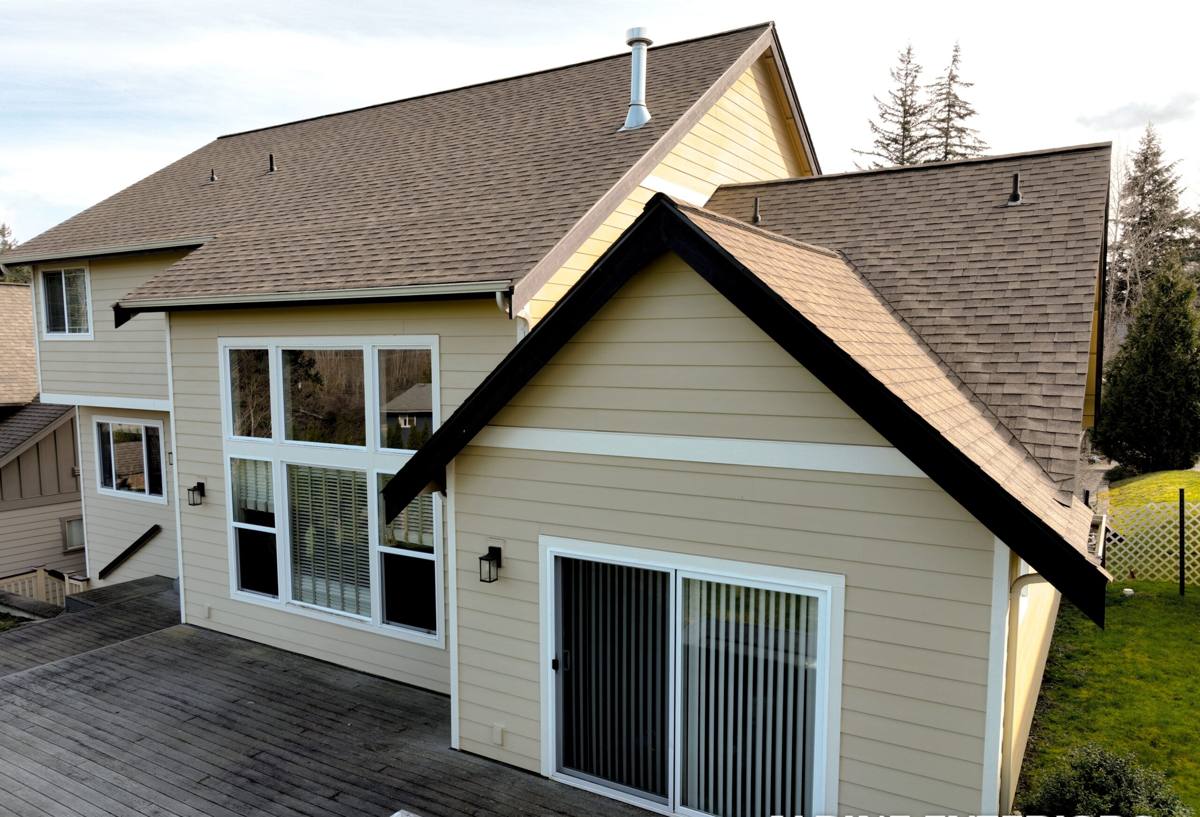
What This Climate Does to Windows Over Time
Heavy Shade and Prolonged Dampness
Most Sudden Valley lots sit under significant tree cover, and it's common for a home to have one or more walls that get very little direct sun for most of the year. Shaded walls stay wet longer after every rain, and windows on those elevations don't get the drying benefit that a sunnier wall does. Wood sills and trim on shaded sides are usually the first place we see soft spots or discoloration develop.
Wind-Driven Rain Off the Lake and Ridgelines
Sudden Valley's terrain is hilly, with homes sitting at a range of elevations and orientations relative to the lake and the surrounding ridgelines. That means wind-driven rain doesn't hit every wall of a house the same way — one elevation might see steady, gentle exposure while another catches the brunt of a storm coming off the water. Window flashing has to be sized to the actual exposure of each wall, not a single generic assumption for the whole house.
Marine Air and a Long Moss Season
Whatcom County's marine climate carries salt-tinged air well inland from Bellingham Bay, and it reaches lake communities like Sudden Valley along with the rest of the region. Combined with the shade and humidity already common here, that moisture keeps window sills, trim, and frame joints damp enough, long enough, for moss and mildew to take hold — usually starting on north-facing sills and anywhere water is slow to drain.
Condensation From Temperature Swings
Cold, damp mornings around the lake put real condensation pressure on glass and frames, especially in older single-pane or early double-pane windows. Fogging between panes, moisture beading on interior sills, or a persistent haze in the glass are usually signs that a seal has failed rather than a passing weather issue.
Signs Your Sudden Valley Home Needs Window Attention
- Fogging or a permanent haze between panes, meaning the seal has failed and the gas fill is gone
- Soft, spongy, or discolored wood at the sill or lower frame corners, especially on shaded walls
- Windows that won't stay open, won't latch, or have been painted shut over the years
- Visible daylight or a draft you can feel at the frame edge
- Moss or dark staining building up on the sill or the trim just below it
- Condensation on the inside of the glass on cold, damp mornings
- A noticeable jump in heating costs with no other clear explanation
One of these on its own might just mean a window is aging normally. Several together, especially on the same wall, usually means water has already found its way past the frame.
What a Correct Window Replacement Involves
Flashing Integration
This is the detail that decides whether a window replacement lasts one wet season or several decades in a climate like this. Flashing has to lap correctly with the weather-resistive barrier and siding around the opening, direct water out and away from the rough opening rather than trapping it behind the trim, and every seam needs to be sealed with materials rated for sustained moisture exposure. On the shaded, higher-exposure walls common in Sudden Valley, that work matters more than it would on a drier, sunnier lot, because there's less margin for a shortcut to dry out before it causes a problem.
Frame and Opening Prep
Before a new window goes in, we check the condition of the rough opening itself — square, level, and whether the framing underneath old flashing has taken on any hidden moisture damage. On older Sudden Valley homes, many originally built as lake cabins or seasonal retreats decades ago, this is often where we find out the real scope of a job isn't just the window, but a section of framing behind it that needs attention first.
Matching Older, Non-Standard Openings
A fair number of homes in this neighborhood were framed before manufacturers standardized common window sizes, so a like-for-like replacement sometimes means ordering a slightly custom size rather than assuming a stock unit will drop straight in. We measure the actual opening rather than guessing from age or style, and we'll tell you upfront if your project is looking at a longer lead time because of it.
Choosing the Right Frame and Glass for This Climate
Frame material matters more on a shaded, humid lot than it does on an open, sunny one, since the frame spends more time wet between storms. We install vinyl and fiberglass window systems suited to sustained Pacific Northwest moisture, and we'll walk through the honest trade-offs for your specific walls rather than defaulting to one answer for the whole house.
| Frame Material | Moisture Behavior in Shade | Maintenance | Best Fit in Sudden Valley |
|---|---|---|---|
| Vinyl | Resists rot; performs reliably in sustained damp conditions | Low; no painting or sealing required | Most shaded and moderately exposed walls |
| Fiberglass | Dimensionally stable through temperature and moisture swings | Low; can be painted later if desired | Larger openings or walls with the heaviest wind-driven rain exposure |
| Wood-clad | Interior wood look with an exterior cladding layer for protection | Moderate; cladding needs to stay intact and properly sealed | Interior-visible walls where appearance matters most, paired with correct exterior detailing |
| Uncladded wood | Absorbs and releases moisture readily; slower to dry in shade | High; needs regular refinishing | Not something we lead with on shaded, moisture-heavy elevations |
On glass, double-pane with a low-E coating is the baseline we recommend for most Sudden Valley homes — it cuts heat loss during cold, damp stretches and helps control interior condensation on cold glass, which is a common complaint here in winter. Triple-pane adds another layer of insulation and condensation resistance and is worth discussing for north-facing rooms or walls that stay shaded and cold most of the day, though it comes with added weight and cost that isn't necessary on every opening.
Our Process, Start to Finish
- On-site assessment — we look at each window's frame condition, seal integrity, and hardware, and note how shade and exposure differ from wall to wall on your specific lot
- Honest recommendation — which windows are reasonable repair candidates and which make more sense to replace, explained plainly
- Measurement and ordering — precise field measurement of each opening, with a realistic lead time if any unit needs to be special-ordered
- Removal and opening prep — the old unit comes out carefully, and any hidden framing or moisture issues get addressed before the new window goes in
- Installation and flashing — the new window is set, shimmed, and flashed to a sequence built for that wall's actual exposure
- Trim and cleanup — exterior trim is finished to match the surrounding siding, and the site is cleaned up before we call the job done
Why a Local Crew That Already Works Sudden Valley Matters
Sudden Valley is a private community with its own road network and homeowners association, and a crew that regularly works here already understands the practical side of that — scheduling around community access, and how much the exposure changes from one lot to the next even within the same neighborhood because of the hilly terrain and tree cover. That familiarity shows up in decisions that don't come up in a sales conversation: which walls get extra flashing lap because they take the brunt of storms off the lake, which sills need a sloped detail instead of relying on caulk, and which openings are old enough that the framing behind them needs a second look before a new window goes in.
What to Ask Before Hiring for Window Work in Sudden Valley
- Ask specifically how they handle flashing integration with the existing siding, not just which window brand they sell
- Confirm current Washington contractor licensing and active liability insurance
- Ask about experience working within HOA or private-road communities, including access and scheduling
- Get a written scope that separates the product warranty from the installation warranty
- Ask for a repair-or-replace recommendation on each window individually rather than a blanket answer for the whole house
What Affects the Cost of a Window Replacement
We won't quote a number without seeing the windows in person, but the factors that actually move price are consistent from project to project: the number of windows being replaced, opening size and whether any are non-standard, frame material, glazing package, the condition of the existing framing once the old window comes out, and how much flashing or siding repair the job needs around each opening. A single failed window on an otherwise sound wall is a different scope than a whole-house project on an older home where several openings need framing attention. We'll walk through which of these apply to your house before you commit to anything.
If you're dealing with drafty, foggy, or stuck windows on a Sudden Valley property, or you're just not sure whether repair or replacement is the right call, we're happy to take a look and give you a straightforward, no-pressure read. Reach out below for a free estimate.