 Bellingham
 Siding Replacement in York: Built for What Bellingham's Climate Actually Does to a House
Homes in and around York face a specific combination of weather that most siding products were never designed to handle well over the long term. You've got salt-laden air moving in off the water, driving rain that gets pushed sideways into wall assemblies during winter storms, and a moss and mildew season that can stretch for most of the year in a marine climate like Whatcom County's. None of these factors are dramatic on their own, but stacked together, year after year, they're exactly what wears out the wrong siding choice faster than homeowners expect.
A siding replacement in this area isn't just a cosmetic upgrade. Done right, it's a chance to correct whatever the original siding got wrong for this climate — usually around moisture management, not appearance.
Salt Air and Coastal Exposure
Even a few miles inland, airborne salt accelerates corrosion on fasteners, trim flashing, and any metal components in a siding assembly. It also degrades certain paint and coating systems faster than manufacturers' standard testing accounts for, which is part of why factory-applied, climate-tested finishes matter more here than in drier inland regions.
Driving Rain and Wind-Driven Moisture
Bellingham's winter storms don't just drop rain straight down — wind pushes it laterally into siding laps, seams, and penetrations. A siding system that isn't installed with the right overlaps, flashing, and drainage gap behind it will eventually let that moisture behind the cladding, where it can sit against sheathing and framing long enough to cause real damage.
The Long Moss and Mildew Season
Shaded, damp conditions for much of the year mean moss, algae, and mildew growth on siding surfaces isn't a matter of if but when. The question is whether the siding material and finish resist it well, or whether it becomes a surface that has to be scrubbed, treated, or repainted every couple of years just to keep it looking presentable.
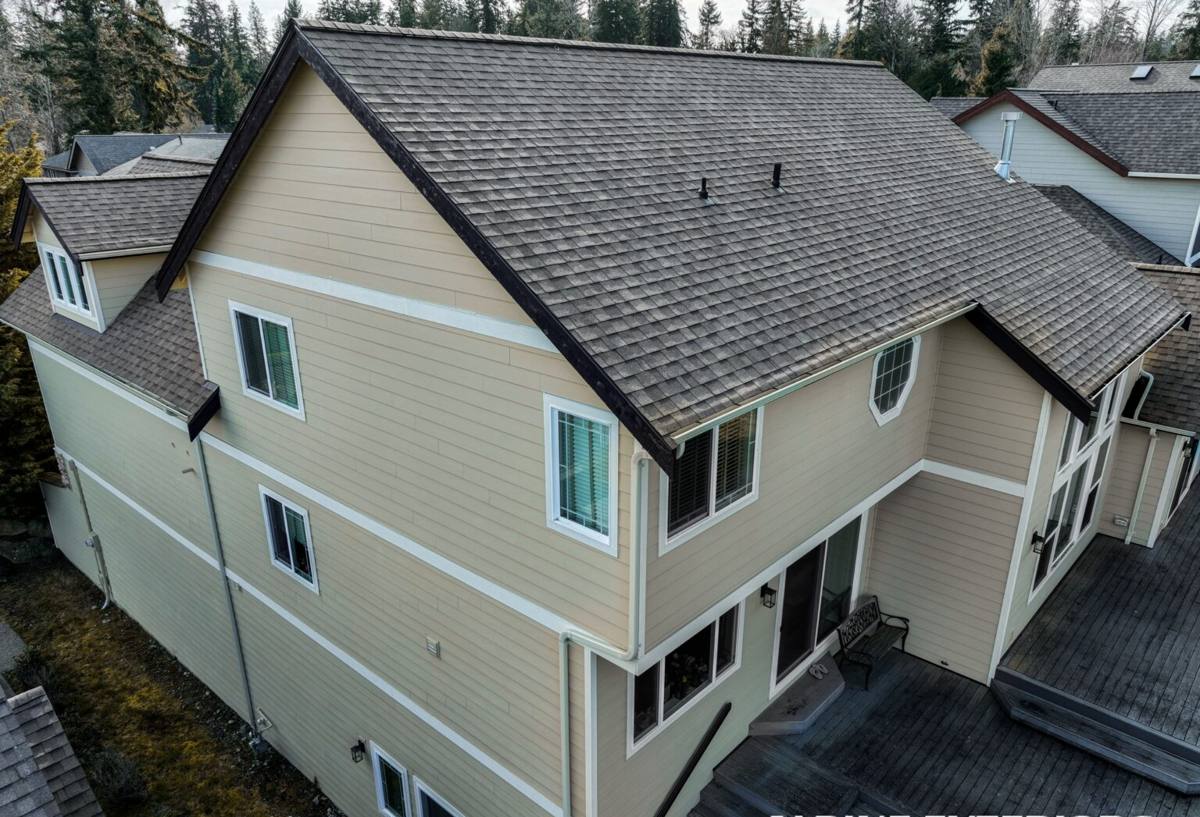
Signs Your York Home Needs Replacement, Not Just Repair
Not every siding problem calls for a full tear-off. But there's a point where patching stops making sense, and pushing past that point usually means paying twice — once for the patch, again for the replacement a year or two later.
- Soft, spongy, or crumbling spots when you press on the siding, especially near the bottom courses or around windows
- Paint that won't hold no matter how often it's redone — often a sign moisture is moving through the material itself
- Visible warping, buckling, or gaps between boards or panels
- Persistent moss or dark staining that comes back within months of cleaning
- Interior signs — peeling paint, musty smell, or soft drywall near exterior walls — that point to moisture getting past the siding entirely
- Siding older than its expected service life, particularly wood-based or engineered wood products in a wet climate
If you're only seeing one or two of these in isolated spots, repair may still be reasonable. If several are showing up across the house, that's usually a sign the whole system — not just the surface — has reached the end of its usable life.
What a Correct Siding Replacement Job Actually Involves
The visible siding is the last piece installed and the first thing anyone notices, but it's not what determines whether the job holds up in a climate like this one. The work underneath it does the heavy lifting.
Full Tear-Off and Sheathing Inspection
We remove the existing siding down to the sheathing, which is the only way to actually see what's been happening behind it. Any soft, rotted, or water-damaged sheathing gets identified and replaced before anything new goes back on. Covering over hidden damage to save time is how homeowners end up with the same problem again in a few years, just hidden under new material.
Weather-Resistive Barrier and Flashing Details
A new weather-resistive barrier gets installed correctly lapped so water sheds downward and outward, never into a seam. Flashing at windows, doors, and any roof-to-wall intersections gets detailed to direct water away from the wall assembly — this is where driving rain does the most damage when it's skipped or done carelessly.
Proper Clearances and Fastening
Siding needs the right gap from grade, roof lines, decks, and other transitions to avoid trapping moisture against the material. Fastening has to follow the manufacturer's specification for spacing, penetration depth, and location — this isn't a place to eyeball it, since improper fastening is one of the most common causes of premature siding failure and voided warranties.
Why We Install Only James Hardie Fiber Cement Siding
We get asked fairly often why we don't offer vinyl, LP SmartSide, or cedar as options. The honest answer is that we looked at how each of those products actually performs over a couple of decades in a marine climate like Bellingham's, and we decided we didn't want to put our name on installations we expected to disappoint homeowners down the road.
Vinyl is inexpensive and low-maintenance in the sense that it doesn't need repainting, but it can warp or crack in temperature swings and it's not fire-resistant. Wood-based and engineered wood products, including LP SmartSide, depend heavily on paint and caulking integrity to keep moisture out — a maintenance burden that's tough to keep up with in a climate where things stay damp for months at a time. Cedar is a beautiful, traditional material, but it demands ongoing sealing and refinishing, and it's genuinely vulnerable to moisture and insect damage if that maintenance schedule slips even once.
James Hardie fiber cement is non-combustible, engineered specifically for wet climates in its HZ5 product line, and finished at the factory with ColorPlus technology — a baked-on finish that resists fading and holds up to the kind of coastal moisture and UV exposure this region sees, far better than field-applied paint. It also carries a strong, transferable limited warranty, which matters to future buyers if you ever sell. When it's installed to spec — which is the part most failures actually trace back to — it's a system built for exactly the conditions York homes face.
Comparing Siding Options for a Marine Climate Like York's
| Factor | James Hardie Fiber Cement | Vinyl | Wood / LP SmartSide / Cedar |
|---|---|---|---|
| Moisture resistance | Engineered for wet climates (HZ5) | Resists rot but can trap moisture behind it | Vulnerable without consistent maintenance |
| Salt air / coastal exposure | Factory finish holds up well | Can chalk or discolor over time | Finish degrades faster near salt air |
| Moss and mildew resistance | Strong, low ongoing upkeep | Resists growth but can look dated | Prone to growth if not treated regularly |
| Fire resistance | Non-combustible | Not fire-resistant | Combustible |
| Maintenance burden | Low — factory finish, no repainting cycle needed | Low, but limited repair/refinish options | High — regular sealing, painting, or staining |
| Warranty | Strong, transferable | Varies widely by manufacturer | Limited on labor/finish; material only |
Our Siding Replacement Process, Start to Finish
- On-site assessment — we walk the exterior, check for hidden moisture damage, and talk through what your home actually needs
- Written estimate and product plan — clear scope, product line, color, and timeline before anything is signed
- Tear-off and sheathing repair — old siding removed, damaged sheathing replaced, no surprises hidden underneath
- Weather barrier and flashing installation — the moisture-management layer that determines long-term performance
- Hardie installation to manufacturer spec — correct fastening, clearances, and joint treatment
- Final walkthrough — we go over the finished work with you before calling the job done
What Affects the Cost of Siding Replacement
Every home is different, so we won't throw out a number that doesn't mean anything until we've actually looked at your house. But a few things reliably move the price:
- How much of the sheathing underneath is damaged and needs replacing before new siding goes on
- The size and complexity of the home — number of stories, corners, windows, and rooflines
- Whether trim, fascia, or soffit work is bundled into the project
- Siding profile and color selection within the Hardie product line
- Site access and any prep work needed around landscaping or structures close to the walls
Why Hiring a Crew That Already Works in York Matters
Siding installation isn't one-size-fits-all, and a crew that's only worked in dry inland climates can miss the details that matter most here. Knowing how much overlap and flashing detail driving rain actually requires, how to sequence work around Whatcom County's wetter months, and what moisture patterns to expect behind a wall assembly in this specific area comes from doing this work locally, repeatedly — not from a general contractor's checklist.
There's also a practical side: a local crew understands permitting expectations in this area, shows up when they say they will, and is still around after the job's done if you ever have a question about your new siding. That accountability is worth something a traveling crew from out of the region can't offer.
Maintaining Your New Siding in Bellingham's Climate
Hardie siding is low-maintenance, not no-maintenance. A little attention keeps it performing the way it's supposed to for decades:
- Rinse siding annually to clear salt residue, pollen, and early moss growth before it takes hold
- Keep gutters clear so overflow doesn't run down the siding face repeatedly
- Trim back vegetation and shrubs that keep siding shaded and damp longer than necessary
- Inspect caulking around windows, doors, and trim every year or two and re-seal as needed
- Address any impact damage or chipped finish promptly rather than letting moisture find a way in
If your York home's siding is showing its age — or you just want an honest read on whether repair or replacement makes more sense — we're happy to take a look. Use the form below to request a free, no-pressure estimate.